Atoms and Molecules — Concept Maps
NIOS · Class 10 · Science & Tech
4 concept maps of Atoms and Molecules for NIOS Class 10 Science & Tech, each also written out as a text outline.
Interactive on Super Tutor
Studying Atoms and Molecules? Get the full interactive chapter.
Quizzes, flashcards, AI doubt-solver and a step-by-step study plan — built for concept maps and more.
Free trial, no card needed.
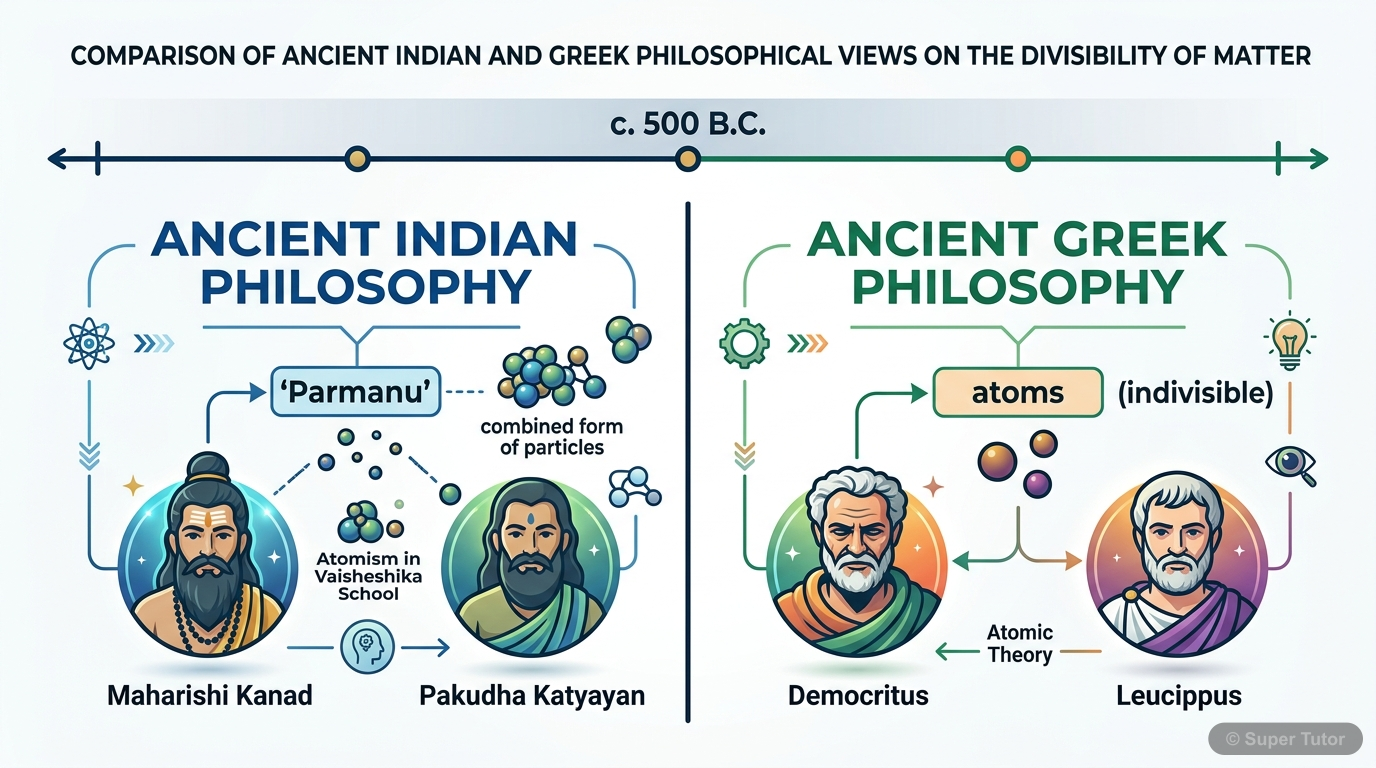
One of 13 illustrations for Atoms and Molecules in Super Tutor — alongside flashcards, concept maps and practice questions.
Atoms and Molecules Concept Map
The map in words
- Atoms and Molecules
- Laws of Chemical Combination
- Conservation of Mass
- Lavoisier Experiments
- Mass Balance
- Constant Proportions
- Fixed Ratios
- Pure Compounds
- Multiple Proportions
- Different Compounds
- Whole Number Ratios
- Conservation of Mass
- Atomic Theory
- Dalton Postulates
- Indivisible Atoms
- Identical Elements
- Different Masses
- Indestructible
- Whole Number Combinations
- Modern Modifications
- Subatomic Particles
- Isotopes
- Dalton Postulates
- Structure and Properties
- Atomic Structure
- Protons
- Neutrons
- Electrons
- Atomic Number
- Mass Number
- Molecular Structure
- Diatomic
- Polyatomic
- Compound Molecules
- Atomic Structure
- Quantitative Aspects
- Mole Concept
- Avogadro Number
- Molar Mass
- Particle Counting
- Chemical Formulas
- Valency Method
- Ionic Method
- Formula Writing
- Mole Concept
- Laws of Chemical Combination
Atoms and Molecules - Chapter Overview
The map in words
- Atoms and Molecules
- Laws of Chemical Combination
- Conservation of Mass
- Constant Proportions
- Multiple Proportions
- Atomic Theory
- Dalton Postulates
- Modern Modifications
- Experimental Evidence
- Atomic Structure
- Protons Neutrons Electrons
- Atomic Number
- Mass Number
- Isotopes
- Molecules
- Diatomic Molecules
- Polyatomic Molecules
- Molecular Mass
- Formula Mass
- Mole Concept
- Avogadro Number
- Molar Mass
- Interconversions
- Chemical Formulas
- Valency Method
- Ionic Compounds
- Covalent Compounds
- Laws of Chemical Combination
Atoms and Molecules - Complete Chapter Overview
The map in words
- Atoms and Molecules
- Laws of Chemical Combination
- Conservation of Mass
- Lavoisier
- Mass Before = Mass After
- Constant Proportions
- Proust
- Fixed Ratio by Mass
- Multiple Proportions
- Dalton
- Simple Whole Numbers
- Conservation of Mass
- Dalton Atomic Theory
- Five Postulates
- Indivisible Atoms
- Identical Atoms per Element
- Different Elements Different Atoms
- Indestructible Atoms
- Small Whole Number Ratios
- Modern Modifications
- Atoms are Divisible
- Isotopes Exist
- Five Postulates
- Atomic Structure
- Subatomic Particles
- Protons Positive
- Neutrons Neutral
- Electrons Negative
- Atomic Number
- Number of Protons
- Defines Element
- Mass Number
- Protons plus Neutrons
- Isotopes
- Same Protons Different Neutrons
- Same Element Different Mass
- Subatomic Particles
- Molecules
- Definition
- Smallest Free Unit
- Chemical Properties Retained
- Types
- Diatomic H2 O2 N2
- Polyatomic P4 S8
- Compound Molecules
- Molecular Mass
- Sum of Atomic Masses
- Formula Mass for Ionic
- Definition
- Mole Concept
- Definition
- 6.022 x 10^23 Particles
- Avogadro Number
- Molar Mass
- Mass of One Mole
- g per mol Units
- Conversions
- Moles to Mass
- Moles to Particles
- Definition
- Chemical Formulas
- Valency
- Combining Capacity
- Cross Multiplication Method
- Types
- Binary Compounds
- Ionic Compounds
- Polyatomic Ions
- Naming Rules
- Metal First
- Nonmetal ends in ide
- Valency
- Laws of Chemical Combination
Matter is made of atoms and molecules, and their laws, masses, mole concept, and formula writing explain how substances combine and behave chemically.
The map in words
- Matter is made of atoms and molecules, and their laws, masses, mole concept, and formula writing explain how substances combine and behave chemically.
- Ideas about divisibility of matter
- Laws of chemical combination
- Dalton's atomic theory
- Atom
- Atomic mass and isotopes
- Molecule
- Molecular mass and formula mass
- Mole concept
Explore these maps interactively
Explore DiagramsFrequently Asked Questions
What are the important topics in Atoms and Molecules for NIOS Class 10 Science & Tech?
What do the concept maps for Atoms and Molecules show?
How should I revise Atoms and Molecules for the NIOS Class 10 board exam?
Sources & Official References
Content is aligned to the official syllabus. Refer to the board website for the latest curriculum.
More resources for Atoms and Molecules
Practice Quiz
Test yourself with a quick quiz
Important Questions
Exam-style questions with answers
Revision Notes
Key points for last-minute revision
Formula Sheet
The chapter's formulas in one place
Chapter Summary
Understand the chapter at a glance
Study Plan
Step-by-step plan for this chapter
Flashcards
Quick-fire cards for active recall
Syllabus
What topics to cover
For serious students
Get the full Atoms and Molecules chapter — start free.
Quizzes, flashcards, an AI doubt solver and a study plan for NIOS Class 10 Science & Tech. Free to start, no card needed.