Bio-Diversity — Concept Maps
NIOS · Class 10 · Social Studies
4 concept maps of Bio-Diversity for NIOS Class 10 Social Studies, each also written out as a text outline. Maps: Biodiversity Components and Distribution.
Interactive on Super Tutor
Studying Bio-Diversity? Get the full interactive chapter.
Quizzes, flashcards, AI doubt-solver and a step-by-step study plan — built for concept maps and more.
Free trial, no card needed.
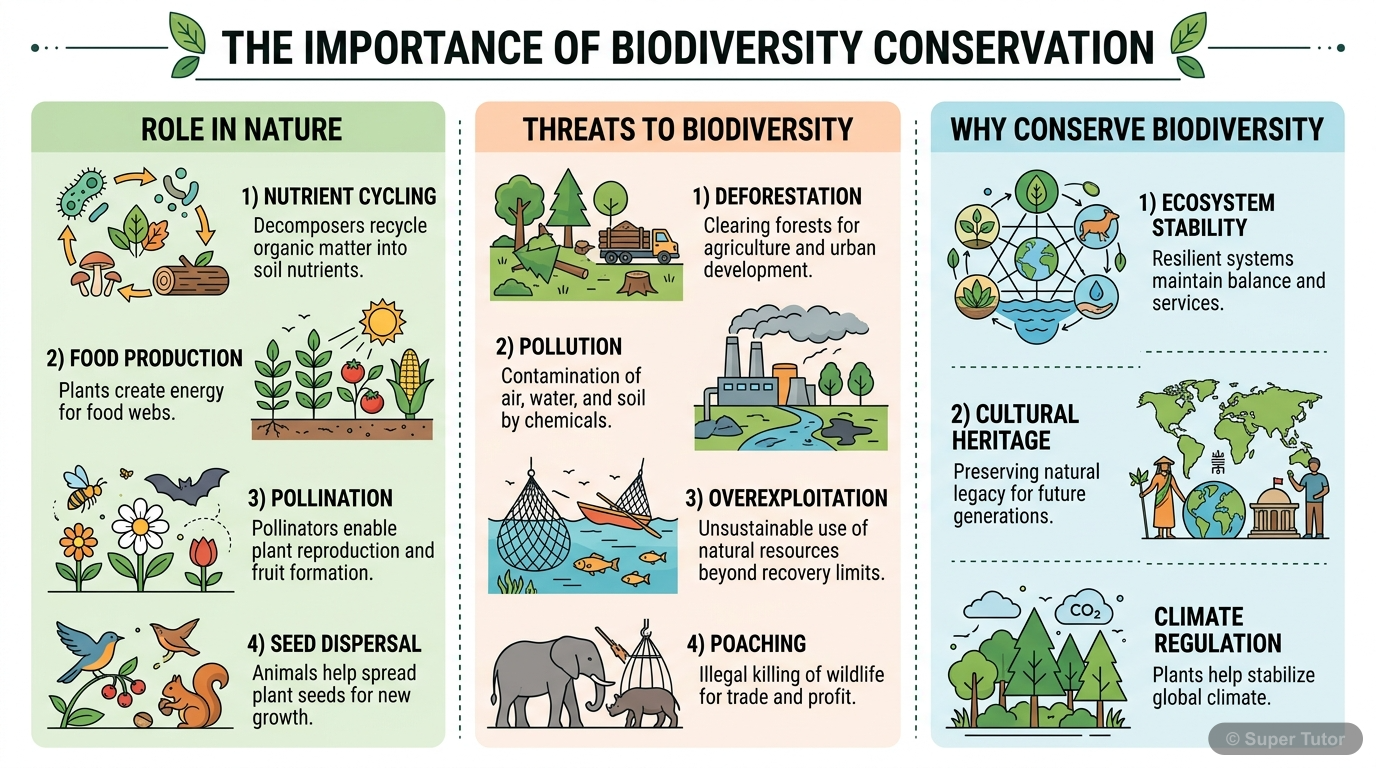
Learn better with visuals Super Tutor pairs illustrations like this with notes and quizzes for Bio-Diversity.
Biodiversity Components and Distribution
The map in words
- Biodiversity
- Genetic Diversity
- Variation within species
- Hereditary traits
- Species Diversity
- 45000 plant species
- Rich animal variety
- Endemic species
- Ecosystem Diversity
- Tropical Evergreen
- Western Ghats
- Northeast India
- Andaman Nicobar
- Tropical Deciduous
- Moist deciduous
- Dry deciduous
- Thorn Forests
- Rajasthan
- Semi-arid regions
- Tidal Forests
- Sundarbans
- Coastal deltas
- Himalayan Forests
- Alpine vegetation
- Temperate forests
- Tropical Evergreen
- Genetic Diversity
Bio-Diversity Chapter Overview
The map in words
- Bio-Diversity
- Concept
- Genetic Diversity
- Species Diversity
- Ecosystem Diversity
- India Statistics
- 8 percent global biodiversity
- 2.4 percent land area
- 45000 plant species
- Hotspots
- North Eastern Region
- Western Ghats
- Significance
- Provides Resources
- Food Water Fuel
- Medicine Shelter
- Ecological Balance
- Climate Regulation
- Disease Control
- Threats
- Population Growth
- Commercial Exploitation
- Deforestation
- Pollution
- Provides Resources
- Natural Vegetation
- Tropical Evergreen
- 200cm plus rainfall
- Western Ghats Assam
- Tropical Deciduous
- 75 to 200cm rainfall
- Most widespread
- Thorn Forests
- Less than 75cm
- Semi arid regions
- Tidal Forests
- Mangrove forests
- Coastal deltas
- Himalayan Forests
- Altitude based
- 1000 to 3800 meters
- Tropical Evergreen
- Wildlife Conservation
- Protected Areas
- 551 Wildlife Sanctuaries
- 96 National Parks
- 25 Wetlands
- 15 Biosphere Reserves
- Legal Framework
- Wildlife Protection Act 1972
- Project Tiger 1973
- Project Elephant 1992
- People Participation
- Community Conservation
- Traditional Knowledge
- Individual Actions
- Protected Areas
- Concept
Biodiversity Concept Overview
The map in words
- Biodiversity
- Definition
- Biological Diversity
- Variety of Life
- Genes Species Ecosystems
- Levels
- Genetic Diversity
- Species Diversity
- Ecosystem Diversity
- India Status
- Mega Diverse Country
- 2.4% Land Area
- 8% Global Biodiversity
- Two Hotspots
- Western Ghats
- North East Region
- Significance
- Life Support
- Food Water Medicine
- Climate Regulation
- Economic Value
- Threats
- Human Activities
- Deforestation
- Pollution
- Climate Change
- Conservation
- Protected Areas
- Community Participation
- Sustainable Development
- Definition
Bio-Diversity
The map in words
- Bio-Diversity
- Definition of biodiversity
- Status of biodiversity in India
- Significance of biodiversity
- Causes of biodiversity loss
- Natural vegetation of India
- Tropical Evergreen Forests
- Tropical Deciduous Forests
- Thorn Forests
Explore these maps interactively
Explore DiagramsFrequently Asked Questions
What are the important topics in Bio-Diversity for NIOS Class 10 Social Studies?
What do the concept maps for Bio-Diversity show?
How should I revise Bio-Diversity for the NIOS Class 10 board exam?
Sources & Official References
Content is aligned to the official syllabus. Refer to the board website for the latest curriculum.
More resources for Bio-Diversity
Practice Quiz
Test yourself with a quick quiz
Important Questions
Exam-style questions with answers
Revision Notes
Key points for last-minute revision
Chapter Summary
Understand the chapter at a glance
Study Plan
Step-by-step plan for this chapter
Flashcards
Quick-fire cards for active recall
Syllabus
What topics to cover
For serious students
Get the full Bio-Diversity chapter — start free.
Quizzes, flashcards, an AI doubt solver and a study plan for NIOS Class 10 Social Studies. Free to start, no card needed.