Bio-Diversity — Chapter Summary
NIOS · Class 10 · Social Studies
Summary of Bio-Diversity for NIOS Class 10 Social Studies. Key concepts: Biodiversity is the total, Genetic diversity refers and Species diversity is.
Interactive on Super Tutor
Studying Bio-Diversity? Get the full interactive chapter.
Quizzes, flashcards, AI doubt-solver and a step-by-step study plan — built for chapter summary and more.
Free trial, no card needed.
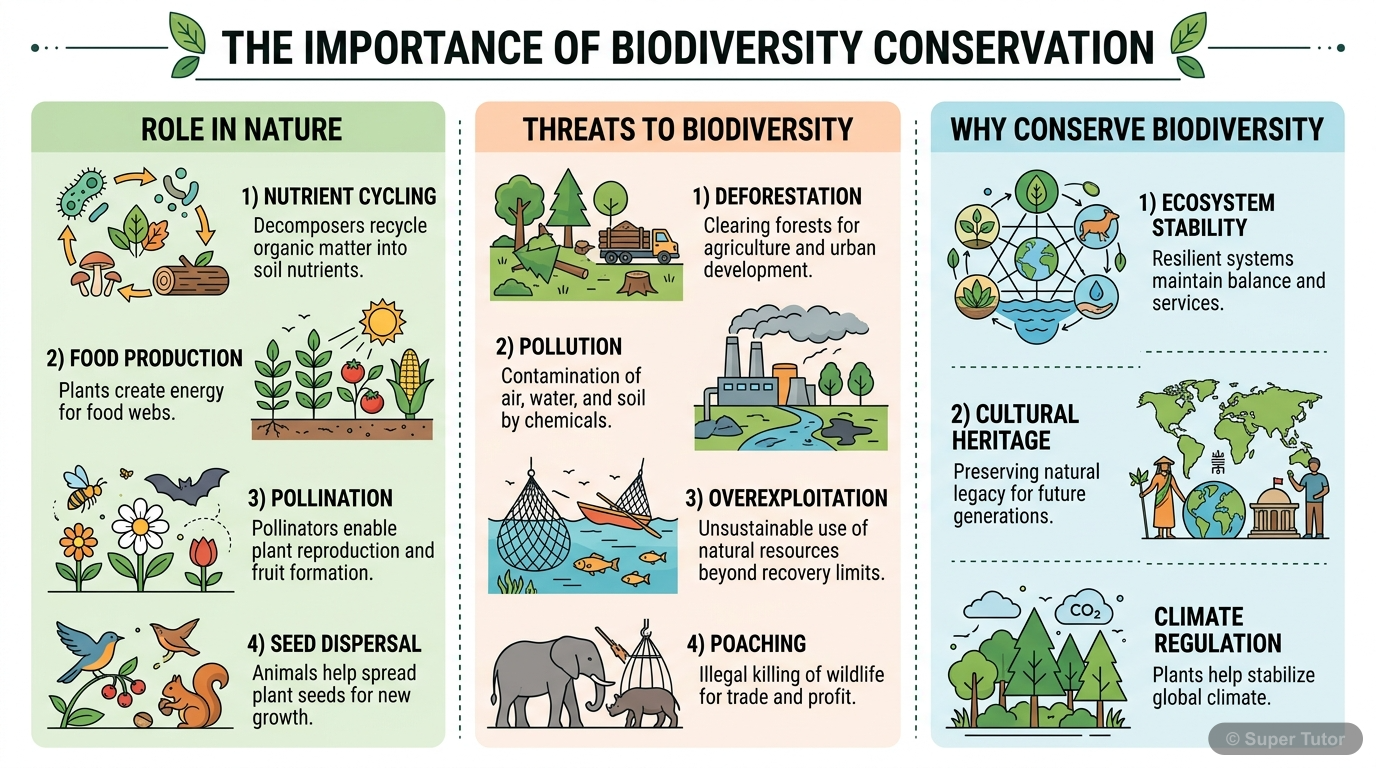
Learn better with visuals Super Tutor pairs illustrations like this with notes and quizzes for Bio-Diversity.
Overview
Biodiversity means the variety of life on Earth. It includes genes, species, ecosystems, plants, animals, and micro-organisms, along with the physical environment such as soil, water, and temperature. India is among the world’s mega biodiversity countries because it has a very rich variety of living
Key Concepts
Biodiversity is the total variety
Biodiversity is the total variety of life in a region. It includes genetic diversity, species diversity, and ecosystem diversity. It also includes the
Genetic diversity refers to differences
Genetic diversity refers to differences in genes within the same species. These differences help living organisms show variation in characteristics.
Species diversity is the variety
Species diversity is the variety of different species found in an area. A species is a group of very similar organisms that can interbreed.
Ecosystem diversity means the variety
Ecosystem diversity means the variety of ecosystems in a region. An ecosystem includes living and non-living components working together.
Mega biodiversity means a unique combination
Mega biodiversity means a unique combination of different plants and animal species that is not found anywhere else.
Learning Objectives
- Understand the meaning of biodiversity and its components
- Explain the status of biodiversity in India
- Describe the significance of biodiversity in nature and human life
- Identify major natural vegetation types of India
- Recognise important wildlife sanctuaries, national parks, wetlands, and biosphere reserves in India
Frequently Asked Questions
What are the important topics in Bio-Diversity for NIOS Class 10 Social Studies?
How should I revise Bio-Diversity for the NIOS Class 10 board exam?
Sources & Official References
Content is aligned to the official syllabus. Refer to the board website for the latest curriculum.
More resources for Bio-Diversity
For serious students
Get the full Bio-Diversity chapter — start free.
Quizzes, flashcards, an AI doubt solver and a study plan for NIOS Class 10 Social Studies. Free to start, no card needed.