Religious And Social Awakening In Colonial India — Concept Maps
NIOS · Class 10 · Social Studies
4 concept maps of Religious And Social Awakening In Colonial India for NIOS Class 10 Social Studies, each also written out as a text outline.
Interactive on Super Tutor
Studying Religious And Social Awakening In Colonial India? Get the full interactive chapter.
Quizzes, flashcards, AI doubt-solver and a step-by-step study plan — built for concept maps and more.
Free trial, no card needed.
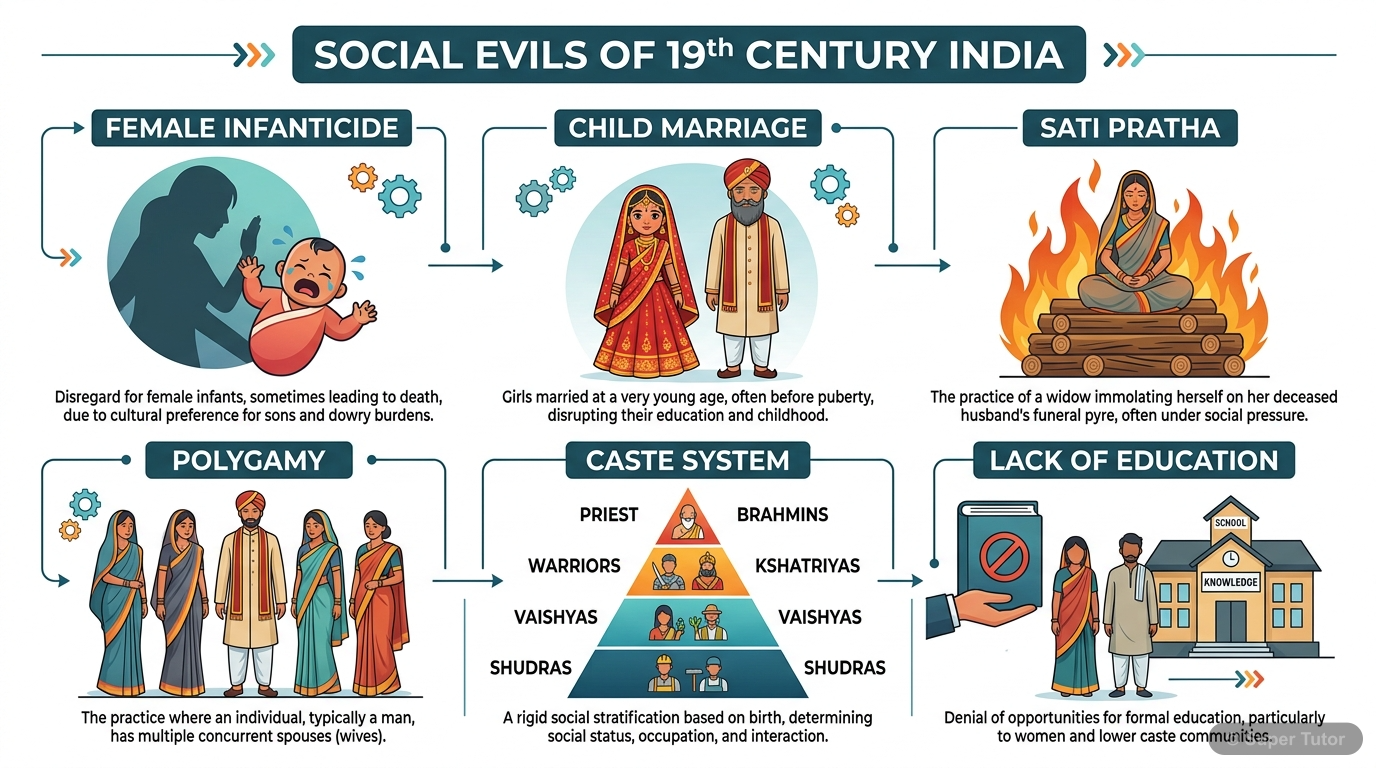
One of 4 illustrations for Religious And Social Awakening In Colonial India in Super Tutor — alongside flashcards, concept maps and practice questions.
Overview of Religious and Social Awakening in Colonial India
The map in words
- Social Religious Awakening
- Social Problems
- Sati Practice
- Child Marriage
- Caste Discrimination
- Women Subordination
- Lack of Education
- Reform Movements
- Brahmo Samaj
- Raja Ram Mohan Roy
- Monotheism
- Anti Sati Campaign
- Arya Samaj
- Dayanand Saraswati
- Vedic Authority
- DAV Schools
- Prarthana Samaj
- MG Ranade
- Social Reform
- Other Movements
- Ramakrishna Mission
- Aligarh Movement
- Akali Movement
- Brahmo Samaj
- Key Reformers
- Hindu Reformers
- Ram Mohan Roy
- Vidyasagar
- Jyotiba Phule
- Pandita Ramabai
- Muslim Reformers
- Syed Ahmed Khan
- Abdul Latif
- Women Reformers
- Savitribai Phule
- Annie Besant
- Hindu Reformers
- Impact
- Legal Changes
- Sati Abolition 1829
- Widow Remarriage 1856
- Sharda Act 1929
- Educational Progress
- Modern Schools
- Women Education
- Scientific Approach
- National Awakening
- Cultural Pride
- Unity in Diversity
- Freedom Movement
- Legal Changes
- Social Problems
Religious and Social Awakening - Complete Overview
The map in words
- Religious and Social Awakening
- Social Conditions
- Caste System
- Hereditary
- Exploitation
- Untouchability
- Women's Status
- Child Marriage
- Sati Pratha
- No Education
- No Property Rights
- Education
- Limited to Upper Castes
- Sanskrit Only
- No Science
- Religious Control
- Caste System
- Causes of Awakening
- Western Contact
- British Rule
- Missionary Criticism
- Modern Ideas
- Educated Indians
- Scripture Study
- Rational Thinking
- Reform Desire
- Western Contact
- Major Reformers
- Raja Ram Mohan Roy
- Brahmo Samaj
- Anti Sati
- Modern Education
- Vidyasagar
- Widow Remarriage
- Girls Education
- Dayanand Saraswati
- Arya Samaj
- Vedic Authority
- Vivekananda
- Ramakrishna Mission
- Self Confidence
- Syed Ahmed Khan
- Aligarh Movement
- Muslim Education
- Jyotiba Phule
- Satya Shodhak Samaj
- Caste Reform
- Raja Ram Mohan Roy
- Impact and Legacy
- Legal Reforms
- Sati Banned 1829
- Widow Remarriage 1856
- Sharda Act 1929
- Social Changes
- Women Education
- Caste Challenges
- National Unity
- Freedom Movement
- National Consciousness
- Women Participation
- United Struggle
- Legal Reforms
- Social Conditions
Religious and Social Awakening in Colonial India - Concept Overview
The map in words
- Religious and Social Awakening
- Social Problems
- Caste System
- Hereditary divisions
- Untouchability
- Limited opportunities
- Women's Issues
- Child marriage
- Sati pratha
- No education
- No property rights
- Education Gap
- Limited to upper castes
- No scientific knowledge
- Religious monopoly
- Caste System
- Reform Organizations
- Brahmo Samaj
- Raja Ram Mohan Roy
- Monotheism
- Social reform
- Arya Samaj
- Swami Dayanand
- Vedic authority
- Shuddhi movement
- Ramakrishna Mission
- Swami Vivekananda
- Spiritual awakening
- Universal religion
- Aligarh Movement
- Sir Syed Ahmed Khan
- Muslim education
- Modern curriculum
- Brahmo Samaj
- Key Reformers
- Raja Ram Mohan Roy
- Sati abolition
- Brahmo Samaj
- English education
- Ishwar Chandra Vidyasagar
- Widow remarriage
- Women's education
- Sanskrit College reform
- Jyotiba Phule
- Lower caste upliftment
- Girls education
- Satya Shodhak Samaj
- Pandita Ramabai
- Women's rights
- Widow rehabilitation
- Arya Mahila Samaj
- Raja Ram Mohan Roy
- Impact and Legacy
- Legal Changes
- Sati abolition 1829
- Widow Remarriage Act 1856
- Sharda Act 1929
- Social Changes
- Women's education
- Caste reform
- Rational thinking
- Political Impact
- Nationalism
- Freedom movement
- Self confidence
- Legal Changes
- Social Problems
Religious and social reform movements in colonial India changed society, challenged harmful practices, promoted modern education, and helped build social awareness and national consciousness.
The map in words
- Religious and social reform movements in colonial India changed society, challenged harmful practices, promoted modern education, and helped build social awareness and national consciousness.
- Problems in early 19th century Indian society
- Need for socio-religious reform
- Raja Ram Mohan Roy
- Ishwar Chandra Vidyasagar
- Swami Dayanand Saraswati and Arya Samaj
- Ramakrishna Paramhansa and Swami Vivekananda
- Sir Syed Ahmed Khan and Aligarh Movement
- Jyotirao Govindrao Phule and Savitribai Phule
Explore these maps interactively
Explore DiagramsFrequently Asked Questions
What are the important topics in Religious And Social Awakening In Colonial India for NIOS Class 10 Social Studies?
What do the concept maps for Religious And Social Awakening In Colonial India show?
How should I revise Religious And Social Awakening In Colonial India for the NIOS Class 10 board exam?
Sources & Official References
Content is aligned to the official syllabus. Refer to the board website for the latest curriculum.
More resources for Religious And Social Awakening In Colonial India
Practice Quiz
Test yourself with a quick quiz
Important Questions
Exam-style questions with answers
Revision Notes
Key points for last-minute revision
Chapter Summary
Understand the chapter at a glance
Study Plan
Step-by-step plan for this chapter
Flashcards
Quick-fire cards for active recall
Syllabus
What topics to cover
For serious students
Get the full Religious And Social Awakening In Colonial India chapter — start free.
Quizzes, flashcards, an AI doubt solver and a study plan for NIOS Class 10 Social Studies. Free to start, no card needed.