The Fundamental Unit of Life
Punjab Board · Class 9 · Science
Most important questions from The Fundamental Unit of Life for Punjab Board Class 9 Science board exam 2026. MCQs, short answer, and long answer questions with marks.
Interactive on Super Tutor
Studying The Fundamental Unit of Life? Get the full interactive chapter.
Quizzes, flashcards, AI doubt-solver and a step-by-step study plan — built for important questions and more.
1,000+ Class 9 students started this chapter today
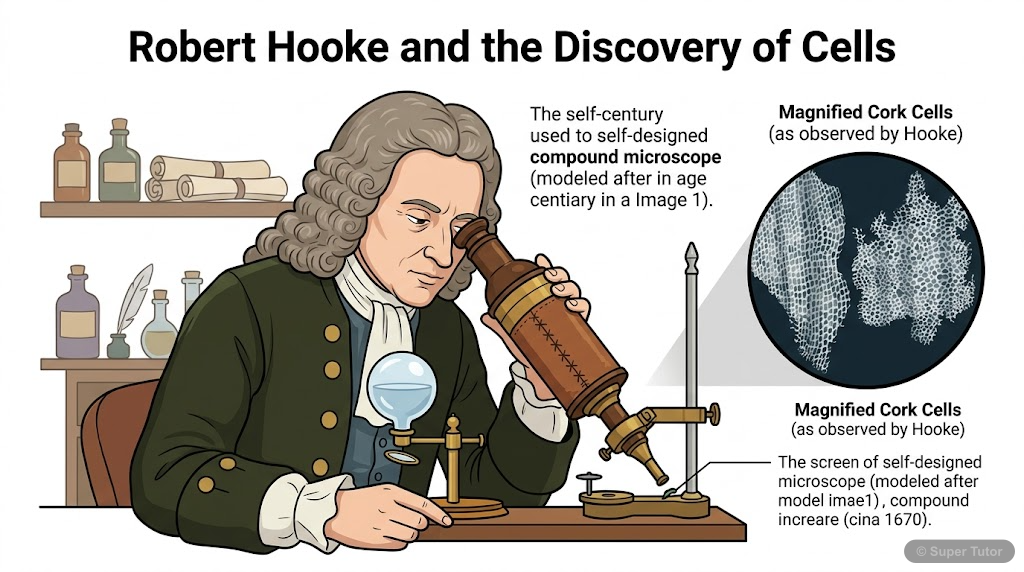
Learn better with visuals Super Tutor has hundreds of illustrations like this across every chapter — all free to try.
Get startedSample Questions
Which of the following statements CORRECTLY distinguishes prokaryotic cells from eukaryotic cells?
Show answer
Prokaryotic cells lack a membrane-bound nucleus and most membrane-bound organelles, while eukaryotic cells have both
Step 1: The key difference between prokaryotic and eukaryotic cells lies in the presence or absence of a membrane-bound nucleus. Step 2: Prokaryotic cells (like bacteria) have a nucleoid region – a poorly defined nuclear area with no nuclear membrane around the DNA. Step 3: Eukaryotic cells have a well-defined nucleus surrounded by a double-layered nuclear membrane. Step 4: Additionally, prokaryotic cells lack membrane-bound organelles such as mitochondria, ER, and Golgi apparatus. Step 5: Option A is wrong because plant cells (eukaryotic) DO have cell walls. Option C is wrong because eukaryot
The process of membrane biogenesis in a cell involves the formation of new cell membrane. Which TWO organelles are DIRECTLY responsible for membrane biogenesis?
Show answer
Smooth Endoplasmic Reticulum (SER) synthesises lipids and Rough Endoplasmic Reticulum (RER) synthesises proteins – both contribute to membrane formation
Step 1: The plasma membrane is made up of lipids and proteins. Step 2: The Smooth Endoplasmic Reticulum (SER) is responsible for synthesising fat molecules (lipids) required for cell membrane formation. Step 3: The Rough Endoplasmic Reticulum (RER) has ribosomes on its surface that synthesise proteins needed for the membrane. Step 4: Both these components – lipids from SER and proteins from RER – come together to build new membrane material. This process is called MEMBRANE BIOGENESIS. Step 5: The Golgi apparatus helps in modification and packaging but does not make membrane components by itsel
Lysosomes are called the 'suicide bags' of the cell. Under which of the following conditions would lysosomes MOST LIKELY cause autolysis (self-digestion of the cell)?
Show answer
When there is severe disturbance in cellular metabolism due to physical or chemical damage to the cell
Step 1: Lysosomes are membrane-bound sacs containing powerful digestive enzymes capable of breaking down all organic materials. Step 2: Under normal conditions, the lysosomal membrane keeps these enzymes safely contained and they perform routine tasks like digesting foreign materials and worn-out organelles. Step 3: When a cell undergoes severe stress – such as physical damage, chemical poisoning, or metabolic disturbance – the lysosomal membrane may rupture. Step 4: Once the membrane bursts, the powerful digestive enzymes are released into the cytoplasm and begin to digest the cell's own cont
Carbon dioxide (CO₂) produced inside a cell needs to exit the cell, while oxygen (O₂) needs to enter. Both gases move across the plasma membrane WITHOUT using any cellular energy. The mechanism responsible for this is:
Show answer
Diffusion – both gases move from regions of higher concentration to regions of lower concentration
Step 1: Diffusion is the spontaneous movement of a substance from a region of HIGH concentration to a region of LOW concentration – it requires NO energy. Step 2: CO₂ builds up to a HIGH concentration inside the cell (as a waste product of respiration). The concentration of CO₂ outside the cell is LOW. Therefore CO₂ diffuses OUT of the cell. Step 3: O₂ is consumed inside the cell for respiration, so its concentration inside becomes LOW. The concentration outside is HIGH. Therefore O₂ diffuses INTO the cell. Step 4: Osmosis (Option D) specifically refers to the diffusion of WATER molecules only
+41 more questions available
Practice AllFrequently Asked Questions
What are the important topics in The Fundamental Unit of Life for Punjab Board Class 9 Science?
How to score full marks in The Fundamental Unit of Life — Punjab Board Class 9 Science?
How many important questions are there in The Fundamental Unit of Life?
Sources & Official References
Content is aligned to the official syllabus. Refer to the board website for the latest curriculum.
More resources for The Fundamental Unit of Life
Practice Quiz
Test yourself with a quick quiz
Revision Notes
Key points for last-minute revision
Formula Sheet
All formulas in one place
Chapter Summary
Understand the chapter at a glance
Concept Maps
See how topics connect visually
Study Plan
Step-by-step plan to ace this chapter
Flashcards
Quick-fire cards for active recall
Syllabus
What topics to cover
NCERT Solutions
Every textbook question solved step by step
For serious students
Get the full The Fundamental Unit of Life chapter — for free.
Quizzes, flashcards, AI doubt-solver and a step-by-step study plan for Punjab Board Class 9 Science.