Magnetism and magnetic effects of electric current — Chapter Summary
Tamil Nadu Board · Class 12 · Physics
Summary of Magnetism and magnetic effects of electric current for Tamil Nadu Board Class 12 Physics. Magnetism is one of the most fascinating phenomena.
Interactive on Super Tutor
Studying Magnetism and magnetic effects of electric current? Get the full interactive chapter.
Quizzes, flashcards, AI doubt-solver and a step-by-step study plan — built for chapter summary and more.
Free trial, no card needed.
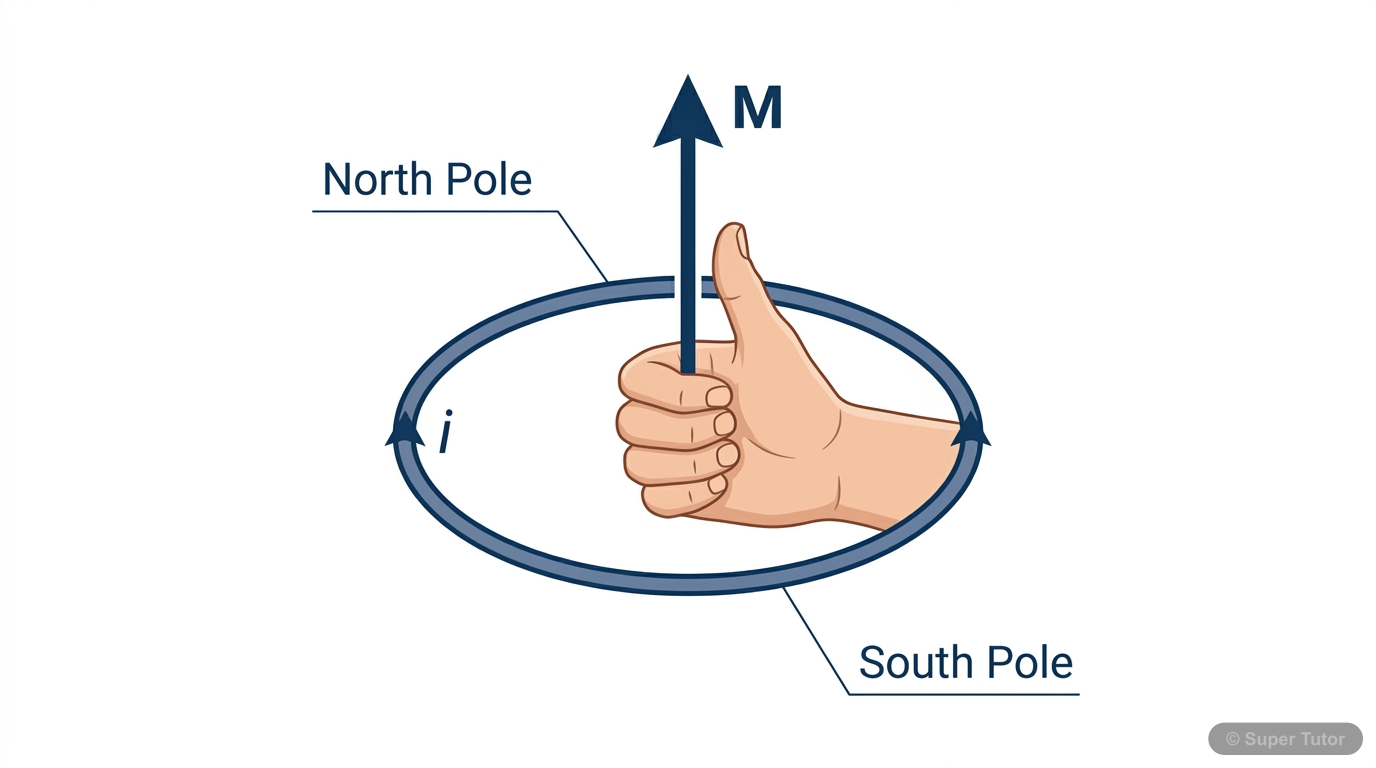
One of 3 illustrations for Magnetism and magnetic effects of electric current in Super Tutor — alongside flashcards, concept maps and practice questions.
Overview
Magnetism is one of the most fascinating phenomena in physics, deeply connected to our daily lives and modern technology. From the Earth's magnetic field that guides migratory birds to the electromagnets in your smartphone, magnetism surrounds us. This chapter unifies two seemingly different branche
Key Concepts
The Earth's magnetic field is completely
The Earth's magnetic field is completely described by three elements: (1) Magnetic declination (D) - the angle between magnetic meridian and geographi
Defined as the product of pole
Defined as the product of pole strength (q_m) and magnetic length (2l), expressed as p_m = q_m × 2l. It's a vector quantity pointing from south to nor
The force between two magnetic poles
The force between two magnetic poles is directly proportional to the product of their pole strengths and inversely proportional to the square of dista
For a short bar magnet (r
For a short bar magnet (r >> l): (1) Along axial line: B_axial = (μ₀/4π) × (2p_m/r³), pointing from S to N, and is stronger; (2) Along equatorial line
A magnetic dipole in uniform field
A magnetic dipole in uniform field experiences torque τ = p_m × B sin θ (vector form: τ = p_m × B). This torque tends to align the dipole with field.
Learning Objectives
- Understand Earth's magnetic field structure and its three fundamental elements: declination, inclination, and horizontal component
- Comprehend the concept of magnetic dipole moment and its significance in characterizing magnets
- Master Coulomb's inverse square law for magnetic poles and calculate forces between magnetic poles
- Apply Biot-Savart law to calculate magnetic fields produced by current-carrying conductors in various geometries
- Understand the behavior of charged particles moving in magnetic fields and apply concepts to cyclotrons and mass spectrometers
Frequently Asked Questions
What are the important topics in Magnetism and magnetic effects of electric current for Tamil Nadu Board Class 12 Physics?
How should I revise Magnetism and magnetic effects of electric current for the Tamil Nadu Board Class 12 board exam?
Sources & Official References
Content is aligned to the official syllabus. Refer to the board website for the latest curriculum.
More resources for Magnetism and magnetic effects of electric current
For serious students
Get the full Magnetism and magnetic effects of electric current chapter — start free.
Quizzes, flashcards, an AI doubt solver and a study plan for Tamil Nadu Board Class 12 Physics. Free to start, no card needed.