Chapter 8 of 8
Revision Notes
The Living Art Traditions of India — Revision Notes
CBSE · Class 12 · Fine Arts
The Living Art Traditions of India revision notes for CBSE Class 12 Fine Arts: 4 topics in quick points. Part of the CBSE Class 12 Fine Arts syllabus.
103 questions80 flashcards5 concepts
Interactive on Super Tutor
Studying The Living Art Traditions of India? Get the full interactive chapter.
Quizzes, flashcards, AI doubt-solver and a step-by-step study plan — built for revision notes and more.
Free trial, no card needed.
Super Tutor
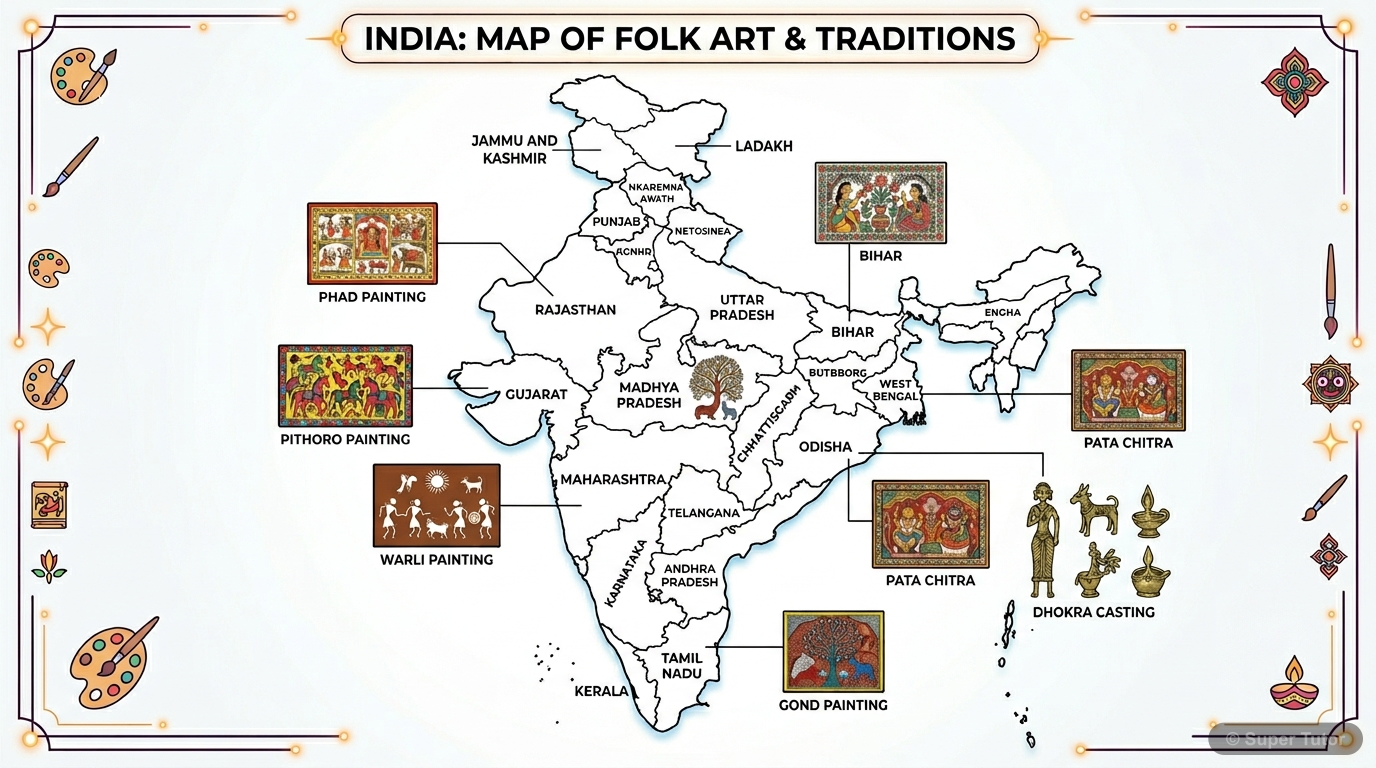
Learn better with visuals Super Tutor pairs illustrations like this with notes and quizzes for The Living Art Traditions of India.
Get startedKey Topics to Revise
1
1. Overview of Living Art Traditions
- These art forms have existed from time immemorial and reflect indigenous knowledge passed from one generation to another.
- They were created in forests, deserts, mountains, villages, and rural areas, often by artists who had never attended formal art school.
- Their materials are usually local and simple, such as clay, cloth, metal, rice flour, palm leaf, bamboo twigs, and organic colours.
2
2. Mithila or Madhubani Painting
- Mithila art derives its name from Mithila, the ancient Videha and birthplace of Sita.
- It is also called Madhubani painting after the nearest district capital.
- Traditionally, women painted figures and designs on mud house walls for ceremonial occasions, especially weddings.
3
3. Warli Painting
- The Warli community inhabits the west coast of Northern Maharashtra around the north Sahyadri range, with a large concentration in Thane district.
- Warli painting is closely associated with marriage, fertility, harvest, and the new season of sowing.
- Married women play a central role in creating the most important painting called Chowk.
4
4. Gond Painting
- Gond painting comes from the Gonds of Mandla and surrounding regions of Madhya Pradesh.
- These are votive geometric wall paintings done on the walls of huts.
- They portray Krishna with his cows surrounded by gopis.
Get complete notes with diagrams and examples
Full NotesKey Concepts
These are indigenous art forms practisedMithilaWarli painting belongs to the WarliGond painting comes from the GondsPithoro painting is practised by Rathva
Frequently Asked Questions
What are the important topics in The Living Art Traditions of India for CBSE Class 12 Fine Arts?
Key topics in The Living Art Traditions of India include Overview of Living Art Traditions, Mithila or Madhubani Painting, Warli Painting, Gond Painting. Study these first, then practise questions on each for the CBSE Class 12 board exam.
How should I revise The Living Art Traditions of India for the CBSE Class 12 board exam?
Learn the core ideas first, then work through the 103 practice questions on The Living Art Traditions of India. Revise definitions regularly and use flashcards for quick recall before the exam.
Sources & Official References
- NCERT Official — ncert.nic.in
- CBSE Academic — cbseacademic.nic.in
- CBSE Official — cbse.gov.in
- National Education Policy 2020 — education.gov.in
Content is aligned to the official syllabus. Refer to the board website for the latest curriculum.
More resources for The Living Art Traditions of India
For serious students
Get the full The Living Art Traditions of India chapter — start free.
Quizzes, flashcards, an AI doubt solver and a study plan for CBSE Class 12 Fine Arts. Free to start, no card needed.