The Living Art Traditions of India — Chapter Summary
CBSE · Class 12 · Fine Arts
Summary of The Living Art Traditions of India for CBSE Class 12 Fine Arts. Part of the CBSE Class 12 Fine Arts syllabus.
Interactive on Super Tutor
Studying The Living Art Traditions of India? Get the full interactive chapter.
Quizzes, flashcards, AI doubt-solver and a step-by-step study plan — built for chapter summary and more.
Free trial, no card needed.
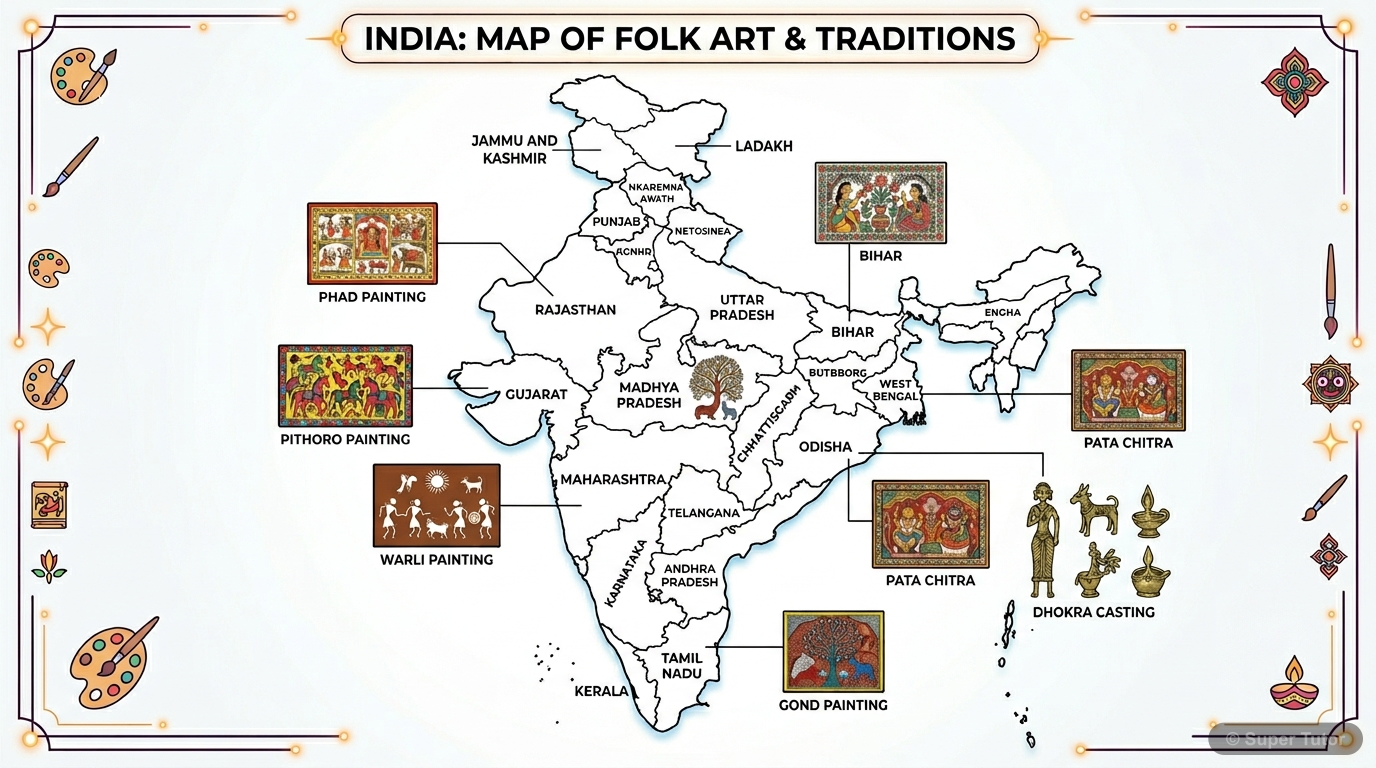
Learn better with visuals Super Tutor pairs illustrations like this with notes and quizzes for The Living Art Traditions of India.
Get startedOverview
India’s living art traditions come from everyday life, ritual practice, belief, and community memory. These traditions survive in villages, forests, deserts, hills, and coastal regions, where artists use local materials and inherited skills to create paintings, sculptures, scrolls, and votive object
Key Concepts
These are indigenous art forms practised
These are indigenous art forms practised by communities for ritual, daily, social, and decorative purposes. They include painting, scroll work, sculpt
Mithila
Mithila, also called Madhubani painting, comes from Mithila in Bihar, the ancient Videha and birthplace of Sita. Women traditionally painted mud house
Warli painting belongs to the Warli
Warli painting belongs to the Warli community of northern Maharashtra, especially the Thane region. Married women create the important Chowk painting
Gond painting comes from the Gonds
Gond painting comes from the Gonds of Mandla and surrounding regions of Madhya Pradesh. It began as votive geometric wall painting and now often appea
Pithoro painting is practised by Rathva
Pithoro painting is practised by Rathva Bhils in the Panchmahal region of Gujarat and Jhabua in Madhya Pradesh. It is painted on house walls during sp
Learning Objectives
- To understand the idea of living art traditions in India
- To identify major painting traditions such as Mithila, Warli, Gond, Pithoro, and Pata
- To understand the structure, themes, and materials of these art forms
- To recognise major sculptural traditions such as Dhokra and Terracotta
- To see how ritual, storytelling, and local belief shape artistic practice
Frequently Asked Questions
What are the important topics in The Living Art Traditions of India for CBSE Class 12 Fine Arts?
How should I revise The Living Art Traditions of India for the CBSE Class 12 board exam?
Sources & Official References
- NCERT Official — ncert.nic.in
- CBSE Academic — cbseacademic.nic.in
- CBSE Official — cbse.gov.in
- National Education Policy 2020 — education.gov.in
Content is aligned to the official syllabus. Refer to the board website for the latest curriculum.
More resources for The Living Art Traditions of India
For serious students
Get the full The Living Art Traditions of India chapter — start free.
Quizzes, flashcards, an AI doubt solver and a study plan for CBSE Class 12 Fine Arts. Free to start, no card needed.