Chapter 2 of 14
Revision Notes
Alternative Dispute Resolution in India (ADR) — Revision Notes
CBSE · Class 12 · Legal Studies
Alternative Dispute Resolution in India (ADR) revision notes for CBSE Class 12 Legal Studies: 4 topics in quick points.
5 concepts
Interactive on Super Tutor
Studying Alternative Dispute Resolution in India (ADR)? Get the full interactive chapter.
Quizzes, flashcards, AI doubt-solver and a step-by-step study plan — built for revision notes and more.
Free trial, no card needed.
Super Tutor
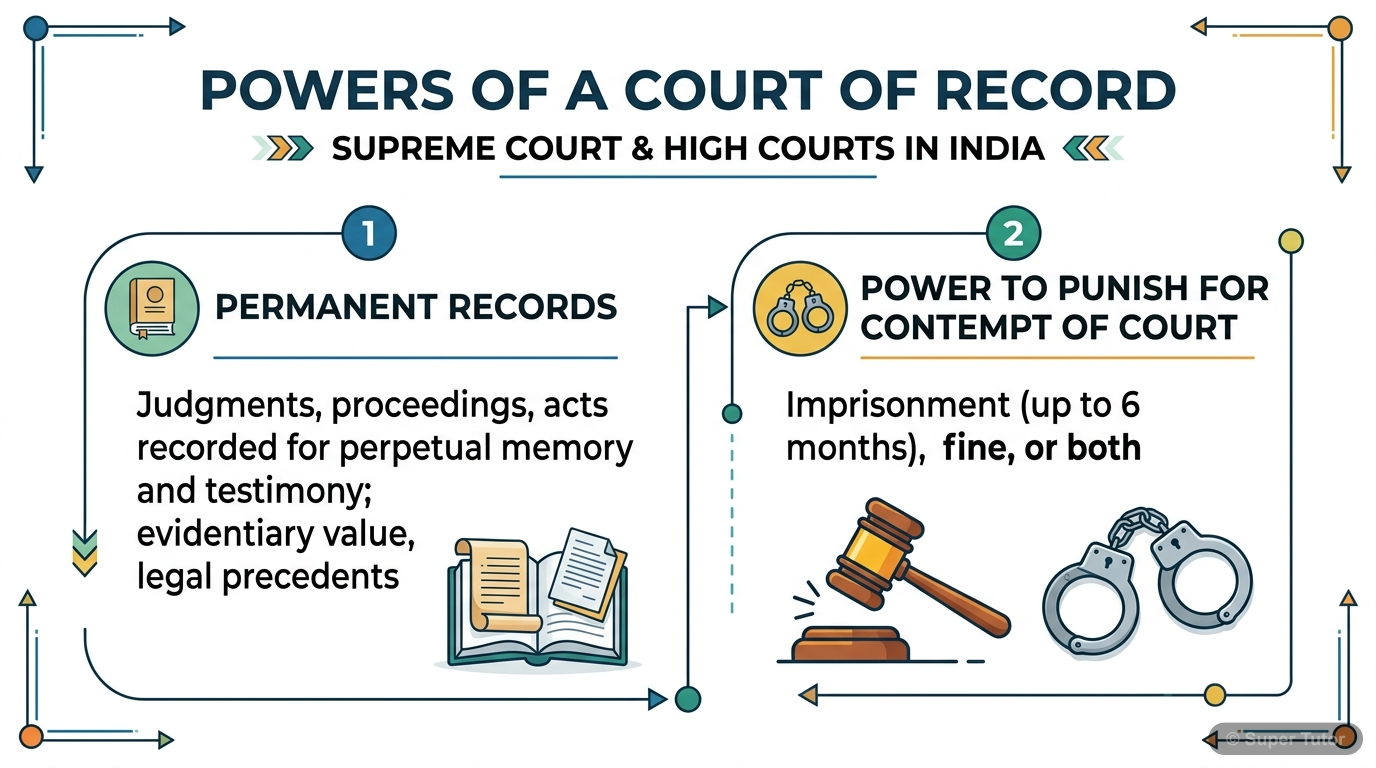
Learn better with visuals Super Tutor pairs illustrations like this with notes and quizzes for Alternative Dispute Resolution in India (ADR).
Key Topics to Revise
1
Adversarial vs Inquisitorial Systems
- Adversarial system: Parties develop their own case theory, lawyers play proactive roles, judges remain passive decision-makers
- Inquisitorial system: Judges take centre-stage, actively determine facts and evidence presentation methods
- India follows the adversarial system inherited from British colonial legal framework
2
Introduction to ADR and Court Problems
- ADR aims to provide alternatives to conventional court dispute resolution methods
- Historical roots in Vedic age institutions: Kula, Shreni, Puga tribunals
- Modern ADR gained statutory recognition through Arbitration and Conciliation Act, 1996 and Legal Services Authority Act, 1987
3
Benefits and Types of ADR
- Key benefits: Time-efficient, cost-effective, informal procedures, flexible timing and venue
- Technical expertise selection possible, non-lawyer neutrals allowed
- Direct party participation increases satisfaction and compliance
4
Arbitration
- Governed by Arbitration and Conciliation Act, 1996, influenced by UNCITRAL Model Law
- Process: Notice → Arbitrator selection → Statement of claim → Counter-claim → Proceedings → Award
- Types: Domestic, Foreign, Ad-hoc, Institutional, Statutory, International Commercial
Get complete notes with diagrams and examples
Full NotesKey Concepts
Adversarial systems rely on partiesADR encompasses nonA private dispute resolution process whereA facilitative process where a neutralSimilar to mediation but with
Frequently Asked Questions
What are the important topics in Alternative Dispute Resolution in India (ADR) for CBSE Class 12 Legal Studies?
Key topics in Alternative Dispute Resolution in India (ADR) include Adversarial vs Inquisitorial Systems, Introduction to ADR and Court Problems, Benefits and Types of ADR, Arbitration. Study these first, then practise questions on each for the CBSE Class 12 board exam.
Sources & Official References
- NCERT Official — ncert.nic.in
- CBSE Academic — cbseacademic.nic.in
- CBSE Official — cbse.gov.in
- National Education Policy 2020 — education.gov.in
Content is aligned to the official syllabus. Refer to the board website for the latest curriculum.
More resources for Alternative Dispute Resolution in India (ADR)
For serious students
Get the full Alternative Dispute Resolution in India (ADR) chapter — start free.
Quizzes, flashcards, an AI doubt solver and a study plan for CBSE Class 12 Legal Studies. Free to start, no card needed.