Chapter 1 of 14
Revision Notes
Judiciary — Revision Notes
CBSE · Class 12 · Legal Studies
Judiciary revision notes for CBSE Class 12 Legal Studies: 4 topics in quick points. Part of the CBSE Class 12 Legal Studies syllabus.
5 concepts
Interactive on Super Tutor
Studying Judiciary? Get the full interactive chapter.
Quizzes, flashcards, AI doubt-solver and a step-by-step study plan — built for revision notes and more.
Free trial, no card needed.
Super Tutor
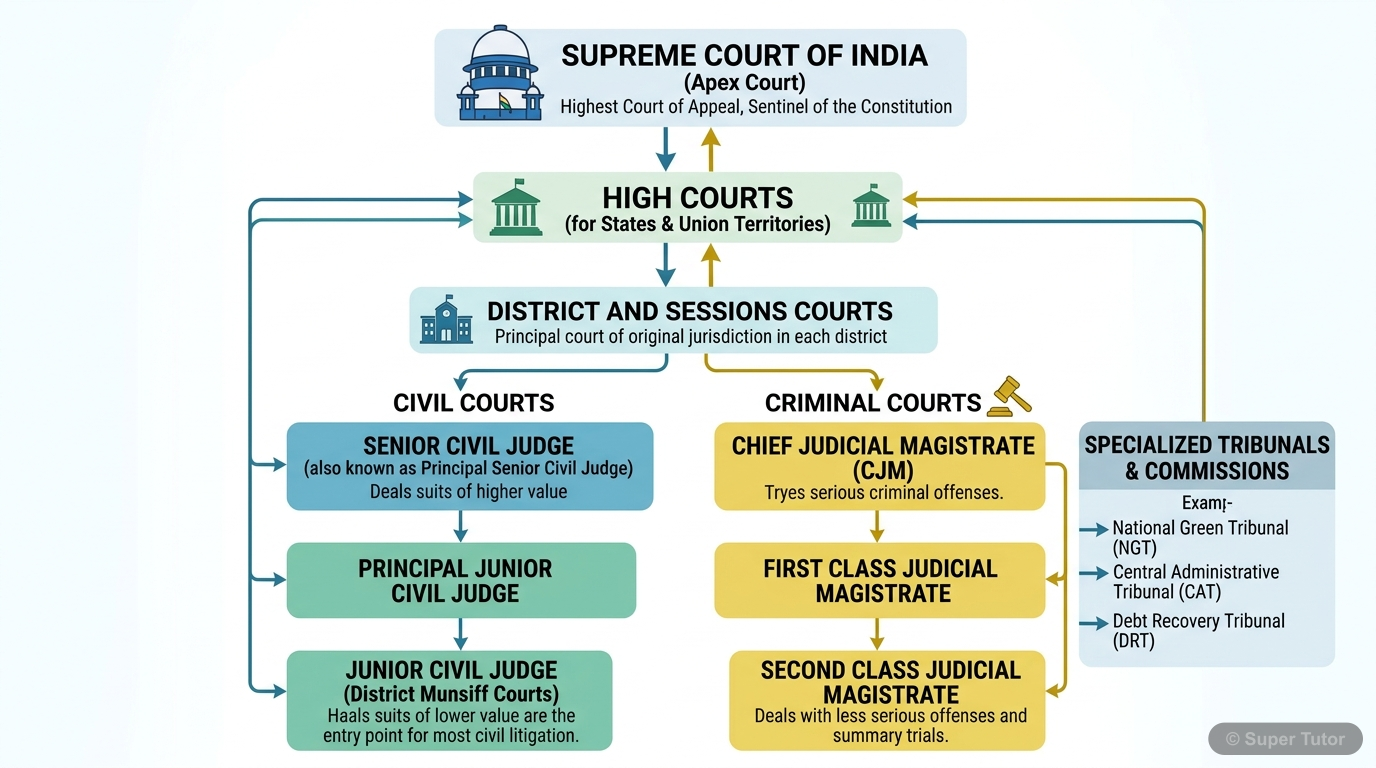
Learn better with visuals Super Tutor pairs illustrations like this with notes and quizzes for Judiciary.
Key Topics to Revise
1
Structure and Hierarchy of Indian Judiciary
- India follows a single integrated judicial system with Supreme Court at apex
- Three-tier structure: Supreme Court → High Courts → District and Subordinate Courts
- 25 High Courts serve states and union territories
2
Independence and Constitutional Safeguards
- Article 50 mandates separation of judiciary from executive
- Security of tenure until retirement age (SC: 65, HC: 62 years)
- Fixed salaries from Consolidated Fund, not subject to legislative vote
3
Supreme Court: Jurisdiction and Powers
- Original Jurisdiction (Article 131): Inter-state and Centre-state disputes
- Writ Jurisdiction (Article 32): Enforcement of fundamental rights
- Appellate Jurisdiction: Appeals from High Courts with substantial legal questions
4
Public Interest Litigation and Judicial Activism
- PIL allows public-spirited citizens to approach court on behalf of victims
- Relaxed locus standi for socially disadvantaged groups
- Suo moto powers allow courts to take cognizance independently
Get complete notes with diagrams and examples
Full NotesKey Concepts
The Indian judicial system followsConstitutional safeguards ensure judiciary's autonomy fromPower of courts to examineJudicial principle established in Kesavananda BharatiRelaxed procedure allowing any public
Frequently Asked Questions
What are the important topics in Judiciary for CBSE Class 12 Legal Studies?
Key topics in Judiciary include Structure and Hierarchy of Indian Judiciary, Independence and Constitutional Safeguards, Supreme Court: Jurisdiction and Powers, Public Interest Litigation and Judicial Activism. Study these first, then practise questions on each for the CBSE Class 12 board exam.
Sources & Official References
- NCERT Official — ncert.nic.in
- CBSE Academic — cbseacademic.nic.in
- CBSE Official — cbse.gov.in
- National Education Policy 2020 — education.gov.in
Content is aligned to the official syllabus. Refer to the board website for the latest curriculum.
More resources for Judiciary
For serious students
Get the full Judiciary chapter — start free.
Quizzes, flashcards, an AI doubt solver and a study plan for CBSE Class 12 Legal Studies. Free to start, no card needed.