Judiciary — Study Plan
CBSE · Class 12 · Legal Studies
A step-by-step study plan for Judiciary, CBSE Class 12 Legal Studies: what to learn first, what to practise and when to revise.
Interactive on Super Tutor
Studying Judiciary? Get the full interactive chapter.
Quizzes, flashcards, AI doubt-solver and a step-by-step study plan — built for study plan and more.
Free trial, no card needed.
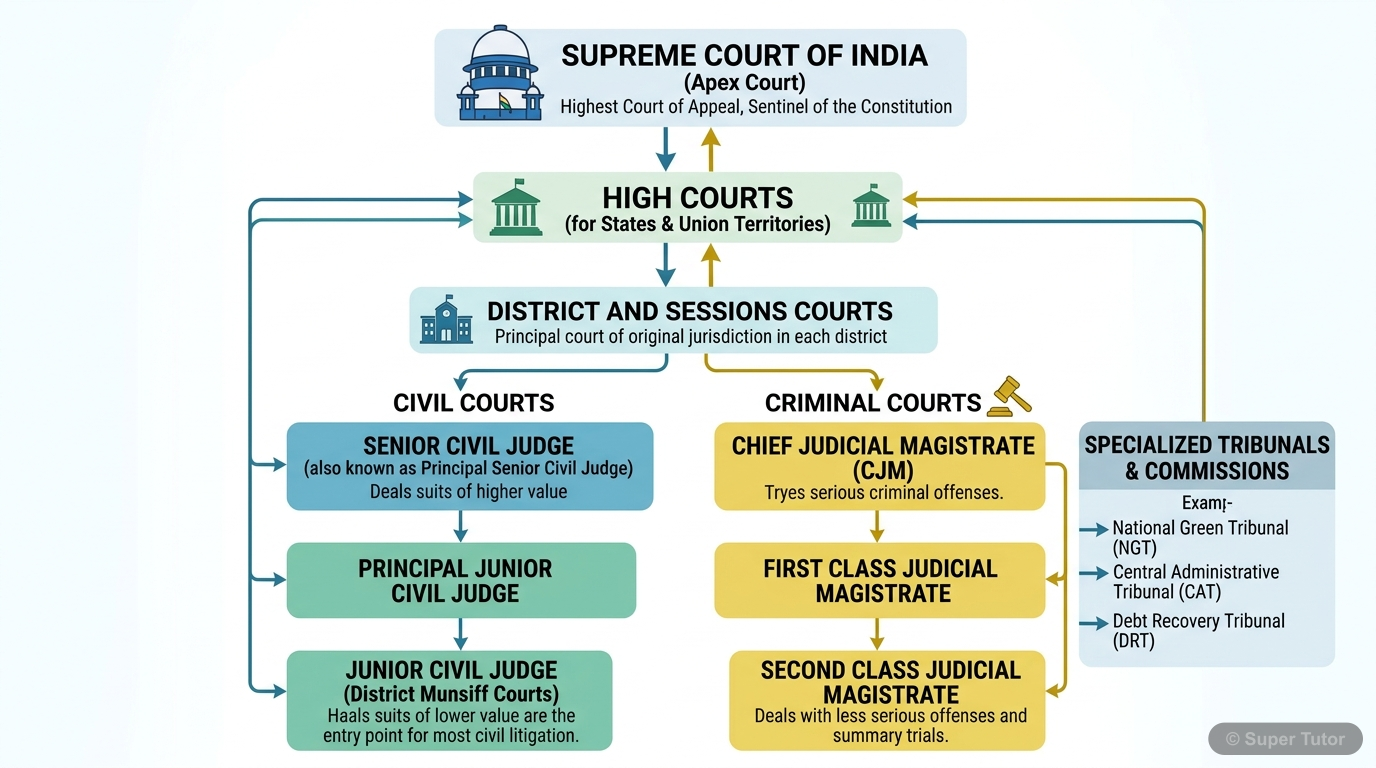
Learn better with visuals Super Tutor pairs illustrations like this with notes and quizzes for Judiciary.
Study Plan
Learn the Theory
Read the textbook chapter carefully. Note down definitions, formulas and key ideas. Focus on: Structure and Hierarchy of Indian Judiciary, Independence and Constitutional Safeguards, Supreme Court: Jurisdiction and Powers.
Practise
Solve the textbook exercises and extra practice questions.
Revise & Test
Revise key points without looking at your notes. Take a practice quiz and mark weak areas for another pass.
Spaced Revision
Come back to Judiciary after a week. Use flashcards for quick recall and try past exam questions on this chapter.
What to Focus On
- Supreme Court is the apex court with 34 judges including CJI
- 25 High Courts serve states and union territories
- District and Subordinate Courts form the lower judiciary
- Article 50 ensures separation of powers and judicial independence
- Security of tenure protects judges from external pressures
- Fixed salaries prevent financial manipulation
- Original jurisdiction for inter-governmental disputes
- Writ jurisdiction for fundamental rights protection
- Appellate jurisdiction for constitutional and legal questions
Common Mistakes to Avoid
The Supreme Court can directly hear any case from anywhere in India under its original jurisdiction
PIL can be filed for any public issue or personal grievance affecting multiple people
Judges can be removed easily if they make unpopular decisions or if there's public pressure
Memory Tips
Hierarchy of Indian Courts (Supreme Court → High Courts → District Courts → Subordinate Courts)
Five Types of Writs (Habeas Corpus, Mandamus, Prohibition, Quo Warranto, Certiorari)
Three Judges Cases and Collegium System Development
Basic Structure Doctrine Key Features
Want a personalised study plan?
Super Tutor builds a day-by-day plan for CBSE Class 12 Legal Studies that fits your exam date and pace.
Create My Study PlanFrequently Asked Questions
What are the important topics in Judiciary for CBSE Class 12 Legal Studies?
Sources & Official References
- NCERT Official — ncert.nic.in
- CBSE Academic — cbseacademic.nic.in
- CBSE Official — cbse.gov.in
- National Education Policy 2020 — education.gov.in
Content is aligned to the official syllabus. Refer to the board website for the latest curriculum.
More resources for Judiciary
For serious students
Get the full Judiciary chapter — start free.
Quizzes, flashcards, an AI doubt solver and a study plan for CBSE Class 12 Legal Studies. Free to start, no card needed.