Morphology of Flowering Plants — Practice Quiz
ICSE · Class 11 · Biology
Try a 4-question quiz on Morphology of Flowering Plants for ICSE Class 11 Biology: tap an answer to check it and see why.
Interactive on Super Tutor
Studying Morphology of Flowering Plants? Get the full interactive chapter.
Quizzes, flashcards, AI doubt-solver and a step-by-step study plan — built for practice quiz and more.
Free trial, no card needed.
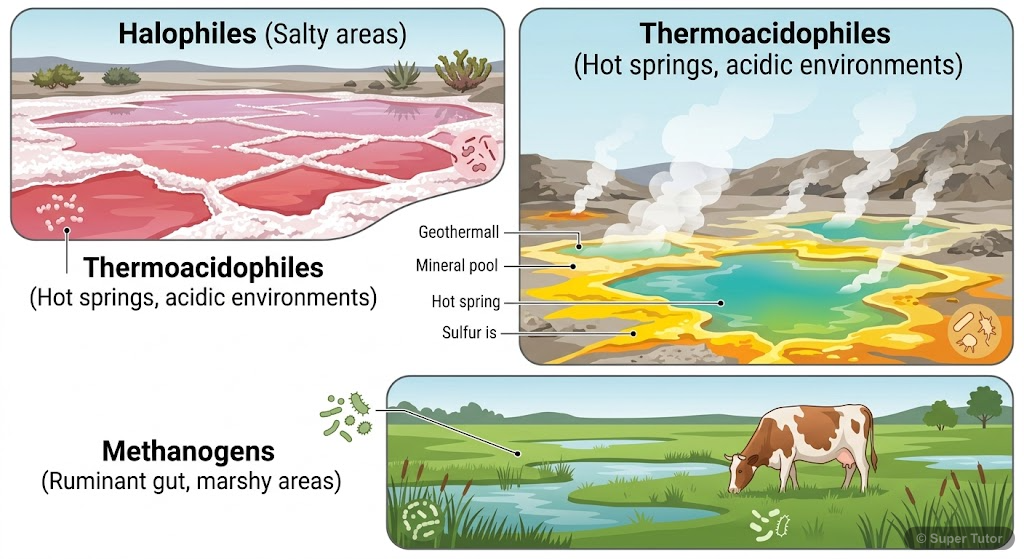
One of 19 illustrations for Morphology of Flowering Plants in Super Tutor — alongside flashcards, concept maps and practice questions.
Quick Quiz: Morphology of Flowering Plants
0/4Tap an answer to check it instantly. No sign-up needed for these 4.
What is the first structure to emerge from a germinating seed?
Which zone of the root is responsible for absorption of water and minerals?
Radish is an example of which type of root modification?
Which plant has a napiform root?
Sample Questions
Pneumatophores are found in which type of plants?
Show answer
Mangrove plants
Pneumatophores are negatively geotropic respiratory roots found in mangrove plants such as Avicennia, Ceriops, and Sonneratia. They grow upward in waterlogged, anaerobic (oxygen-poor) soil to absorb oxygen for respiration.
Potato is an example of which type of stem modification?
Show answer
Stem tuber
Potato (Solanum tuberosum) is a stem tuber — a swollen tip of an underground lateral branch of the stem. Evidence: it has nodes ('eyes') bearing axillary buds and scale leaf scars, which are characteristics of stems, not roots.
Which of the following is an example of a bulb?
Show answer
Onion
Onion (Allium cepa) is a bulb — a much reduced disc-shaped stem (basal plate) bearing tightly packed fleshy scale leaves that store food. Ginger is a rhizome; Colocasia is a corm; Potato is a tuber.
The type of venation found in monocot leaves is:
Show answer
Parallel venation
Monocot leaves have parallel venation — the veins run parallel to each other without forming a network. Examples: Grass, Banana, Maize, Sugarcane, Wheat. Reticulate venation (veins form a net-like network) is characteristic of dicots.
+101 more questions on Morphology of Flowering Plants (ICSE Class 11 Biology)
Practise AllFrequently Asked Questions
What are the important topics in Morphology of Flowering Plants for ICSE Class 11 Biology?
How many practice questions are there for Morphology of Flowering Plants?
Sources & Official References
Content is aligned to the official syllabus. Refer to the board website for the latest curriculum.
More resources for Morphology of Flowering Plants
Important Questions
Exam-style questions with answers
Revision Notes
Key points for last-minute revision
Chapter Summary
Understand the chapter at a glance
Concept Maps
See how topics connect
Study Plan
Step-by-step plan for this chapter
Flashcards
Quick-fire cards for active recall
Syllabus
What topics to cover
For serious students
Get the full Morphology of Flowering Plants chapter — start free.
Quizzes, flashcards, an AI doubt solver and a study plan for ICSE Class 11 Biology. Free to start, no card needed.