Alternating Current — Chapter Summary
ICSE · Class 12 · Physics
Summary of Alternating Current for ICSE Class 12 Physics. Key concepts: Alternating current changes, The mean value over one and The root.
Interactive on Super Tutor
Studying Alternating Current? Get the full interactive chapter.
Quizzes, flashcards, AI doubt-solver and a step-by-step study plan — built for chapter summary and more.
Free trial, no card needed.
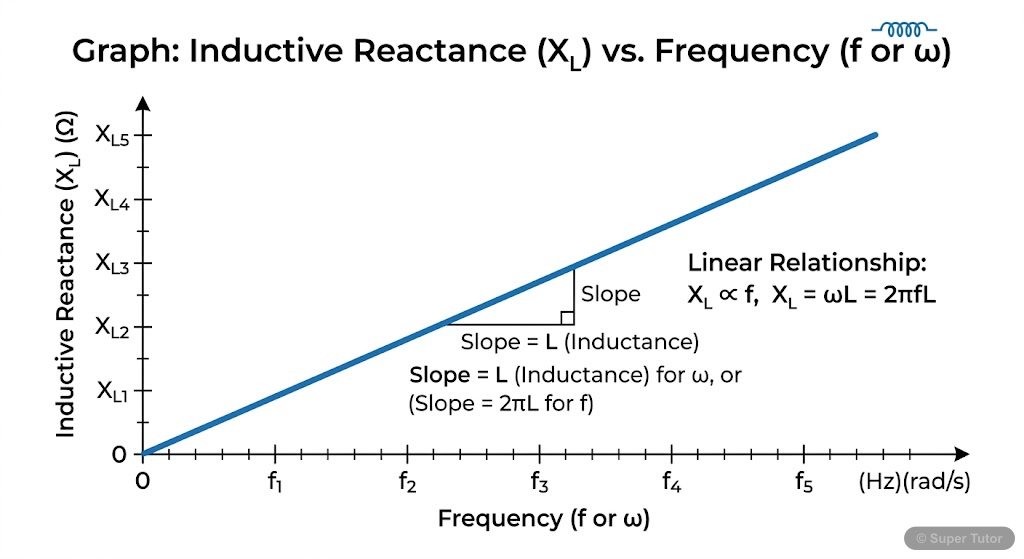
One of 5 illustrations for Alternating Current in Super Tutor — alongside flashcards, concept maps and practice questions.
Overview
Alternating current is an electric current whose magnitude and direction change periodically. A sinusoidal AC source is represented by I = I0 sin ωt, where I0 is the peak value and ω is angular frequency. Direct current remains constant in magnitude and direction, so AC and DC behave differently in
Key Concepts
Alternating current changes its direction
Alternating current changes its direction and magnitude periodically. For a sinusoidal source, I = I0 sin ωt and V = V0 sin ωt. The peak value is the
The mean value over one complete
The mean value over one complete cycle is zero because positive and negative halves cancel. Over a half cycle, Im = (2/π)I0 = 0.637 I0. The mean value
The root
The root-mean-square value is Irms = I0/√2 = 0.707 I0. It is the effective value of AC because it produces the same heating effect in a resistor as a
For sinusoidal AC
For sinusoidal AC, Irms = I0/√2. For square wave AC, Irms = I0. For triangular wave AC, Irms = I0/√3. These results depend on the waveform shape.
In a pure resistor
In a pure resistor, current is in phase with voltage. The average power is P = Vrms Irms. The current amplitude is I0 = V0/R and does not depend on fr
Learning Objectives
- Understand the meaning of alternating current, peak value, mean value, and rms value.
- Use I = I0 sin ωt and V = V0 sin ωt to describe sinusoidal AC.
- Relate periodic time, frequency, and angular frequency.
- Distinguish between resistive, inductive, and capacitive AC circuits using phase relations.
- Calculate inductive reactance, capacitive reactance, and impedance.
Frequently Asked Questions
What are the important topics in Alternating Current for ICSE Class 12 Physics?
How should I revise Alternating Current for the ICSE Class 12 board exam?
Sources & Official References
Content is aligned to the official syllabus. Refer to the board website for the latest curriculum.
More resources for Alternating Current
Practice Quiz
Test yourself with a quick quiz
Important Questions
Exam-style questions with answers
Revision Notes
Key points for last-minute revision
Formula Sheet
The chapter's formulas in one place
Concept Maps
See how topics connect
Study Plan
Step-by-step plan for this chapter
Flashcards
Quick-fire cards for active recall
Syllabus
What topics to cover
For serious students
Get the full Alternating Current chapter — start free.
Quizzes, flashcards, an AI doubt solver and a study plan for ICSE Class 12 Physics. Free to start, no card needed.