Reproduction In Humans — Chapter Summary
ICSE · Class 8 · Biology
Summary of Reproduction In Humans for ICSE Class 8 Biology. Key concepts: Reproduction is the process in, Asexual reproduction does not and In Amoeba.
Interactive on Super Tutor
Studying Reproduction In Humans? Get the full interactive chapter.
Quizzes, flashcards, AI doubt-solver and a step-by-step study plan — built for chapter summary and more.
Free trial, no card needed.
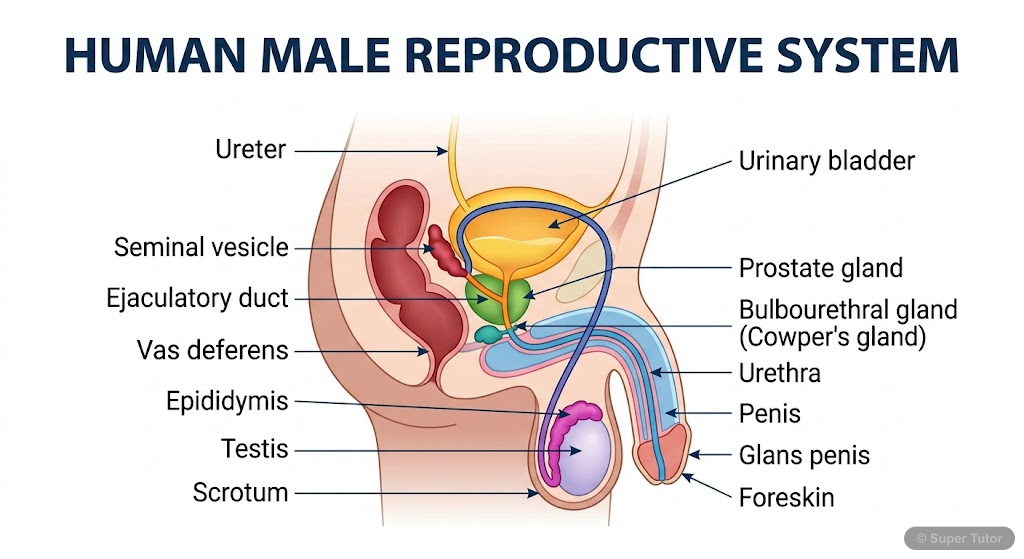
An illustration from Super Tutor's Reproduction In Humans chapter — alongside flashcards, concept maps and practice questions.
Overview
Reproduction is the process in which organisms give rise to new individuals of their own kind. It helps in the continuance of the species. In humans, reproduction is mainly sexual and involves the male and female reproductive systems. A few animals also show asexual reproduction, such as binary fiss
Key Concepts
Reproduction is the process in
Reproduction is the process in which organisms give rise to new individuals of their own kind. It maintains the species from one generation to the nex
Asexual reproduction does not involve eggs
Asexual reproduction does not involve eggs or sperms. It occurs in some simple animals. Amoeba reproduces by binary fission, Hydra by budding, and Pla
In Amoeba
In Amoeba, the parent cell divides into two daughter amoebae. The nucleus divides first, then the cytoplasm divides, and finally the two offspring sep
In Hydra
In Hydra, a small bud grows on the parent body. When the bud becomes large enough, it separates and lives independently.
Regeneration is the ability to regrow
Regeneration is the ability to regrow lost body parts. Hydra can regenerate when cut into 2-3 pieces, and Planaria can form young worms when cut into
Learning Objectives
- Understand the meaning of reproduction and its importance
- Differentiate between asexual and sexual reproduction
- Describe binary fission, budding, and regeneration in animals
- Identify the main parts of the male and female reproductive systems
- Explain fertilisation, zygote formation, implantation, growth, and birth
Frequently Asked Questions
What are the important topics in Reproduction In Humans for ICSE Class 8 Biology?
How should I revise Reproduction In Humans for Class 8 exams?
Sources & Official References
Content is aligned to the official syllabus. Refer to the board website for the latest curriculum.
More resources for Reproduction In Humans
For serious students
Get the full Reproduction In Humans chapter — start free.
Quizzes, flashcards, an AI doubt solver and a study plan for ICSE Class 8 Biology. Free to start, no card needed.