The Judiciary — Flashcards
ICSE · Class 8 · History & Civics
38 flashcards for The Judiciary (ICSE Class 8 History & Civics) to test yourself on key terms and facts. Sample: "What is the main role of the Judiciary?"
Interactive on Super Tutor
Studying The Judiciary? Get the full interactive chapter.
Quizzes, flashcards, AI doubt-solver and a step-by-step study plan — built for flashcards and more.
Free trial, no card needed.
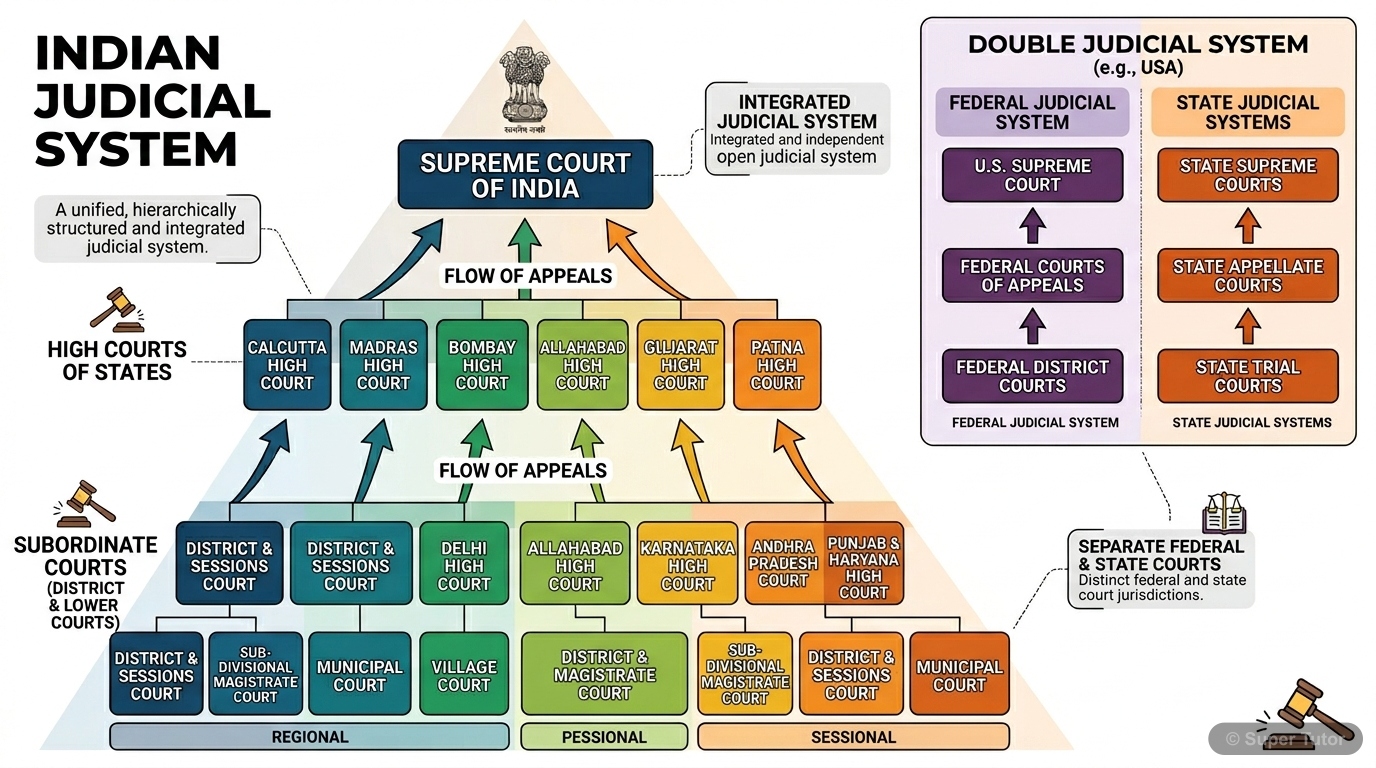
Learn better with visuals Super Tutor pairs illustrations like this with notes and quizzes for The Judiciary.
What is the main role of the Judiciary?
Answer
The Judiciary interprets or explains the meaning of laws and gives punishment to law breakers. It works separately from the legislature, which makes laws, and the executive, which carries them out.
Why is the judicial system of India described as a pyramid?
Answer
It is described as a pyramid because the Supreme Court is at the top, the High Courts are in the middle, and the District Courts and other Subordinate Courts are at the lower level.
What are Criminal Cases?
Answer
Criminal cases are cases involving theft, robbery, killing, physical injury, rioting, and similar offences. These cases deal with actions that break the law and harm people or society.
What are Civil Cases?
Answer
Civil cases are disputes related to property, marriage, contracts, and damage to goods. They usually concern private rights, family matters, or disagreements between people or groups.
What is the Supreme Court of India?
Answer
The Supreme Court of India is the top judicial set-up of the country and the apex court of the judicial system. It stands at the head of the judicial hierarchy.
How many judges are in the Supreme Court?
Answer
The Supreme Court consists of the Chief Justice and 33 other judges. The number is fixed by Parliament from time to time, so it can change.
Who appoints the Chief Justice of the Supreme Court?
Answer
The Chief Justice of the Supreme Court is appointed by the President of India.
How are other Supreme Court judges appointed?
Answer
Other Supreme Court judges are appointed by the President in consultation with the Chief Justice of the Supreme Court.
+30 more flashcards
Practise AllFrequently Asked Questions
What are the important topics in The Judiciary for ICSE Class 8 History & Civics?
How many flashcards are available for The Judiciary?
How should I revise The Judiciary for Class 8 exams?
Sources & Official References
Content is aligned to the official syllabus. Refer to the board website for the latest curriculum.
More resources for The Judiciary
Practice Quiz
Test yourself with a quick quiz
Important Questions
Exam-style questions with answers
Revision Notes
Key points for last-minute revision
Chapter Summary
Understand the chapter at a glance
Concept Maps
See how topics connect
Study Plan
Step-by-step plan for this chapter
Syllabus
What topics to cover
For serious students
Get the full The Judiciary chapter — start free.
Quizzes, flashcards, an AI doubt solver and a study plan for ICSE Class 8 History & Civics. Free to start, no card needed.