Practical Work — Chapter Summary
ICSE · Class 9 · Chemistry
Summary of Practical Work for ICSE Class 9 Chemistry. Key concepts: Hydrogen is colourless, Heating causes different and Reactive metals give hydrogen.
Interactive on Super Tutor
Studying Practical Work? Get the full interactive chapter.
Quizzes, flashcards, AI doubt-solver and a step-by-step study plan — built for chapter summary and more.
Free trial, no card needed.
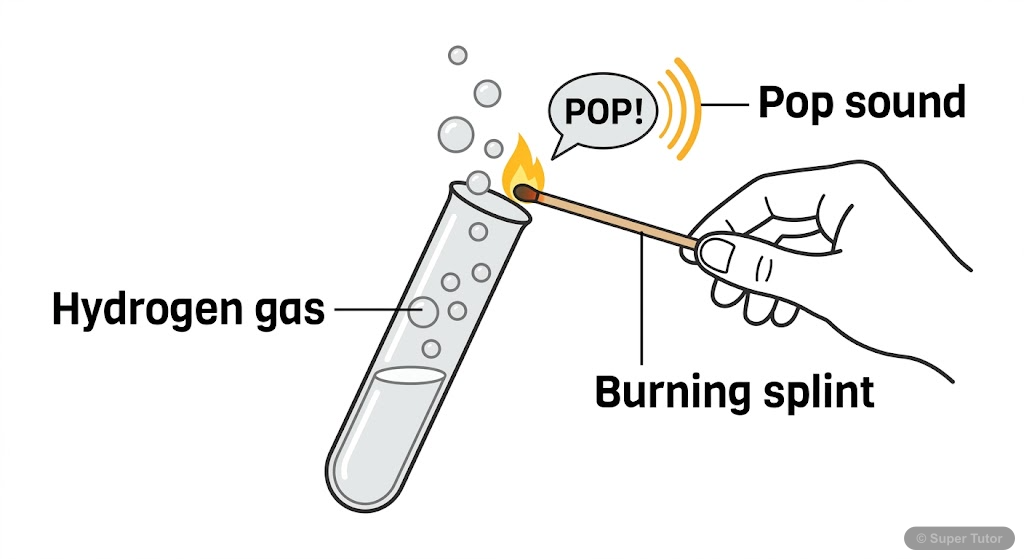
One of 20 illustrations for Practical Work in Super Tutor — alongside flashcards, concept maps and practice questions.
Overview
Practical work in chemistry focuses on observing changes in substances, identifying gases, studying the effect of heat, using flame tests, comparing hard water and soft water, and understanding the causes and control of water pollution. Careful observation of colour, smell, flame, residue, fumes, an
Key Concepts
Hydrogen is colourless
Hydrogen is colourless, odourless, neutral, burns with a pale blue flame, and gives a pop sound with a burning taper. Oxygen is colourless, odourless,
Heating causes different substances to change
Heating causes different substances to change in characteristic ways. Copper carbonate gives black copper oxide and carbon dioxide. Zinc carbonate giv
Reactive metals give hydrogen gas
Reactive metals give hydrogen gas with dilute acid. Carbonates and hydrogen carbonates give carbon dioxide. Sulphides give hydrogen sulphide. Sulphite
Sodium salts give a golden yellow
Sodium salts give a golden yellow persistent flame. Potassium salts give a violet or lilac flame. Calcium compounds give a brick red fugitive flame. C
Hard water contains dissolved bicarbonates
Hard water contains dissolved bicarbonates, sulphates, and chlorides of calcium and magnesium, and does not lather easily with soap. Soft water forms
Learning Objectives
- Recognise common gases by their colour, smell, and chemical tests
- Identify substances by the action of heat
- Use dilute sulphuric acid to test metals, carbonates, sulphides, and sulphites
- Perform flame tests to identify sodium, potassium, calcium, and copper compounds
- Distinguish hard water from soft water and temporary hardness from permanent hardness
Frequently Asked Questions
What are the important topics in Practical Work for ICSE Class 9 Chemistry?
How should I revise Practical Work for Class 9 exams?
Sources & Official References
Content is aligned to the official syllabus. Refer to the board website for the latest curriculum.
More resources for Practical Work
Practice Quiz
Test yourself with a quick quiz
Important Questions
Exam-style questions with answers
Revision Notes
Key points for last-minute revision
Formula Sheet
The chapter's formulas in one place
Concept Maps
See how topics connect
Study Plan
Step-by-step plan for this chapter
Flashcards
Quick-fire cards for active recall
Syllabus
What topics to cover
For serious students
Get the full Practical Work chapter — start free.
Quizzes, flashcards, an AI doubt solver and a study plan for ICSE Class 9 Chemistry. Free to start, no card needed.