Atmospheric Pollution — Syllabus
ICSE · Class 9 · Chemistry
What Atmospheric Pollution covers in ICSE Class 9 Chemistry: 4 topics, for the 2026-27 session. Part of the ICSE Class 9 Chemistry syllabus.
Interactive on Super Tutor
Studying Atmospheric Pollution? Get the full interactive chapter.
Quizzes, flashcards, AI doubt-solver and a step-by-step study plan — built for syllabus and more.
Free trial, no card needed.
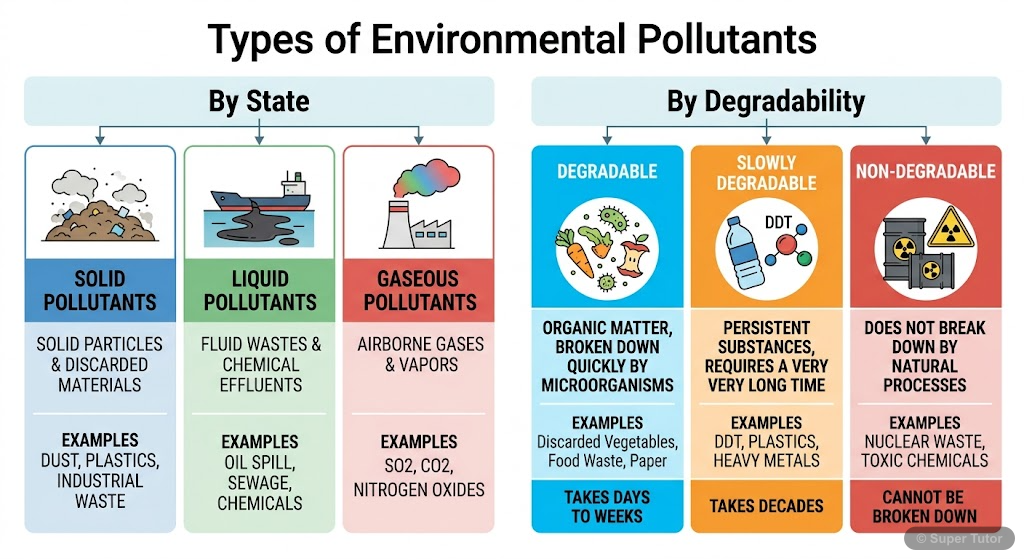
Learn better with visuals Super Tutor pairs illustrations like this with notes and quizzes for Atmospheric Pollution.
Topics in Atmospheric Pollution
1. Pollution and Air Pollution
- Environmental pollution is the effect of undesirable changes in our surroundings that have a harmful effect on plants, animals and human beings.
- Pollution is created by harmful substances generally produced by human beings, though nature also pollutes at times.
- Pollutants are toxic or harmful substances that contaminate and degrade the environment.
2. Sources of Air Pollutants
- Natural sources of air pollutants include volcanoes, decaying vegetation, forest fires, winds, and dust storms.
- Volcanoes release carbon monoxide, sulphur dioxide, hydrogen sulphide, chlorine, hydrogen chloride, hydrocarbons, and particulates.
- Microbial action on organic matter in soil releases nitrous oxide.
3. Important Air Pollutants and Their Harmful Effects
- Sulphur dioxide affects crop yield and causes damage to lungs.
- Hydrogen sulphide is produced by decaying organic matter, sewage, and certain industrial operations. It causes nausea, irritates the eyes and throat, and destroys vegetable matter because it is acidic
- Fluorides destroy vegetation and affect teeth and bones.
4. Oxides of Nitrogen and Oxides of Sulphur
- Oxides of nitrogen are formed at high temperatures in furnaces and internal combustion engines.
- Nitric oxide further reacts with atmospheric oxygen and ozone to form nitrogen dioxide.
- Nitrogen dioxide is harmful to plants and animals and causes irritation in the mucous membrane.
Key Concepts
Central concept: Atmospheric Pollution
Work through every topic in Atmospheric Pollution with notes and quizzes
Start This ChapterFrequently Asked Questions
What are the important topics in Atmospheric Pollution for ICSE Class 9 Chemistry?
How should I revise Atmospheric Pollution for Class 9 exams?
Sources & Official References
Content is aligned to the official syllabus. Refer to the board website for the latest curriculum.
More resources for Atmospheric Pollution
Practice Quiz
Test yourself with a quick quiz
Important Questions
Exam-style questions with answers
Revision Notes
Key points for last-minute revision
Formula Sheet
The chapter's formulas in one place
Chapter Summary
Understand the chapter at a glance
Concept Maps
See how topics connect
Study Plan
Step-by-step plan for this chapter
Flashcards
Quick-fire cards for active recall
For serious students
Get the full Atmospheric Pollution chapter — start free.
Quizzes, flashcards, an AI doubt solver and a study plan for ICSE Class 9 Chemistry. Free to start, no card needed.