Planning and Sustainable Development in Indian Context — Syllabus
Madhya Pradesh Board · Class 12 · Geography
What Planning and Sustainable Development in Indian Context covers in Madhya Pradesh Board Class 12 Geography: 4 topics, for the 2026-27 session.
Interactive on Super Tutor
Studying Planning and Sustainable Development in Indian Context? Get the full interactive chapter.
Quizzes, flashcards, AI doubt-solver and a step-by-step study plan — built for syllabus and more.
Free trial, no card needed.
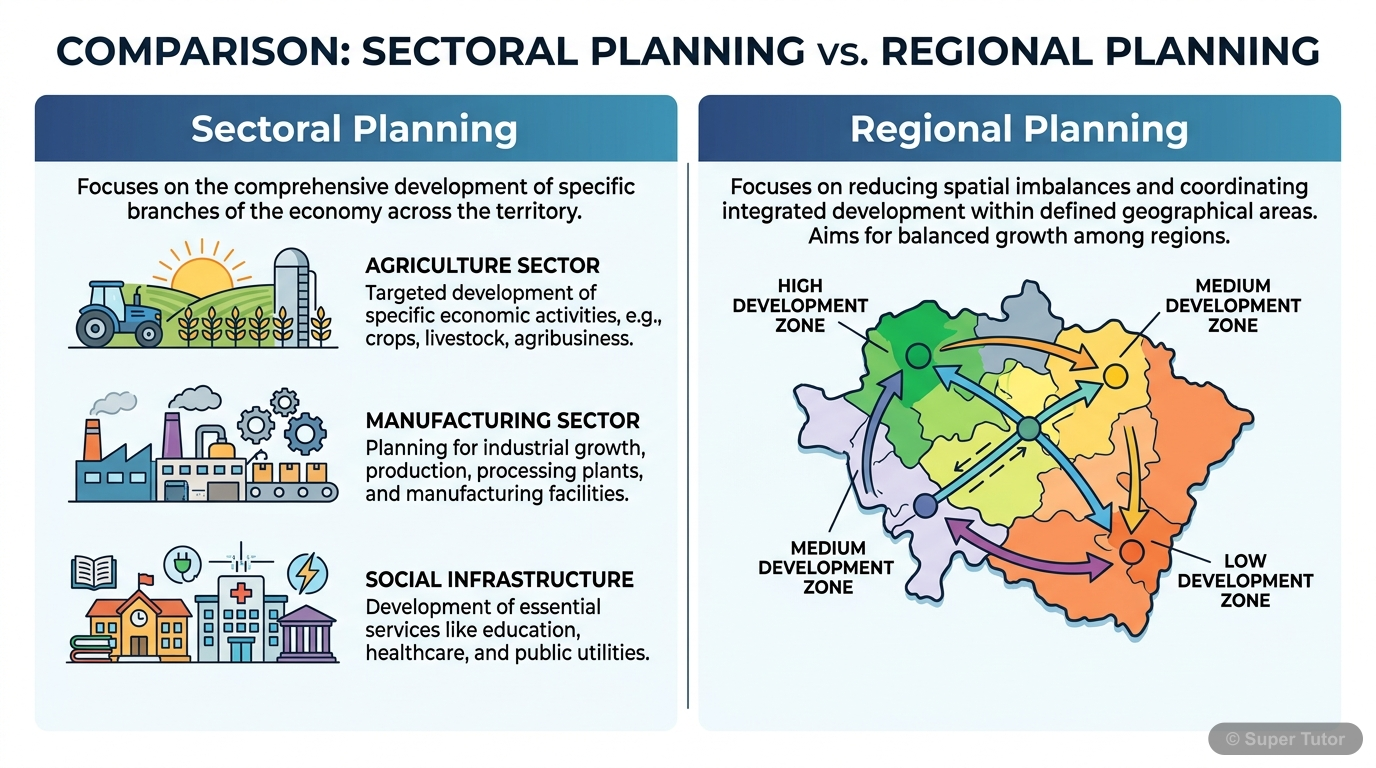
One of 10 illustrations for Planning and Sustainable Development in Indian Context in Super Tutor — alongside flashcards, concept maps and practice questions.
Topics in Planning and Sustainable Development in Indian Context
1. Meaning of Planning and NITI Aayog
- Planning is the process of thinking, formulating a scheme or programme, and implementing actions to achieve a goal.
- In economic development, planning is different from hit-and-miss methods because it is organised and goal-oriented.
- India adopted centralised planning after Independence.
2. Approaches to Planning
- There are two main approaches to planning: sectoral planning and regional planning.
- Sectoral planning deals with development of different sectors of the economy such as agriculture, irrigation, manufacturing, power, construction, transport, communication, social infrastructure and se
- Regional planning focuses on reducing spatial or regional imbalance in development.
3. Target Area Planning and Special Area Programmes
- Regional imbalance and social disparity led to target area and target group approaches to planning.
- Target area programmes were designed for backward or problem regions.
- Examples of target area programmes are Command Area Development Programme, Drought Prone Area Development Programme, Desert Development Programme and Hill Area Development Programme.
4. Hill Area Development Programme
- Hill Area Development Programmes were initiated during the Fifth Five Year Plan.
- They covered 15 districts, including hilly districts of Uttar Pradesh, Mikir Hill and North Cachar hills of Assam, Darjeeling district of West Bengal and Nilgiri district of Tamil Nadu.
- Backward hill areas are those above 600 m height and not covered under tribal sub-plan.
Key Concepts
Central concept: Planning and sustainable development in India as linked processes of economic development, regional balance, social justice, and ecological balance
Work through every topic in Planning and Sustainable Development in Indian Context with notes and quizzes
Start This ChapterFrequently Asked Questions
What are the important topics in Planning and Sustainable Development in Indian Context for Madhya Pradesh Board Class 12 Geography?
How should I revise Planning and Sustainable Development in Indian Context for the Madhya Pradesh Board Class 12 board exam?
Sources & Official References
Content is aligned to the official syllabus. Refer to the board website for the latest curriculum.
More resources for Planning and Sustainable Development in Indian Context
Practice Quiz
Test yourself with a quick quiz
Important Questions
Exam-style questions with answers
Revision Notes
Key points for last-minute revision
Chapter Summary
Understand the chapter at a glance
Concept Maps
See how topics connect
Study Plan
Step-by-step plan for this chapter
Flashcards
Quick-fire cards for active recall
NCERT Solutions
Every textbook question solved step by step
For serious students
Get the full Planning and Sustainable Development in Indian Context chapter — start free.
Quizzes, flashcards, an AI doubt solver and a study plan for Madhya Pradesh Board Class 12 Geography. Free to start, no card needed.