Natural Environment — Flashcards
NIOS · Class 10 · Science & Tech
38 flashcards for Natural Environment (NIOS Class 10 Science & Tech) to test yourself on key terms and facts. Sample: "What is an ecosystem?"
Interactive on Super Tutor
Studying Natural Environment? Get the full interactive chapter.
Quizzes, flashcards, AI doubt-solver and a step-by-step study plan — built for flashcards and more.
Free trial, no card needed.
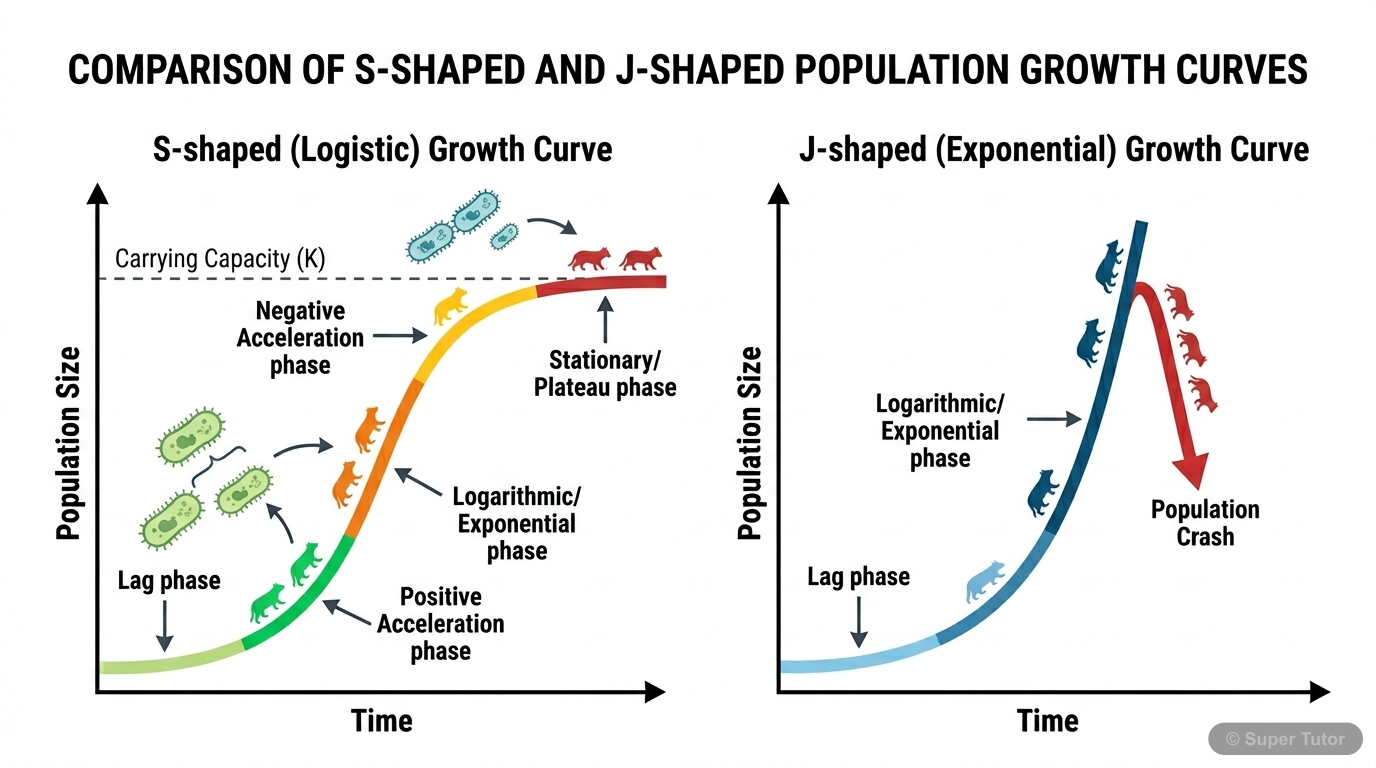
Learn better with visuals Super Tutor pairs illustrations like this with notes and quizzes for Natural Environment.
What is an ecosystem?
Answer
An ecosystem is a biological environment consisting of all organisms living in a particular area, along with the non-living physical components with which they interact.
Who put forward the concept of ecosystem and when?
Answer
A.G. Tansley put forward the concept of ecosystem in 1935.
What is the origin of the word ecosystem?
Answer
The word ecosystem is derived from the Greek words oikos meaning home and systema meaning system.
How are ecosystems classified?
Answer
An ecosystem can be natural or human-designed. Natural ecosystems exist in nature, while human-designed ecosystems are artificial ecosystems such as gardens, aquariums, and crop fields.
Give one example of a terrestrial ecosystem and one example of an aquatic ecosystem.
Answer
Grasslands and deserts are terrestrial ecosystems. Rivers, ponds, and oceans are aquatic ecosystems.
What are abiotic components of an ecosystem?
Answer
Abiotic components are the non-living physical and chemical factors in an ecosystem, such as sunlight, temperature, water, soil, air, and moisture.
What are biotic components of an ecosystem?
Answer
Biotic components are the living organisms in an ecosystem, including plants, animals, and microorganisms.
Why are plants called producers?
Answer
Plants are called producers because they manufacture their own food by photosynthesis. In some cases, certain bacteria also produce food by chemosynthesis. Producers form the basis of any biotic syste…
+30 more flashcards
Practise AllFrequently Asked Questions
What are the important topics in Natural Environment for NIOS Class 10 Science & Tech?
How many flashcards are available for Natural Environment?
How should I revise Natural Environment for the NIOS Class 10 board exam?
Sources & Official References
Content is aligned to the official syllabus. Refer to the board website for the latest curriculum.
More resources for Natural Environment
Practice Quiz
Test yourself with a quick quiz
Important Questions
Exam-style questions with answers
Revision Notes
Key points for last-minute revision
Chapter Summary
Understand the chapter at a glance
Concept Maps
See how topics connect
Study Plan
Step-by-step plan for this chapter
Syllabus
What topics to cover
For serious students
Get the full Natural Environment chapter — start free.
Quizzes, flashcards, an AI doubt solver and a study plan for NIOS Class 10 Science & Tech. Free to start, no card needed.