Constitutional Values And Political System In India — Study Plan
NIOS · Class 10 · Social Studies
A step-by-step study plan for Constitutional Values And Political System In India, NIOS Class 10 Social Studies: what to learn first, what to practise.
Interactive on Super Tutor
Studying Constitutional Values And Political System In India? Get the full interactive chapter.
Quizzes, flashcards, AI doubt-solver and a step-by-step study plan — built for study plan and more.
Free trial, no card needed.
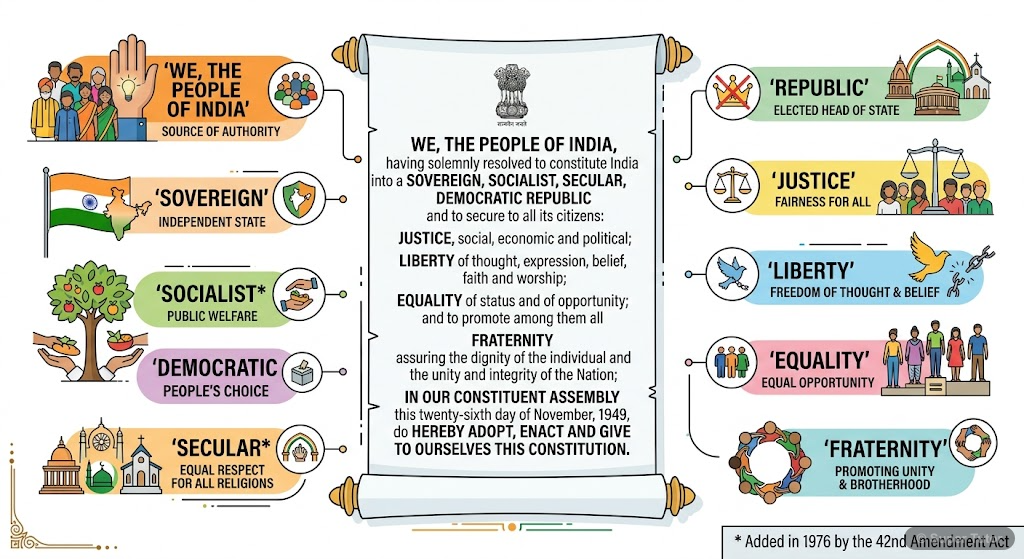
One of 6 illustrations for Constitutional Values And Political System In India in Super Tutor — alongside flashcards, concept maps and practice questions.
Study Plan
Learn the Theory
Read the textbook chapter carefully. Note down definitions, formulas and key ideas. Focus on: 1. Meaning of Constitution and the Indian Constitution, 2. Constitutional Values in the Preamble, 3. Salient Features of the Constitution.
Practise
Solve the textbook exercises and extra practice questions. There are 85 questions available for this chapter.
Revise & Test
Revise key points without looking at your notes. Take a practice quiz and mark weak areas for another pass.
Spaced Revision
Come back to Constitutional Values And Political System In India after a week. Use flashcards for quick recall and try past exam questions on this chapter.
What to Focus On
- Constitution means fundamental principles, basic rules and established precedents.
- It regulates the executive, legislature and judiciary.
- It gives rights to citizens and defines the relation between citizen and State.
- The Constituent Assembly prepared the Constitution.
- Work began on 9 December 1946.
- Dr. Rajendra Prasad was elected President on 11 December 1946.
- The Constitution has 395 Articles, 22 Parts, 12 Schedules and 5 Appendices.
- It declares India a sovereign, democratic, socialist and secular republic.
- It covers rights, duties, citizenship and government structure.
Common Mistakes to Avoid
India is described in the Constitution as a federal state.
The President of India is the real executive because all executive power is vested in the President.
The Prime Minister is chosen by direct election by all citizens.
Memory Tips
Meaning of Constitution
Indian Constitution as a living document
Longest written constitution
Key dates in Constitution making
Want a personalised study plan?
Super Tutor builds a day-by-day plan for NIOS Class 10 Social Studies that fits your exam date and pace.
Create My Study PlanFrequently Asked Questions
What are the important topics in Constitutional Values And Political System In India for NIOS Class 10 Social Studies?
How should I revise Constitutional Values And Political System In India for the NIOS Class 10 board exam?
Sources & Official References
Content is aligned to the official syllabus. Refer to the board website for the latest curriculum.
More resources for Constitutional Values And Political System In India
Practice Quiz
Test yourself with a quick quiz
Important Questions
Exam-style questions with answers
Revision Notes
Key points for last-minute revision
Chapter Summary
Understand the chapter at a glance
Concept Maps
See how topics connect
Flashcards
Quick-fire cards for active recall
Syllabus
What topics to cover
For serious students
Get the full Constitutional Values And Political System In India chapter — start free.
Quizzes, flashcards, an AI doubt solver and a study plan for NIOS Class 10 Social Studies. Free to start, no card needed.