Modern World-I — Study Plan
NIOS · Class 10 · Social Studies
A step-by-step study plan for Modern World-I, NIOS Class 10 Social Studies: what to learn first, what to practise and when to revise.
Interactive on Super Tutor
Studying Modern World-I? Get the full interactive chapter.
Quizzes, flashcards, AI doubt-solver and a step-by-step study plan — built for study plan and more.
Free trial, no card needed.
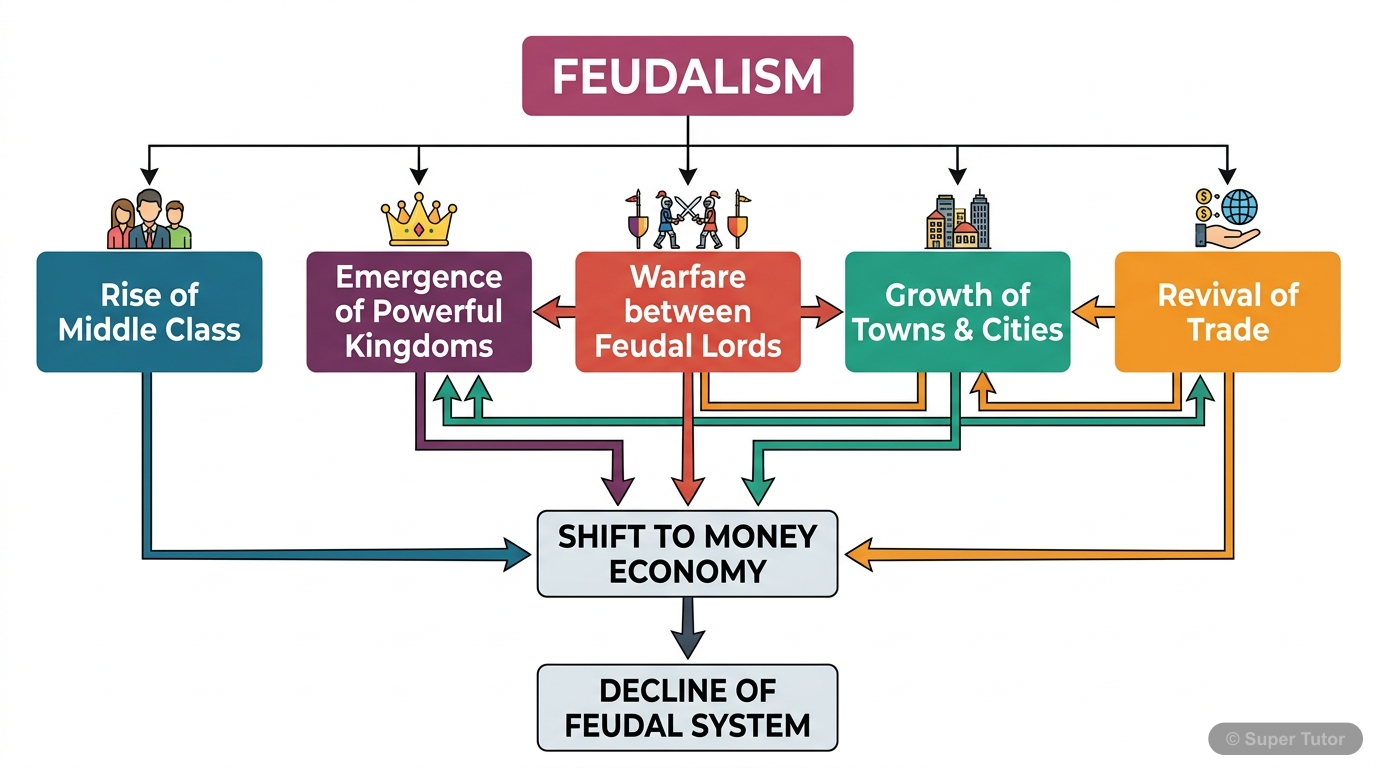
One of 8 illustrations for Modern World-I in Super Tutor — alongside flashcards, concept maps and practice questions.
Study Plan
Learn the Theory
Read the textbook chapter carefully. Note down definitions, formulas and key ideas. Focus on: 1. Decline of Feudalism and the Rise of New Towns, 2. Renaissance, 3. Reformation and Counter Reformation.
Practise
Solve the textbook exercises and extra practice questions. There are 88 questions available for this chapter.
Revise & Test
Revise key points without looking at your notes. Take a practice quiz and mark weak areas for another pass.
Spaced Revision
Come back to Modern World-I after a week. Use flashcards for quick recall and try past exam questions on this chapter.
What to Focus On
- Feudalism was a medieval system of land, labour, and protection.
- Towns, trade, and money economy weakened feudal control.
- The merchant class rose in importance.
- Renaissance means rebirth.
- It started in Italy around the 14th century AD.
- It stressed reason, observation, experimentation, and humanism.
- Renaissance art became more realistic.
- Human anatomy and proportion were studied carefully.
- Sculpture became more independent and natural.
Common Mistakes to Avoid
The Renaissance began in Germany and was mainly a religious movement.
Martin Luther wanted to start a new religion from the beginning.
Ignatius Loyola was a Protestant reformer like Martin Luther.
Memory Tips
Meaning of Renaissance
Renaissance began in Italy around 14th Century AD
Renaissance ideas: reason, observation, experimentation, humanism, rationalism, inquiry
Feudalism declined because towns, trade, and the merchant class grew
Want a personalised study plan?
Super Tutor builds a day-by-day plan for NIOS Class 10 Social Studies that fits your exam date and pace.
Create My Study PlanFrequently Asked Questions
What are the important topics in Modern World-I for NIOS Class 10 Social Studies?
How should I revise Modern World-I for the NIOS Class 10 board exam?
Sources & Official References
Content is aligned to the official syllabus. Refer to the board website for the latest curriculum.
More resources for Modern World-I
Practice Quiz
Test yourself with a quick quiz
Important Questions
Exam-style questions with answers
Revision Notes
Key points for last-minute revision
Chapter Summary
Understand the chapter at a glance
Concept Maps
See how topics connect
Flashcards
Quick-fire cards for active recall
Syllabus
What topics to cover
For serious students
Get the full Modern World-I chapter — start free.
Quizzes, flashcards, an AI doubt solver and a study plan for NIOS Class 10 Social Studies. Free to start, no card needed.