Matter in Our Surroundings — Chapter Summary
Punjab Board · Class 9 · Science
Summary of Matter in Our Surroundings for Punjab Board Class 9 Science. Part of the Punjab Board Class 9 Science syllabus.
Interactive on Super Tutor
Studying Matter in Our Surroundings? Get the full interactive chapter.
Quizzes, flashcards, AI doubt-solver and a step-by-step study plan — built for chapter summary and more.
Free trial, no card needed.
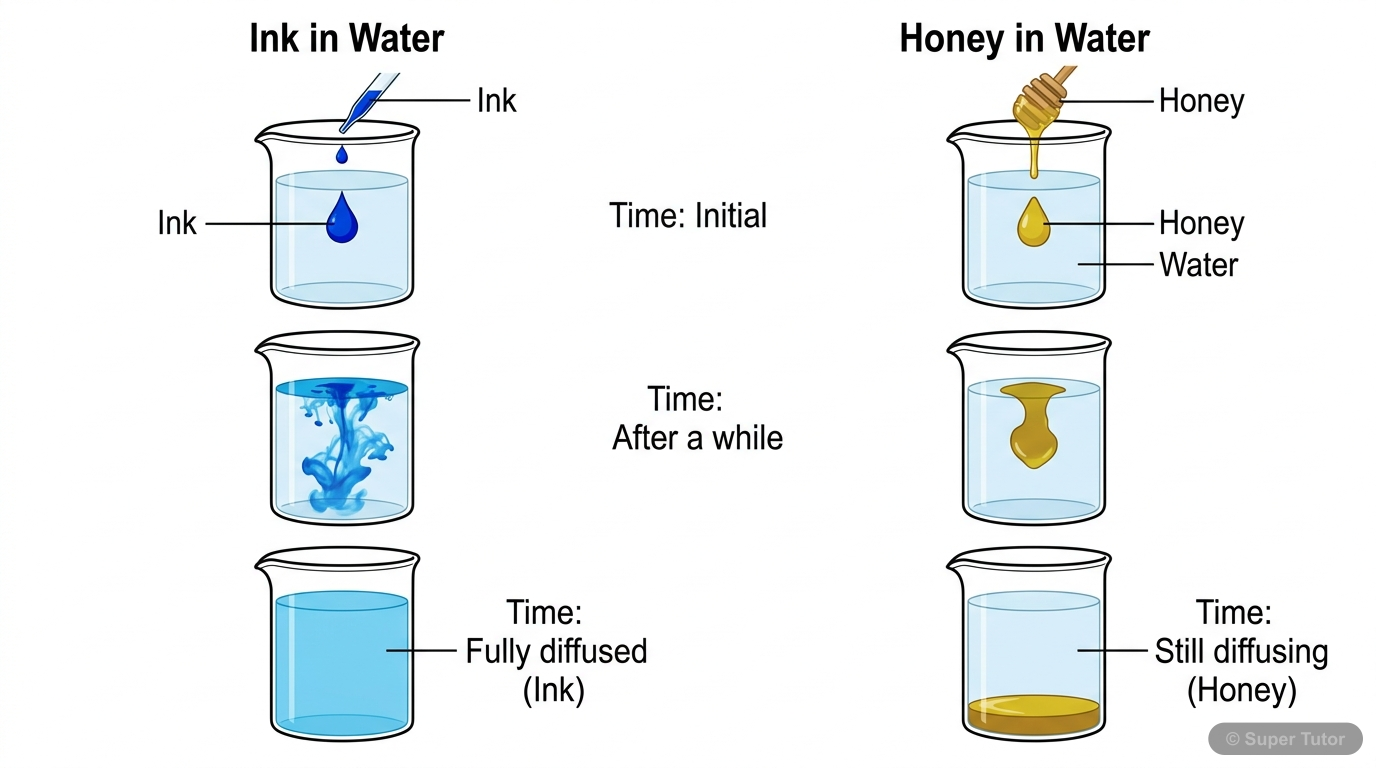
One of 2 illustrations for Matter in Our Surroundings in Super Tutor — alongside flashcards, concept maps and practice questions.
Overview
Matter is everything around us that has mass and occupies space. From the air we breathe to the food we eat, from stones to stars, everything is composed of matter. This chapter explores the fundamental nature of matter, its properties, different states, and how matter can transform from one state t
Key Concepts
Matter is any substance that has
Matter is any substance that has mass and occupies space (volume). Everything in the universe, whether living or non-living, is made of matter. Mass i
Matter is composed of extremely small
Matter is composed of extremely small particles that cannot be seen with the naked eye. These particles have empty spaces between them. Evidence comes
Particles of matter have three key
Particles of matter have three key characteristics: (1) Spaces between particles - demonstrated by sugar dissolving in water; (2) Continuous motion -
Diffusion is the process where particles
Diffusion is the process where particles of two different substances intermix on their own by moving into the spaces between each other. Examples incl
Solids have definite shape
Solids have definite shape, definite volume, and distinct boundaries. They are rigid and have negligible compressibility. Particles in solids are tigh
Learning Objectives
- Understand that matter is made up of tiny particles
- Recognize the characteristics of particles of matter - space between them, continuous motion, and mutual attraction
- Identify and describe the three states of matter - solid, liquid, and gas
- Explain the properties of each state of matter and how they differ
- Understand state changes through temperature and pressure variations
Frequently Asked Questions
What are the important topics in Matter in Our Surroundings for Punjab Board Class 9 Science?
How should I revise Matter in Our Surroundings for Class 9 exams?
Sources & Official References
Content is aligned to the official syllabus. Refer to the board website for the latest curriculum.
More resources for Matter in Our Surroundings
For serious students
Get the full Matter in Our Surroundings chapter — start free.
Quizzes, flashcards, an AI doubt solver and a study plan for Punjab Board Class 9 Science. Free to start, no card needed.