Chapter 8 of 10
Syllabus
Sound — Syllabus
Tamil Nadu Board · Class 9 · Science
What Sound covers in Tamil Nadu Board Class 9 Science: 4 topics, for the 2026-27 session. Part of the Tamil Nadu Board Class 9 Science syllabus.
43 questions40 flashcards5 concepts
Interactive on Super Tutor
Studying Sound? Get the full interactive chapter.
Quizzes, flashcards, AI doubt-solver and a step-by-step study plan — built for syllabus and more.
Free trial, no card needed.
Super Tutor
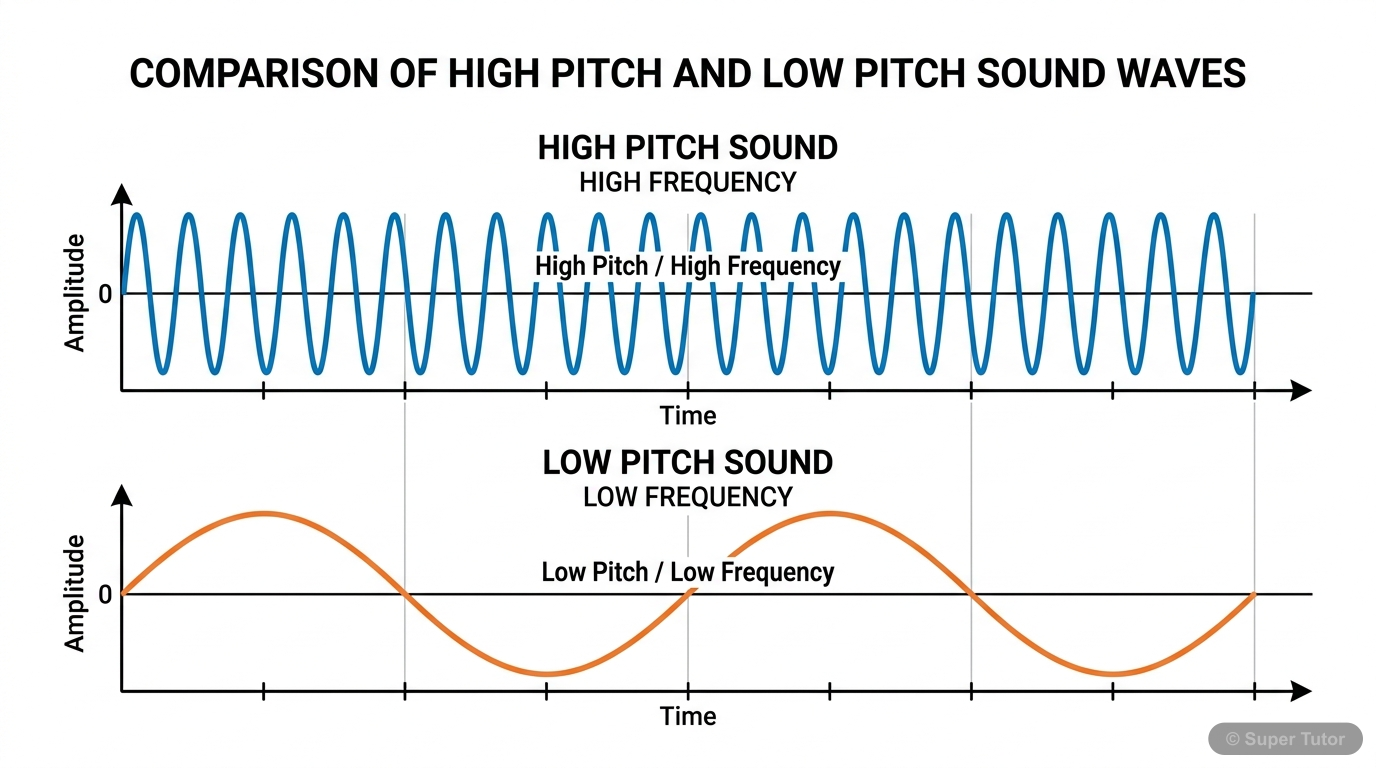
One of 3 illustrations for Sound in Super Tutor — alongside flashcards, concept maps and practice questions.
4 Topics · Tamil Nadu Board Class 9 Science · 2026-27
Topics in Sound
1
1. Production and Propagation of Sound
- Sound is produced by the vibration of objects (e.g., tuning fork, vocal cords, strings of musical instruments).
- Sound needs a material medium (solid, liquid, or gas) for propagation. It CANNOT travel through vacuum.
- Bell-Jar Experiment proves sound cannot travel through vacuum: as air is pumped out of the jar containing a ringing bell, the sound becomes fainter and finally disappears.
2
2. Characteristics of a Sound Wave
- A sound wave is completely described by five characteristics: Amplitude, Frequency, Time Period, Wavelength, and Velocity (Speed).
- Amplitude (A): Maximum displacement of medium particles from rest position. SI unit: metre (m). Larger amplitude → louder sound.
- Frequency (n): Number of complete vibrations (cycles) per second. SI unit: hertz (Hz) or s⁻¹.
3
3. Distinguishing Sounds – Loudness, Pitch, and Timbre
- Sounds can be distinguished by three qualities: Loudness, Pitch, and Timbre (Quality).
- LOUDNESS depends on the amplitude of the sound wave. Greater amplitude → louder sound. Loud sound has higher energy and travels farther.
- Intensity of sound is the amount of energy crossing per unit area per unit time, perpendicular to the direction of propagation. Unit: decibel (dB), named after Alexander Graham Bell.
4
4. Speed of Sound
- Speed of sound is the distance travelled by a sound wave per unit time in an elastic medium.
- Speed of sound varies with the medium: fastest in solids, slower in liquids, slowest in gases.
- Speed of sound in air at 0°C = 330 m/s; at 25°C = 340 m/s. Speed increases with increase in temperature.
Key Concepts
Sound is created when an objectSound cannot travel through a vacuumSound waves are longitudinal wavesAmplitude is the maximum displacementFrequency is the number of complete
Work through every topic in Sound with notes and quizzes
Start This ChapterFrequently Asked Questions
What are the important topics in Sound for Tamil Nadu Board Class 9 Science?
Key topics in Sound include Production and Propagation of Sound, Characteristics of a Sound Wave, Distinguishing Sounds – Loudness, Pitch, and Timbre, Speed of Sound. Study these first, then practise questions on each for Class 9 exams.
How should I revise Sound for Class 9 exams?
Learn the core ideas first, then work through the 43 practice questions on Sound. Revise definitions regularly and use flashcards for quick recall before the exam.
Sources & Official References
Content is aligned to the official syllabus. Refer to the board website for the latest curriculum.
More resources for Sound
For serious students
Get the full Sound chapter — start free.
Quizzes, flashcards, an AI doubt solver and a study plan for Tamil Nadu Board Class 9 Science. Free to start, no card needed.