Gene Cloning — Concept Maps
CBSE · Class 12 · Biotechnology
4 concept maps of Gene Cloning for CBSE Class 12 Biotechnology, each also written out as a text outline. Part of the CBSE Class 12 Biotechnology syllabus.
Interactive on Super Tutor
Studying Gene Cloning? Get the full interactive chapter.
Quizzes, flashcards, AI doubt-solver and a step-by-step study plan — built for concept maps and more.
Free trial, no card needed.
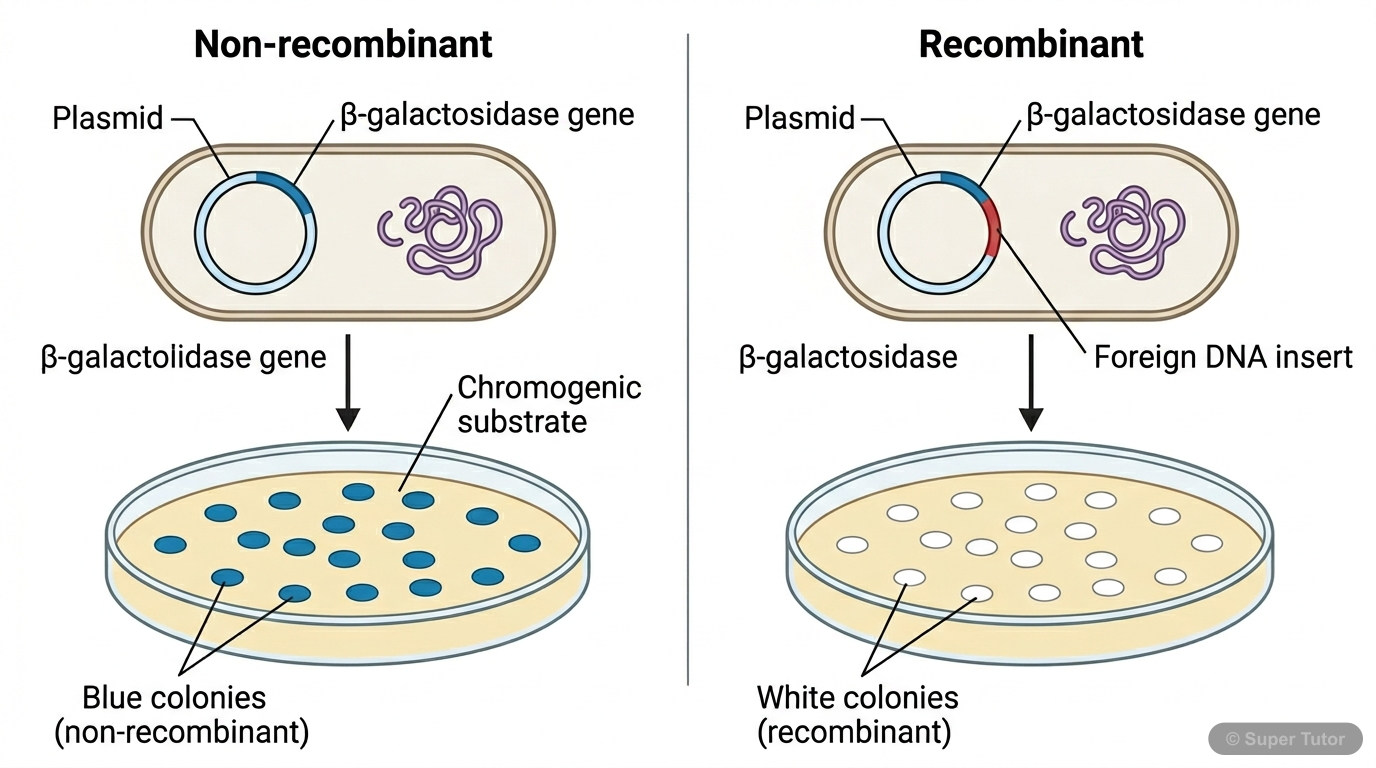
Learn better with visuals Super Tutor pairs illustrations like this with notes and quizzes for Gene Cloning.
Get startedGene Cloning — Complete Chapter Overview
The map in words
- Gene Cloning
- Candidate Gene
- Biomedical Significance
- Amino Acid to DNA
- mRNA to cDNA
- Nucleic Acid Isolation
- DNA Isolation
- RPSP Steps
- CTAB for Plants
- EDTA Role
- Chloroform Isoamyl
- RNA Isolation
- GITC Method
- Three Phase Separation
- RNase Inactivation
- DNA Isolation
- Key Enzymes
- Restriction Enzymes
- Type I Far Cut
- Type II Precise Cut
- Type III Medium Cut
- DNA Ligase
- NAD or ATP Energy
- Sticky and Blunt Ends
- DNA Polymerase
- 5 to 3 Direction
- Requires Primer
- Reverse Transcriptase
- RNA to cDNA
- Retroviruses
- Restriction Enzymes
- DNA Transfer
- Natural Methods
- Transformation
- Transduction
- Conjugation
- Lab Methods
- CaCl2 Chemical
- Electroporation
- Lipofection
- Microinjection
- Gene Gun
- Natural Methods
- Screening
- Direct Selection
- Antibiotic Resistance
- Insertional Inactivation
- AmpR and TetR System
- Blue White Selection
- lacZ Gene
- Direct Selection
- Blotting
- Southern DNA
- Northern RNA
- Western Protein
- Eastern Post Translational
- PCR
- Denaturation 94 degrees
- Annealing 50 to 55 degrees
- Extension 72 degrees
- Taq Polymerase
- 2 to the power n Copies
- RT PCR
- Real Time qPCR
- DNA Libraries
- Genomic Library
- Complete Genome
- All Genes
- cDNA Library
- Expressed Genes Only
- Tissue Specific
- Genomic Library
- Candidate Gene
Gene Cloning — Chapter Overview
The map in words
- Gene Cloning
- Identification of Candidate Gene
- Biomedical Significance
- Insulin gene
- Blood clotting factors
- Agricultural Significance
- Pest resistance
- Salinity tolerance
- Methods to Obtain Gene
- Amino acid to DNA sequence
- mRNA to cDNA via RTase
- Biomedical Significance
- Isolation of Nucleic Acids
- DNA Isolation
- Bacterial cells
- Lysozyme plus SDS
- Plant cells
- CTAB method
- PVP for phenols
- Animal cells
- Detergent lysis
- Key reagents
- EDTA chelates Mn2 Mg2
- Chloroform isoamyl
- Ethanol precipitation
- Bacterial cells
- RNA Isolation
- GITC phenol chloroform
- Acidic conditions
- Isopropanol precipitation
- DNA Isolation
- Enzymes in rDNA Technology
- Nucleases
- Exonucleases
- Endonucleases
- Restriction Enzymes
- Type I far from site
- Type II at site used in rDNA
- Type III 24 to 26 bp from site
- DNA Ligase
- T4 joins sticky and blunt
- E coli joins cohesive only
- Other Enzymes
- DNA Polymerase
- Reverse Transcriptase
- Alkaline Phosphatase
- Terminal Transferase
- Nucleases
- Modes of DNA Transfer
- Natural Methods
- Transformation
- Transduction
- Conjugation
- Artificial Methods
- Chemical CaCl2
- Electroporation
- Lipofection
- Microinjection
- Biolistic Gene Gun
- Natural Methods
- Screening and Selection
- Direct Selection
- Antibiotic resistance
- Insertional Inactivation
- Dual antibiotic method
- Blue white selection
- GFP based selection
- Direct Selection
- Blotting Techniques
- Southern Blot
- Detects DNA
- DNA probe
- Northern Blot
- Detects RNA
- RNA probe
- Western Blot
- Detects Protein
- Specific antibody
- Southern Blot
- PCR
- Steps
- Denaturation 94 95 C
- Annealing 50 55 C
- Extension 72 C
- Types
- Conventional end point
- RT PCR from mRNA
- Real time qPCR
- Formula 2 to n copies
- Steps
- DNA Libraries
- Genomic Library
- Complete genome
- Includes introns
- cDNA Library
- Expressed genes only
- Tissue specific
- No introns
- Genomic Library
- Identification of Candidate Gene
Gene Cloning — Complete Chapter Overview
The map in words
- Gene Cloning
- Identification of Gene
- Biomedical significance
- Economic significance
- mRNA to cDNA route
- Nucleic Acid Isolation
- DNA Isolation
- Bacteria: Lysozyme plus SDS
- Plants: CTAB plus PVP
- Animals: Detergent lysis
- Ethanol precipitation
- RNA Isolation
- GITC-phenol-chloroform
- Aqueous phase has RNA
- Isopropanol precipitation
- DNA Isolation
- Enzymes in rDNA
- Restriction Enzymes
- Type I: 1000 bp away
- Type II: within site
- Type III: 24 to 26 bp away
- DNA Ligase
- E coli: uses NAD
- T4: uses ATP
- Other Enzymes
- Alkaline Phosphatase
- Terminal Transferase
- Reverse Transcriptase
- Restriction Enzymes
- DNA Transfer
- Natural Methods
- Transformation
- Transduction
- Conjugation
- Artificial Methods
- Electroporation
- Lipofection
- Biolistic Gene Gun
- Microinjection
- Natural Methods
- Screening and Selection
- Direct Selection
- Antibiotic resistance
- Insertional Inactivation
- Two antibiotic method
- Blue-White Selection
- Direct Selection
- Blotting
- Southern: detects DNA
- Northern: detects RNA
- Western: detects Protein
- Eastern: Post-translational mods
- PCR
- Three steps
- Denaturation 94 to 95C
- Annealing 50 to 55C
- Extension 72C
- Variants
- RT-PCR
- Real-time qPCR
- Three steps
- DNA Libraries
- Genomic Library
- Complete genome
- All sequences
- cDNA Library
- Expressed genes only
- Tissue specific
- Genomic Library
- Identification of Gene
Gene cloning is the process of using a gene for its product through recombinant DNA technology so that many copies of the gene can be made, studied, and used.
The map in words
- Gene cloning is the process of using a gene for its product through recombinant DNA technology so that many copies of the gene can be made, studied, and used.
- Identification of candidate gene
- Isolation of nucleic acids
- Enzymes used in recombinant DNA technology
- Restriction enzymes
- DNA ligase
- DNA polymerase
- Other modifying enzymes
- Modes of DNA transfer
Explore these maps interactively
Explore DiagramsFrequently Asked Questions
What are the important topics in Gene Cloning for CBSE Class 12 Biotechnology?
What do the concept maps for Gene Cloning show?
How should I revise Gene Cloning for the CBSE Class 12 board exam?
Sources & Official References
- NCERT Official — ncert.nic.in
- CBSE Academic — cbseacademic.nic.in
- CBSE Official — cbse.gov.in
- National Education Policy 2020 — education.gov.in
Content is aligned to the official syllabus. Refer to the board website for the latest curriculum.
More resources for Gene Cloning
Practice Quiz
Test yourself with a quick quiz
Important Questions
Exam-style questions with answers
Revision Notes
Key points for last-minute revision
Chapter Summary
Understand the chapter at a glance
Study Plan
Step-by-step plan for this chapter
Flashcards
Quick-fire cards for active recall
Syllabus
What topics to cover
NCERT Solutions
Every textbook question solved step by step
For serious students
Get the full Gene Cloning chapter — start free.
Quizzes, flashcards, an AI doubt solver and a study plan for CBSE Class 12 Biotechnology. Free to start, no card needed.