Gene Cloning — Revision Notes
CBSE · Class 12 · Biotechnology
Gene Cloning revision notes for CBSE Class 12 Biotechnology: 4 topics in quick points. Part of the CBSE Class 12 Biotechnology syllabus.
Interactive on Super Tutor
Studying Gene Cloning? Get the full interactive chapter.
Quizzes, flashcards, AI doubt-solver and a step-by-step study plan — built for revision notes and more.
Free trial, no card needed.
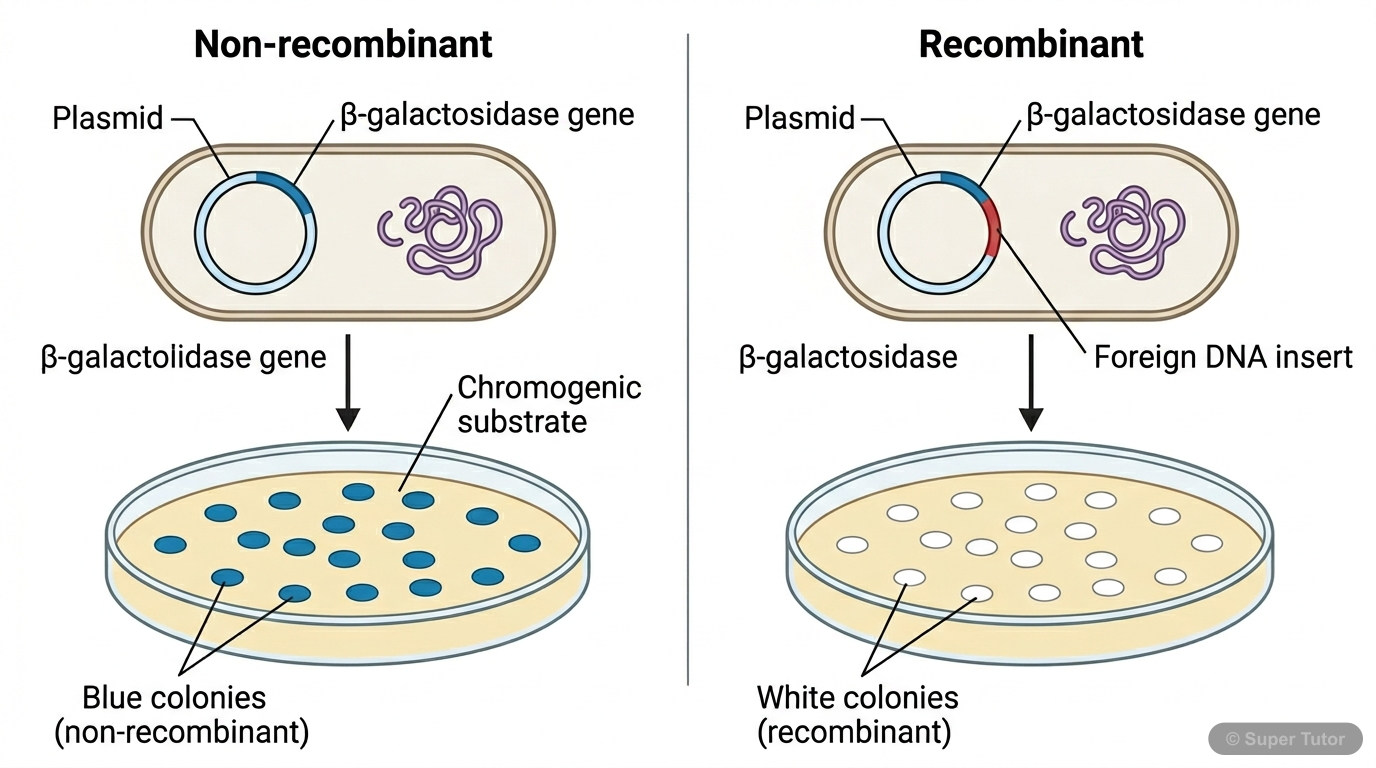
Learn better with visuals Super Tutor pairs illustrations like this with notes and quizzes for Gene Cloning.
Get startedKey Topics to Revise
1. Identification of Candidate Gene
- A candidate gene is chosen based on its importance in biomedical, economic, or evolutionary studies.
- Examples of important candidate genes include genes related to diabetes, iron deficiency, salinity tolerance, infection resistance, milk protein, and blood clotting factors.
- A haploid human genome contains approximately 3.2 billion bp, so finding a short gene sequence is extremely difficult.
2. Isolation of Nucleic Acids
- Isolation of nucleic acids has four main steps: cell disruption, protection from nucleases, separation from other molecules, and precipitation/concentration.
- Cells can be broken mechanically or enzymatically depending on the source.
- DNA and RNA are present in very small amounts compared with proteins, carbohydrates, and lipids.
3. Enzymes Used in Recombinant DNA Technology
- Nucleases hydrolyse phosphodiester bonds in nucleic acids.
- Exonucleases remove nucleotides one at a time from the 3' or 5' end.
- Endonucleases break internal phosphodiester bonds within DNA or RNA.
4. Modes of DNA Transfer
- Natural DNA transfer in bacteria occurs by transformation, transduction, and conjugation.
- Transformation is direct uptake of exogenous DNA from the surroundings through the cell membrane and its incorporation into recipient genetic material.
- Cells that receive foreign DNA by transformation are called transformants.
Get complete notes with diagrams and examples
Full NotesKey Concepts
Frequently Asked Questions
What are the important topics in Gene Cloning for CBSE Class 12 Biotechnology?
How should I revise Gene Cloning for the CBSE Class 12 board exam?
Sources & Official References
- NCERT Official — ncert.nic.in
- CBSE Academic — cbseacademic.nic.in
- CBSE Official — cbse.gov.in
- National Education Policy 2020 — education.gov.in
Content is aligned to the official syllabus. Refer to the board website for the latest curriculum.
More resources for Gene Cloning
Practice Quiz
Test yourself with a quick quiz
Important Questions
Exam-style questions with answers
Chapter Summary
Understand the chapter at a glance
Concept Maps
See how topics connect
Study Plan
Step-by-step plan for this chapter
Flashcards
Quick-fire cards for active recall
Syllabus
What topics to cover
NCERT Solutions
Every textbook question solved step by step
For serious students
Get the full Gene Cloning chapter — start free.
Quizzes, flashcards, an AI doubt solver and a study plan for CBSE Class 12 Biotechnology. Free to start, no card needed.