Chapter 3 of 13
NCERT Solutions

Gene Cloning

CBSE · Class 12 · Biotechnology

NCERT Solutions for Gene Cloning — CBSE Class 12 Biotechnology.

5 concepts

Interactive on Super Tutor

Studying Gene Cloning? Get the full interactive chapter.

Quizzes, flashcards, AI doubt-solver and a step-by-step study plan — built for ncert solutions and more.

1,000+ Class 12 students started this chapter today

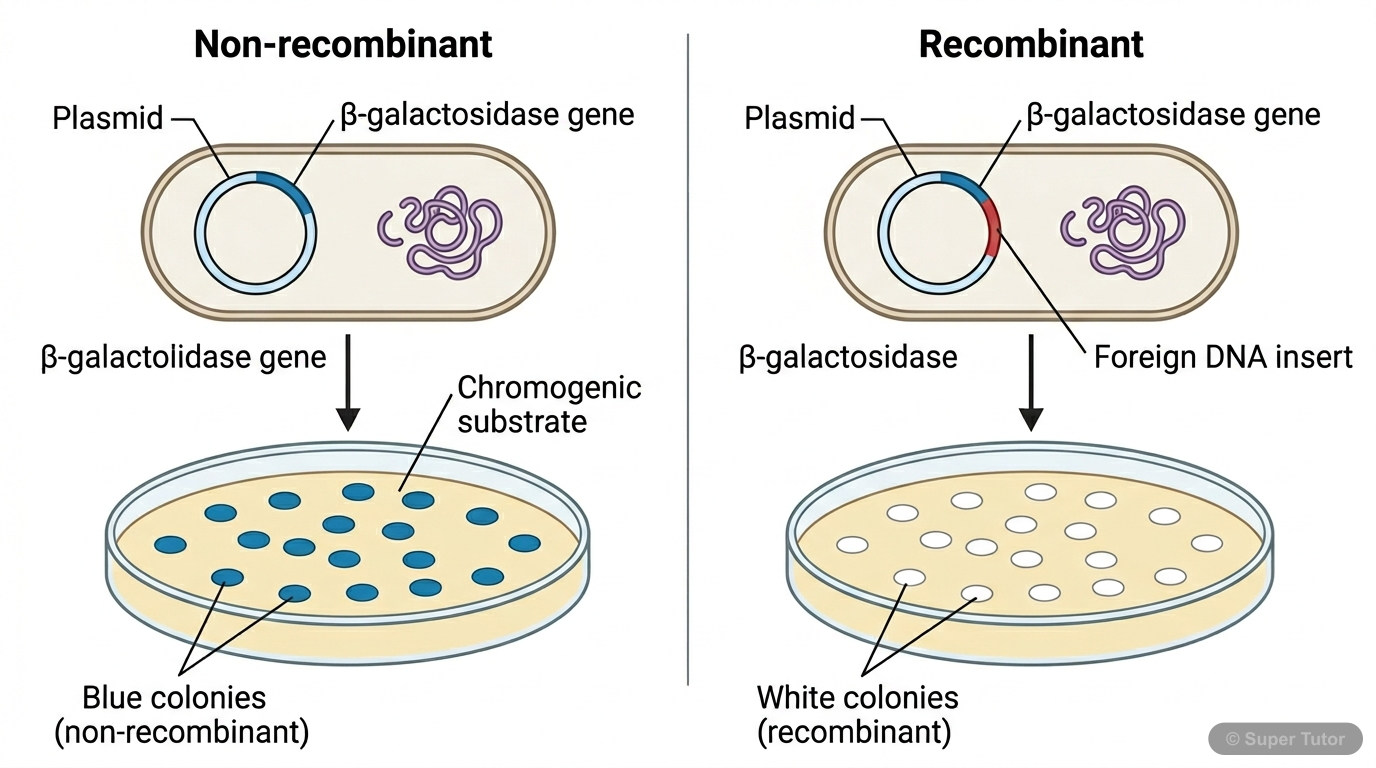
A diagram illustrating the concept of insertional inactivation using a chromogenic substrate, where insertion of foreign DNA into a gene (e.g., β-galactosidase) inactivates it, leading to a visible ch
Super Tutor

Learn better with visuals Super Tutor has hundreds of illustrations like this across every chapter — all free to try.

Get started
19 Questions Solved · 1 Section

EXERCISES

1Describe the methods used for isolation of DNA.Show solution
Given/Concept: DNA isolation involves extracting DNA from biological samples in a pure, intact form. There are four major steps involved.

Step-by-step description:

Step 1 – Disruption of Biological Samples (Cell Lysis):
The cells or tissues must be broken open to release their contents. This is achieved by:
- Mechanical disruption: grinding with liquid nitrogen (for plant/tough tissues), bead beating, or sonication.
- Chemical disruption: using detergents (SDS – sodium dodecyl sulphate) and biological detergents (CTAB – cetyltrimethylammonium bromide for plant cells) that solubilise the cell membrane and nuclear membrane.
- Enzymatic disruption: lysozyme is used to break bacterial cell walls; cellulase/pectinase for plant cell walls.

Step 2 – Protection of Nucleic Acids from Degrading Enzymes:
- DNases and RNases present in the cell can degrade the released nucleic acids.
- Chelating agents like EDTA (ethylenediaminetetraacetic acid) are added to chelate (bind) Mg2+\text{Mg}^{2+} ions, which are essential cofactors for nucleases, thereby inhibiting their activity.
- Proteinase K is used to digest proteins including nucleases.

Step 3 – Separation of Nucleic Acids from Other Molecules:
- Proteins are removed by adding phenol-chloroform-isoamyl alcohol (25:24:1) mixture. On centrifugation, proteins partition into the organic (lower) phase, while nucleic acids remain in the aqueous (upper) phase.
- RNA can be removed by treating with RNase (when isolating DNA).
- DNA is precipitated by adding chilled absolute ethanol or isopropanol. The DNA appears as white fibrous strands (spooling) and is collected by centrifugation.

Step 4 – Assessment of Purity and Quality:
- The purity of isolated DNA is assessed by measuring absorbance at A260A_{260} and A280A_{280} nm using a spectrophotometer.
- Pure DNA has an A260/A280A_{260}/A_{280} ratio of approximately 1.8.
- Agarose gel electrophoresis is used to check the integrity (size) of the isolated DNA.

Conclusion: These four steps — disruption, protection, separation, and quality assessment — together constitute the standard protocol for DNA isolation.
2What is the role of biological detergent in the process of isolation of nucleic acid?Show solution
Given/Concept: Biological detergents are surfactants used during nucleic acid isolation.

Role of Biological Detergent:

1. Cell membrane solubilisation: Biological detergents such as CTAB (cetyltrimethylammonium bromide) and SDS (sodium dodecyl sulphate) disrupt the lipid bilayer of the cell membrane and nuclear membrane by solubilising the membrane lipids and proteins. This causes cell lysis and releases the nucleic acids into the solution.

2. Protein denaturation: SDS denatures proteins (including histones associated with DNA) by disrupting non-covalent interactions, helping to dissociate DNA–protein complexes.

3. CTAB specifically forms complexes with nucleic acids at high salt concentrations and precipitates polysaccharides and other contaminants, making it especially useful for plant tissue DNA isolation where polysaccharides are abundant.

Conclusion: Biological detergents are essential for breaking open cells and dissociating nucleic acids from proteins, thereby facilitating efficient extraction of nucleic acids.
3How does DNA isolation from plant tissue differ from that of bacterial cell?Show solution
Given/Concept: Both plant cells and bacterial cells have cell walls, but their composition and associated challenges differ.

| Feature | Plant Cell DNA Isolation | Bacterial Cell DNA Isolation |
|---|---|---|
| Cell wall composition | Cellulose, hemicellulose, pectin | Peptidoglycan (murein) |
| Enzyme for cell wall digestion | Cellulase, pectinase (or mechanical grinding) | Lysozyme |
| Detergent used | CTAB (cetyltrimethylammonium bromide) preferred | SDS is commonly used |
| Major contaminants | Polysaccharides, polyphenols, pigments (chlorophyll) | Relatively fewer contaminants |
| Special treatment | CTAB precipitates polysaccharides; β\beta-mercaptoethanol added to prevent polyphenol oxidation | Generally simpler lysis protocol |
| Difficulty | More complex due to tough cell wall and secondary metabolites | Relatively easier |
| Mechanical disruption | Often required (grinding in liquid nitrogen) | Usually not required; chemical/enzymatic lysis sufficient |

Conclusion: DNA isolation from plant tissue is more complex than from bacterial cells due to the presence of a rigid cellulosic cell wall, polysaccharides, and polyphenols, requiring specialised reagents like CTAB and additional steps to remove contaminants.
4How many types of restriction enzymes (REs) are there? Can all REs be used in rDNA technology? Give justification.Show solution
Given/Concept: Restriction endonucleases (REs) are enzymes that cleave DNA at specific sequences.

Types of Restriction Enzymes:
Restriction enzymes are mainly categorised into three types — Type I, Type II, and Type III — based on their cofactor requirements and the position of their DNA cleavage site relative to the recognition/target sequence.

| Type | Cleavage Site | Cofactors | Application |
|---|---|---|---|
| Type I | Cleaves DNA at random sites far from recognition sequence (~1000 bp away) | ATP, Mg2+\text{Mg}^{2+}, SAM | Not used in rDNA technology |
| Type II | Cleaves DNA at or near the recognition sequence (palindromic) | Mg2+\text{Mg}^{2+} only | Used in rDNA technology |
| Type III | Cleaves DNA ~25–27 bp away from recognition sequence | ATP, Mg2+\text{Mg}^{2+} | Not used in rDNA technology |

Can all REs be used in rDNA technology?
No. Only Type II restriction enzymes are used in recombinant DNA (rDNA) technology.

Justification:
- Type II REs recognise specific palindromic sequences (4–8 bp) and cleave DNA at a defined, predictable position within or adjacent to the recognition sequence.
- This produces specific, reproducible fragments with either blunt ends or sticky ends (cohesive ends), which can be ligated into vectors precisely.
- Type I and Type III REs cleave DNA at random or distant sites from the recognition sequence, producing unpredictable fragments that cannot be used for precise gene cloning.

Conclusion: Only Type II REs are suitable for rDNA technology because they cut DNA at specific, predictable sites, enabling precise manipulation of DNA.
5What are the challenges faced during the process of nucleic acid extraction?Show solution
Given/Concept: Nucleic acid extraction involves several steps, each presenting specific challenges.

Challenges faced during nucleic acid extraction:

1. Degradation by nucleases: DNases and RNases are ubiquitous enzymes present in cells and the environment. They can rapidly degrade the released nucleic acids during extraction. This is a major challenge, especially for RNA isolation (RNases are extremely stable).

2. Contamination with proteins: Proteins (especially histones, enzymes) are tightly associated with nucleic acids and must be completely removed. Incomplete removal leads to impure preparations.

3. Contamination with polysaccharides and polyphenols (especially in plants): Plant cells contain large amounts of polysaccharides and polyphenols that co-precipitate with DNA and inhibit downstream enzymatic reactions (e.g., PCR, restriction digestion).

4. Mechanical shearing of DNA: High molecular weight genomic DNA is very fragile and can be sheared into small fragments by vigorous pipetting, vortexing, or mechanical disruption, reducing the quality of the extract.

5. Disruption of tough cell walls: Plant cells (cellulosic wall) and bacterial cells (peptidoglycan wall) require specific enzymatic or mechanical treatments for complete lysis, which can be challenging.

6. Co-precipitation of RNA with DNA (or vice versa): When isolating DNA, RNA contamination must be removed (using RNase treatment), and when isolating RNA, DNA must be removed (using DNase treatment).

7. Low yield from small samples: Extracting sufficient quantities of nucleic acid from small or rare tissue samples is challenging.

8. Maintaining sterile, RNase-free conditions: Especially for RNA isolation, all equipment and reagents must be RNase-free, which requires careful handling.

Conclusion: The major challenges include nuclease-mediated degradation, contamination with proteins/polysaccharides, mechanical shearing, and maintaining purity throughout the process.
6Write the role of alkaline phosphatase, DNA ligase, terminal transferase in rDNA technology.Show solution
Given/Concept: These are important enzymes used as molecular tools in recombinant DNA technology.

1. Alkaline Phosphatase:
- Role: Alkaline phosphatase removes the terminal 5′ phosphate group (dephosphorylation) from the ends of linearised DNA (vectors or inserts).
- Significance in rDNA technology: After restriction digestion, the vector is treated with alkaline phosphatase to prevent self-ligation (re-circularisation of the vector without insert). Since DNA ligase requires a 5′ phosphate and a 3′ hydroxyl group to form a phosphodiester bond, dephosphorylated vector ends cannot ligate with each other. They can only ligate with the insert (which retains its 5′ phosphate), thereby increasing the efficiency of recombinant clone formation.

2. DNA Ligase:
- Role: DNA ligase catalyses the formation of a phosphodiester bond between adjacent 3′-OH and 5′-phosphate ends of DNA strands in a duplex, thereby joining (ligating) two DNA fragments together.
- Significance in rDNA technology: It is used to join the gene of interest (insert) with the vector DNA to create recombinant DNA molecules. The most commonly used is T4 DNA ligase (from bacteriophage T4), which can join both sticky ends and blunt ends.
Insert DNA+Vector DNADNA LigaseRecombinant DNA\text{Insert DNA} + \text{Vector DNA} \xrightarrow{\text{DNA Ligase}} \text{Recombinant DNA}

3. Terminal Transferase (Terminal Deoxynucleotidyl Transferase – TdT):
- Role: Terminal transferase adds homopolymeric tails of a single type of deoxyribonucleotide (e.g., poly-dA or poly-dC) to the 3′-OH ends of DNA molecules in a template-independent manner.
- Significance in rDNA technology: It is used in homopolymer tailing strategy for cloning. For example, poly-dA tails are added to the insert and poly-dT tails to the vector (or vice versa). These complementary tails allow the insert and vector to anneal and be joined by DNA ligase, enabling cloning of blunt-ended DNA fragments. It is also used in cDNA synthesis to add poly-dC tails to the first strand cDNA.

Conclusion: Alkaline phosphatase prevents vector self-ligation, DNA ligase joins insert and vector, and terminal transferase enables homopolymer tailing for cloning of blunt-ended fragments.
7Describe the role of chelating agent in the process of DNA extraction.Show solution
Given/Concept: Chelating agents are chemicals that bind metal ions and are used during DNA extraction.

Role of Chelating Agent (EDTA) in DNA Extraction:

The most commonly used chelating agent in DNA extraction is EDTA (Ethylenediaminetetraacetic acid).

Mechanism:
- EDTA chelates (tightly binds) divalent metal ions, particularly Mg2+\text{Mg}^{2+} and Ca2+\text{Ca}^{2+} ions, present in the extraction buffer.

Significance:
1. Inhibition of DNases: Most DNases (deoxyribonucleases) require Mg2+\text{Mg}^{2+} or Ca2+\text{Ca}^{2+} as essential cofactors for their enzymatic activity. By chelating these ions, EDTA inactivates DNases, thereby protecting the extracted DNA from degradation.

2. Destabilisation of cell membrane: EDTA also chelates Mg2+\text{Mg}^{2+} ions that stabilise the outer membrane of Gram-negative bacteria (by cross-linking lipopolysaccharides), thereby aiding in cell lysis.

3. Inhibition of other metal-dependent enzymes: EDTA inhibits other enzymes that could interfere with the extraction process.

Typical concentration used: EDTA is typically used at a concentration of 0.5 M (pH 8.0) in extraction buffers like TE buffer (Tris-EDTA buffer).

EDTA+Mg2+[EDTAMg]2 (chelate complex)DNase inactivated\text{EDTA} + \text{Mg}^{2+} \rightarrow [\text{EDTA} \cdot \text{Mg}]^{2-} \text{ (chelate complex)} \Rightarrow \text{DNase inactivated}

Conclusion: EDTA acts as a protective agent during DNA extraction by chelating divalent metal ions (Mg2+\text{Mg}^{2+}, Ca2+\text{Ca}^{2+}) that are required as cofactors by nucleases, thus preventing degradation of the extracted DNA.
8Briefly describe the modes of DNA transfer into the host.Show solution
Given/Concept: In rDNA technology, recombinant DNA must be introduced into host cells (usually bacteria) by a process called transformation/transfection. There are two broad categories of methods.

Modes of DNA Transfer into Host Cells:

A. Chemical-Based Methods (Chemical Transfection):

1. Calcium Chloride (CaCl2\text{CaCl}_2) Method:
- Bacterial cells are treated with ice-cold CaCl2\text{CaCl}_2 solution, which makes the cell membrane permeable (competent cells) by disrupting the lipopolysaccharide layer.
- The DNA-cell mixture is then given a brief heat shock at 42°C for 90 seconds, which facilitates entry of DNA into the cell.
- This is the most common method for transforming *E. coli*.

2. Lipofection (Liposome-Mediated Transfection):
- DNA is encapsulated within liposomes (artificial lipid vesicles).
- Liposomes fuse with the cell membrane and deliver the DNA into the cell.
- Commonly used for transfecting eukaryotic cells.

B. Physical Methods (Physical Transfection):

1. Electroporation:
- Cells are placed in a cuvette with DNA and subjected to a brief, high-voltage electric pulse.
- The electric field creates temporary pores in the cell membrane, through which DNA enters the cell.
- Applicable to both prokaryotic and eukaryotic cells.

2. Microinjection:
- DNA is directly injected into the nucleus of a cell using a very fine glass micropipette (microinjector) under a microscope.
- Used mainly for animal cells and for producing transgenic animals.

3. Biolistics (Gene Gun / Particle Bombardment):
- DNA is coated onto gold or tungsten microparticles (microprojectiles).
- These particles are accelerated at high velocity into the target cells/tissues using a gene gun.
- Widely used for plant cell transformation (since plant cells have tough cell walls).

Conclusion: DNA can be transferred into host cells by chemical methods (CaCl₂ treatment, lipofection) or physical methods (electroporation, microinjection, biolistics), each suited to different cell types and experimental requirements.
9Identify the correct statement for blue-white selection method.
(a) A specific dye is used to stain bacterial colony.
(b) It is based on the expression of lacZ gene.
(c) The recombinant bacterial colony remains blue.
(d) lacZ gene is inserted in an antibiotic resistant gene.
Show solution
Correct Answer: (b) It is based on the expression of lacZ gene.

Justification:
- Blue-white selection is a method of insertional inactivation used to identify recombinant bacterial colonies.
- The vector used contains the lacZ gene, which encodes the enzyme β\beta-galactosidase.
- The gene of interest (insert) is cloned within the lacZ gene, disrupting (inactivating) it.
- When the substrate X-gal (5-bromo-4-chloro-3-indolyl-β\beta-D-galactopyranoside) is added to the growth medium:
- Non-recombinant colonies (lacZ gene intact) produce functional β\beta-galactosidase, which cleaves X-gal to produce a blue coloured product → Blue colonies.
- Recombinant colonies (lacZ gene disrupted by insert) cannot produce functional β\beta-galactosidase → White colonies.

Why other options are wrong:
- (a) Incorrect — No external dye is used to stain the colony; X-gal is a substrate, not a stain.
- (c) Incorrect — The recombinant colony appears white (not blue); non-recombinant colonies are blue.
- (d) Incorrect — The insert is cloned within the lacZ gene, not within an antibiotic resistant gene (that would be a different insertional inactivation method).
10Identify the correctly matched pair from the following options.
(a) Northern blot: Detect specific sequence of DNA
(b) Southern blot: Detect specific sequence of RNA
(c) Western blot: Detect specific proteins
(d) Eastern blot: Detect transcriptional modifications in RNA
Show solution
Correct Answer: (c) Western blot: Detect specific proteins

Justification:
- Western blotting is a technique used to detect and identify specific proteins in a sample of tissue homogenate or extract. Proteins are separated by SDS-PAGE, transferred to a membrane, and detected using specific antibodies.

Why other options are wrong:
- (a) Incorrect — Northern blot detects specific RNA molecules (not DNA).
- (b) Incorrect — Southern blot detects specific DNA sequences (not RNA).
- (d) Incorrect — Eastern blot is used to detect post-translational modifications of proteins (such as lipids, carbohydrates attached to proteins), not transcriptional modifications in RNA.

Memory Aid:
SouthernDNANorthernRNAWesternProtein\text{Southern} \rightarrow \text{DNA} \quad | \quad \text{Northern} \rightarrow \text{RNA} \quad | \quad \text{Western} \rightarrow \text{Protein}
11Identify the incorrect matched pair from the following options.
(a) Taq polymerase: Thermus aquaticus
(b) Pfu polymerase: Pyrococcus furiosus
(c) HindIII: Haemophilus influenzae
(d) PstI: Pyrococcus stuartii
Show solution
Correct Answer: (d) PstI: Pyrococcus stuartii — This is the INCORRECT matched pair.

Justification:
- PstI is a restriction enzyme isolated from *Providencia stuartii* (not *Pyrococcus stuartii*). *Pyrococcus* is an archaeon, not the source of PstI.

Verification of other pairs:
- (a) Taq polymerase is isolated from the thermophilic bacterium *Thermus aquaticus* — Correct.
- (b) Pfu polymerase is isolated from the hyperthermophilic archaeon *Pyrococcus furiosus* — Correct.
- (c) HindIII is isolated from *Haemophilus influenzae* strain Rd — Correct.

Conclusion: Option (d) is incorrectly matched because PstI is derived from *Providencia stuartii*, not *Pyrococcus stuartii*.
12How are recombinants screened? Describe the methods in detail.Show solution
Given/Concept: After transformation, it is essential to identify cells that have taken up the recombinant vector (with insert) from non-transformed cells and cells with non-recombinant vector. This process is called screening of recombinants.

Screening methods are of two types:

---

A. Direct Selection Methods:

These methods directly distinguish transformed cells from non-transformed cells based on the expression of a selectable marker.

1. Antibiotic Resistance Selection:
- Vectors carry antibiotic resistance genes (e.g., ampicillin resistance — ampramp^r, tetracycline resistance — tetrtet^r) as selectable markers.
- Transformed bacteria are plated on medium containing the antibiotic.
- Only cells that have taken up the vector (and thus carry the antibiotic resistance gene) will survive and form colonies.
- Non-transformed cells (without vector) will be killed by the antibiotic.
- Limitation: This method only distinguishes transformed from non-transformed cells; it cannot distinguish recombinant (with insert) from non-recombinant (without insert) transformants.

---

B. Insertional Inactivation Methods:

These methods identify recombinant transformants (with insert) from non-recombinant transformants (without insert).

1. Antibiotic Resistance Insertional Inactivation:
- Vectors carry two antibiotic resistance genes, e.g., ampramp^r and tetrtet^r.
- The gene of interest is inserted within one of the resistance genes (e.g., tetrtet^r), disrupting it.
- Step 1: Plate all transformants on ampicillin medium → Only transformed cells (with vector) survive.
- Step 2: Replica plate surviving colonies onto tetracycline medium.
- Non-recombinant transformants (insert not in tetrtet^r): Grow on both ampamp and tettet media → ampramp^r, tetrtet^r.
- Recombinant transformants (insert disrupts tetrtet^r): Grow only on ampamp medium, NOT on tettet medium → ampramp^r, tetstet^s.
- Colonies that grow on ampicillin but fail to grow on tetracycline are identified as recombinants.

2. Blue-White Selection (lacZ Insertional Inactivation):
- The vector contains the lacZ gene (encoding β\beta-galactosidase) as a marker, and the gene of interest is cloned within the lacZ gene.
- The growth medium contains:
- IPTG (isopropyl β\beta-D-thiogalactopyranoside) — inducer of lacZ expression.
- X-gal (5-bromo-4-chloro-3-indolyl-β\beta-D-galactopyranoside) — chromogenic substrate.
- Non-recombinant colonies (lacZ intact): β\beta-galactosidase cleaves X-gal → Blue colonies.
- Recombinant colonies (lacZ disrupted by insert): No functional β\beta-galactosidase → X-gal not cleaved → White colonies.
- White colonies are picked as recombinants.

Conclusion: Recombinants are screened using direct antibiotic selection (to identify transformed cells) followed by insertional inactivation methods (antibiotic resistance or blue-white selection) to identify cells carrying recombinant vectors with the gene of interest.
13Differentiate between the Southern, Northern and Western blotting.Show solution
Given/Concept: Blotting techniques are used to detect specific molecules (DNA, RNA, or protein) from a complex mixture by transferring them onto a membrane and probing with specific molecules.

| Feature | Southern Blotting | Northern Blotting | Western Blotting |
|---|---|---|---|
| Named after | E.M. Southern (inventor) | Named analogously (compass direction) | Named analogously |
| Target molecule | Specific DNA sequences | Specific RNA molecules | Specific proteins |
| Separation method | Agarose gel electrophoresis | Agarose gel electrophoresis (denaturing) | SDS-PAGE (polyacrylamide gel) |
| Denaturing step | DNA denatured with NaOH | RNA denatured with formaldehyde/glyoxal | Proteins denatured with SDS |
| Transfer membrane | Nitrocellulose or nylon membrane | Nitrocellulose or nylon membrane | PVDF or nitrocellulose membrane |
| Probe used | Labelled DNA or RNA probe (complementary to target DNA) | Labelled DNA or RNA probe (complementary to target RNA) | Specific antibody (primary + secondary antibody) |
| Detection | Autoradiography / chemiluminescence | Autoradiography / chemiluminescence | Enzyme-linked antibody / chemiluminescence |
| Applications | Gene mapping, RFLP analysis, detecting specific genes | Gene expression studies, detecting mRNA | Protein identification, diagnosis of diseases |

Summary:
SouthernDNANorthernRNAWesternProtein\text{Southern} \rightarrow \text{DNA} \quad \text{Northern} \rightarrow \text{RNA} \quad \text{Western} \rightarrow \text{Protein}

Conclusion: All three blotting techniques follow the same basic principle of gel electrophoresis → transfer to membrane → probing, but differ in the target molecule and the type of probe used.
14What is PCR? Describe in detail.Show solution
Given/Concept: PCR (Polymerase Chain Reaction) is an in vitro technique used to amplify a specific segment of DNA.

Definition:
Polymerase Chain Reaction (PCR) is a molecular biology technique used to amplify a small, specific segment of DNA into thousands to millions of copies in a short time, using repeated cycles of heating and cooling.

Components Required:
1. Template DNA — the DNA containing the target sequence to be amplified.
2. Primers — two short, single-stranded oligonucleotides (18–25 bp) complementary to the flanking sequences of the target DNA (forward and reverse primers).
3. Taq DNA Polymerase — a thermostable DNA polymerase isolated from *Thermus aquaticus* (stable at high temperatures up to ~95°C).
4. dNTPs (deoxyribonucleoside triphosphates — dATP, dTTP, dGTP, dCTP) — building blocks for new DNA synthesis.
5. Buffer with Mg2+\text{Mg}^{2+} — provides optimal conditions for Taq polymerase activity.

Steps of PCR (One Cycle):

Each PCR cycle consists of three steps:

Step 1 – Denaturation (~94–95°C, 30–60 seconds):
- The reaction mixture is heated to ~94–95°C.
- The hydrogen bonds between the two strands of the double-stranded template DNA are broken.
- The double-stranded DNA separates into two single strands.
dsDNA94°CssDNA+ssDNA\text{dsDNA} \xrightarrow{94°C} \text{ssDNA} + \text{ssDNA}

Step 2 – Annealing (~50–65°C, 30–60 seconds):
- The temperature is lowered to ~50–65°C (depending on the melting temperature of primers).
- The two primers (forward and reverse) anneal (hybridise) to their complementary sequences on the single-stranded template DNA.
- The annealing temperature is critical — too high prevents primer binding; too low causes non-specific binding.

Step 3 – Extension/Elongation (~72°C, 1 minute per kb):
- The temperature is raised to ~72°C (optimal temperature for Taq polymerase).
- Taq DNA polymerase extends the primers by adding dNTPs in the 5′→3′ direction, synthesising new complementary DNA strands.
- Each template strand produces a new complementary strand.

Amplification:
After nn cycles, the number of copies of target DNA = 2n2^n
- After 30 cycles: 2301092^{30} \approx 10^9 copies (over 1 billion copies)

Analysis of PCR Product:
- The amplified product (amplicon) is analysed by agarose gel electrophoresis (end-point analysis).
- The size of the amplified band is confirmed by comparison with a DNA ladder.

Real-Time Quantitative PCR (qPCR):
- An advanced form of PCR where fluorescent markers (e.g., SYBR Green, TaqMan probes) are used.
- Fluorescent dyes bind specifically to double-stranded DNA; fluorescence is measured in real time after each cycle.
- Allows quantification of the initial amount of template DNA.
- Gel electrophoresis is not required.

Applications of PCR:
1. Diagnosis of infectious diseases (e.g., COVID-19, HIV, tuberculosis).
2. Forensic analysis (DNA fingerprinting).
3. Detection of genetic mutations.
4. Gene cloning and expression studies.
5. Prenatal diagnosis of genetic disorders.

Conclusion: PCR is a powerful, rapid, and sensitive technique that exponentially amplifies specific DNA sequences using repeated cycles of denaturation, annealing, and extension, making it indispensable in molecular biology and biotechnology.
15Write a comparative account of the genomic and cDNA libraries.Show solution
Given/Concept: DNA libraries are collections of cloned DNA fragments stored in host cells. There are two main types.

| Feature | Genomic Library | cDNA Library |
|---|---|---|
| Definition | A collection of clones of small fragments of DNA that together represent the complete genome of an organism | A collection of cDNA clones representing all the genes expressed (mRNA) in a specific cell type or tissue at a particular time |
| Source of DNA | Total genomic DNA (from all chromosomes) | mRNA (messenger RNA) isolated from a specific tissue/cell |
| Method of construction | Genomic DNA is digested with restriction enzymes → fragments cloned into vectors | mRNA → cDNA (using reverse transcriptase) → double-stranded cDNA → cloned into vectors |
| Contains | All sequences: coding (exons), non-coding (introns), regulatory sequences, repetitive sequences | Only coding sequences (no introns, no non-coding regions) |
| Introns | Present | Absent (since derived from processed mRNA) |
| Represents | Entire genome of the organism | Only genes actively expressed in a particular tissue/cell at a specific physiological state |
| Size | Very large (contains entire genome) | Smaller (contains only expressed genes) |
| Tissue/condition specificity | Same for all cells of an organism (genome is constant) | Varies with tissue type, developmental stage, and physiological state |
| Application | Gene mapping, studying gene structure, regulatory elements, non-coding regions | Studying gene expression, isolating coding sequences for protein production, identifying active genes in specific tissues |
| Use of probes | cDNA probes can be used to screen genomic library for a specific gene | Used to identify which genes are active in particular tissues |

Key Distinction:
- Genomic library = what genes an organism has
- cDNA library = what genes an organism is using (in a specific tissue at a specific time)

Conclusion: Genomic libraries represent the complete genetic information of an organism, while cDNA libraries represent only the expressed genes in a specific tissue under specific conditions, making each useful for different research purposes.
16Diploid human genome contains:
(a) 3.2×1093.2 \times 10^{9} base pairs
(b) 6.4×1086.4 \times 10^{8} base pairs
(c) 3.2×1083.2 \times 10^{8} base pairs
(d) 6.4×1096.4 \times 10^{9} base pairs
Show solution
Correct Answer: (d) 6.4×1096.4 \times 10^{9} base pairs

Justification:
- The haploid human genome (one set of 23 chromosomes) contains approximately 3.2×1093.2 \times 10^9 base pairs.
- The diploid human genome (two sets of 23 chromosomes, i.e., 46 chromosomes total) contains:
2×3.2×109=6.4×10⁹ base pairs2 \times 3.2 \times 10^9 = 6.4 \times 10^9 \text{ base pairs}
- Therefore, the diploid human genome contains 6.4×10⁹\mathbf{6.4 \times 10^9} base pairs.

Why other options are wrong:
- (a) 3.2×1093.2 \times 10^9 bp — This is the haploid genome size, not diploid.
- (b) 6.4×1086.4 \times 10^8 bp — Incorrect value.
- (c) 3.2×1083.2 \times 10^8 bp — Incorrect value (100 times smaller than haploid genome).
17Select the incorrectly matched pair from the following.
(a) Nucleases: Hydrolyse phosphodiester bond
(b) Restriction enzymes: Cleave DNA at specific sequence
(c) Palindromic sequence: Read same backwards and forward
(d) EcoRI: Type I Restriction Enzyme
Show solution
Correct Answer: (d) EcoRI: Type I Restriction Enzyme — This is the INCORRECTLY matched pair.

Justification:
- EcoRI is a Type II restriction enzyme isolated from *Escherichia coli* strain RY13, not a Type I enzyme.
- EcoRI recognises the palindromic sequence 5′-GAATTC-3′ and cleaves between G and A on both strands, producing sticky ends. This is characteristic of Type II restriction enzymes.
- Type I restriction enzymes cleave DNA at random sites far from the recognition sequence and are not used in rDNA technology.

Verification of other pairs:
- (a) Nucleases: Hydrolyse phosphodiester bond — Correct. Nucleases cleave nucleic acids by hydrolysing the phosphodiester bonds between adjacent nucleotides.
- (b) Restriction enzymes: Cleave DNA at specific sequence — Correct. Restriction endonucleases recognise and cleave DNA at specific palindromic sequences.
- (c) Palindromic sequence: Read same backwards and forward — Correct. A palindromic sequence reads the same on both strands in the 5′→3′ direction (e.g., 5′-GAATTC-3′ / 3′-CTTAAG-5′).
18Assertion: PCR can be used to amplify very small amount of DNA using DNA modifying enzymes.
Reason: PCR uses Taq Polymerase.
(a) Both assertion and reason are true and the reason is the correct explanation of the assertion.
(b) Both assertion and reason are true but the reason is not the correct explanation of the assertion.
(c) Assertion is true but reason is false.
(d) Both assertion and reason are false.
Show solution
Correct Answer: (b) Both assertion and reason are true but the reason is not the correct explanation of the assertion.

Explanation:

Assertion Analysis (True):
- PCR (Polymerase Chain Reaction) can indeed amplify a very small amount of DNA (even a single molecule) into millions of copies using DNA modifying enzymes (specifically, thermostable DNA polymerases). The assertion is TRUE.

Reason Analysis (True):
- PCR does use Taq Polymerase (isolated from *Thermus aquaticus*), a thermostable DNA polymerase that can withstand the high temperatures (~94–95°C) used during the denaturation step of PCR. The reason is TRUE.

Is the Reason the correct explanation of the Assertion?
- No. The assertion states that PCR amplifies small amounts of DNA using DNA modifying enzymes — this is a general statement about the capability of PCR.
- The reason (that PCR uses Taq Polymerase) is a specific fact about PCR, but it does not fully explain why PCR can amplify very small amounts of DNA. The ability to amplify from minute quantities is due to the exponential amplification principle (2n2^n copies after nn cycles), not merely because of Taq polymerase.
- Taq polymerase is important for PCR (it is thermostable), but it is not the explanation for why PCR can work with very small amounts of DNA.

Conclusion: Both statements are true, but the reason does not correctly explain the assertion. Hence, option (b) is correct.
19Assertion: Foreign gene can be introduced into host bacterium by transformation techniques like electroporation.
Reason: Bacteria have cell wall/membrane.
(a) Both assertion and reason are true and the reason is the correct explanation of the assertion.
(b) Both assertion and reason are true but the reason is not the correct explanation of the assertion.
(c) Assertion is true but reason is false.
(d) Both assertion and reason are false.
Show solution
Correct Answer: (b) Both assertion and reason are true but the reason is not the correct explanation of the assertion.

Explanation:

Assertion Analysis (True):
- Foreign DNA (recombinant DNA) can indeed be introduced into host bacteria using transformation techniques such as electroporation (application of electric pulses to create temporary pores in the membrane), as well as chemical methods (CaCl₂ treatment + heat shock). The assertion is TRUE.

Reason Analysis (True):
- Bacteria do have a cell wall and cell membrane. This is a factual statement. The reason is TRUE.

Is the Reason the correct explanation of the Assertion?
- No. The presence of a cell wall/membrane in bacteria is actually a barrier to DNA entry, not the reason why electroporation works.
- Electroporation works by applying a high-voltage electric pulse that creates temporary pores in the cell membrane, allowing DNA to enter. The technique is used despite the cell wall/membrane barrier, not because of it.
- The reason (bacteria have cell wall/membrane) does not explain why or how foreign genes can be introduced by electroporation. In fact, the cell wall/membrane is the obstacle that transformation techniques are designed to overcome.

Conclusion: Both the assertion and reason are individually true, but the reason does not correctly explain the assertion. Hence, option (b) is correct.

Stuck on a step?

Ask Super Tutor AI to explain any solution on this page in a simpler way — free, 24x7.

Ask a Doubt Free

Frequently Asked Questions

What are the important topics in Gene Cloning for CBSE Class 12 Biotechnology?
Key topics in Gene Cloning include Gene Cloning — Chapter Overview, Gene Cloning — Complete Chapter Overview, Gene Cloning — Chapter Overview. These are the concepts CBSE Class 12 examiners draw on most — study them first, then practise related questions.
How to score full marks in Gene Cloning — CBSE Class 12 Biotechnology?
Start by understanding all key concepts. Practise previous year questions from this chapter. Revise formulas and definitions regularly. Use flashcards for quick revision before the exam.
Where can I get free NCERT Solutions for Gene Cloning Class 12 Biotechnology?
This page has free step-by-step NCERT Solutions for every exercise question in Gene Cloning (CBSE Class 12 Biotechnology) — written the way examiners award marks: given, formula, working, answer.

Sources & Official References

Content is aligned to the official syllabus. Refer to the board website for the latest curriculum.

For serious students

Get the full Gene Cloning chapter — for free.

Quizzes, flashcards, AI doubt-solver and a step-by-step study plan for CBSE Class 12 Biotechnology.