Design for Fabric and Apparel — Chapter Summary
CBSE · Class 12 · Home Science
Summary of Design for Fabric and Apparel for CBSE Class 12 Home Science. Part of the CBSE Class 12 Home Science syllabus.
Interactive on Super Tutor
Studying Design for Fabric and Apparel? Get the full interactive chapter.
Quizzes, flashcards, AI doubt-solver and a step-by-step study plan — built for chapter summary and more.
Free trial, no card needed.
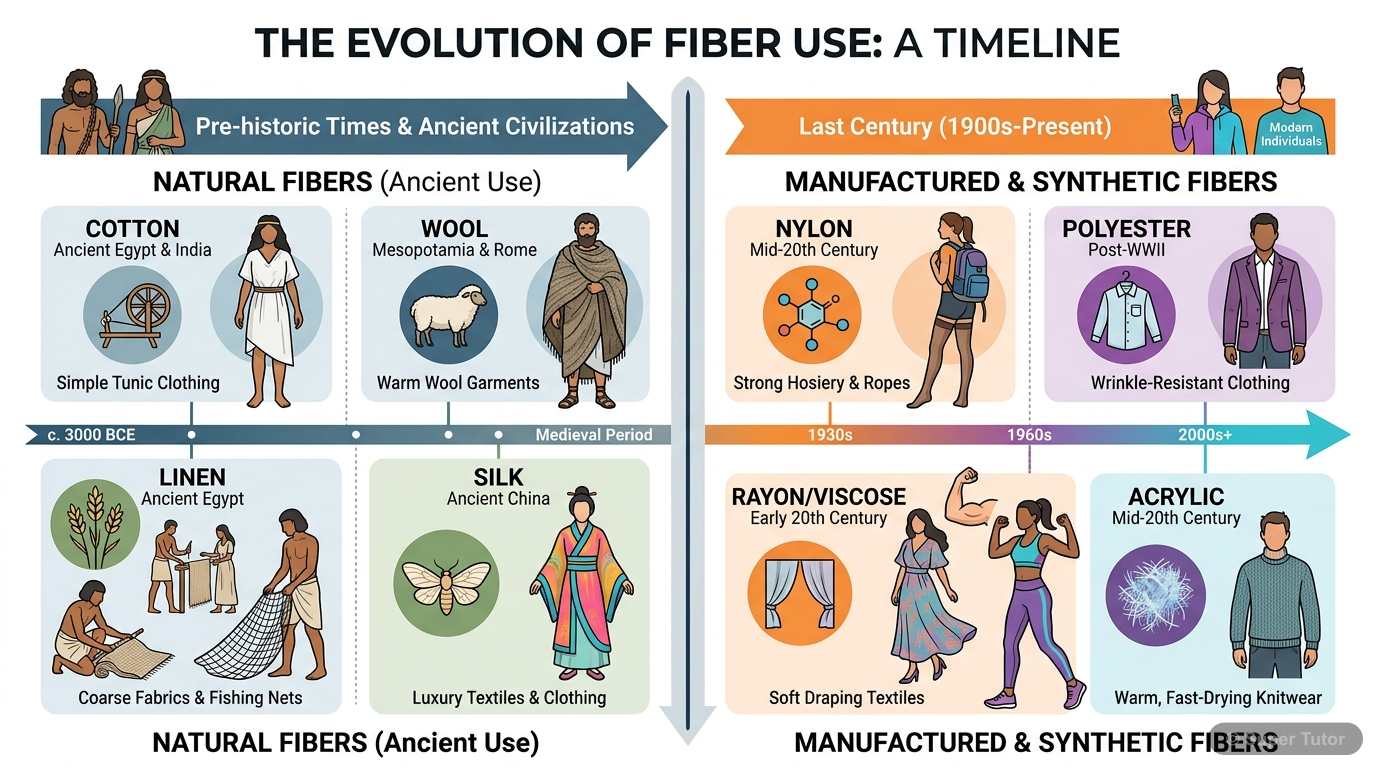
One of 25 illustrations for Design for Fabric and Apparel in Super Tutor — alongside flashcards, concept maps and practice questions.
See them allOverview
Design in fabric and apparel is the planned creation of a product that is both useful and visually pleasing. It is not mere decoration. A good design combines aesthetic appeal with the right use of materials, expected price, colour, and service. Design in textiles and dress is studied through two as
Key Concepts
Design is an arrangement according
Design is an arrangement according to a plan for creation of a desired object. It combines usefulness with visual appeal and gives harmony in form. A
Structural design depends on form
Structural design depends on form and not on superimposed ornamentation. In fabric, it includes fibre processing, types of fibres and yarns, weaving,
Applied design is added on
Applied design is added on the basic structure. In fabric it includes finishes, dyeing, printing, embroidery, and fancy needle-work. In garments it in
The elements of design are colour
The elements of design are colour, texture, line, shape or form. These are the basic tools used to create visual interest and good composition.
The principles of design are proportion
The principles of design are proportion, balance, emphasis, rhythm, and harmony. They guide how the elements are arranged for a pleasing effect.
Learning Objectives
- Understand the meaning of design in fabric and apparel
- Recognise structural and applied design
- Identify the elements of design: colour, texture, line, shape or form
- Explain the principles of design: proportion, balance, emphasis, rhythm, and harmony
- Understand colour theory, colour wheels, shade cards, and colour schemes
Frequently Asked Questions
What are the important topics in Design for Fabric and Apparel for CBSE Class 12 Home Science?
How should I revise Design for Fabric and Apparel for the CBSE Class 12 board exam?
Sources & Official References
- NCERT Official — ncert.nic.in
- CBSE Academic — cbseacademic.nic.in
- CBSE Official — cbse.gov.in
- National Education Policy 2020 — education.gov.in
Content is aligned to the official syllabus. Refer to the board website for the latest curriculum.
More resources for Design for Fabric and Apparel
Practice Quiz
Test yourself with a quick quiz
Important Questions
Exam-style questions with answers
Revision Notes
Key points for last-minute revision
Concept Maps
See how topics connect
Study Plan
Step-by-step plan for this chapter
Flashcards
Quick-fire cards for active recall
Syllabus
What topics to cover
NCERT Solutions
Every textbook question solved step by step
For serious students
Get the full Design for Fabric and Apparel chapter — start free.
Quizzes, flashcards, an AI doubt solver and a study plan for CBSE Class 12 Home Science. Free to start, no card needed.