Exploring Mixtures and their Separation — Concept Maps
CBSE · Class 9 · Science
4 concept maps of Exploring Mixtures and their Separation for CBSE Class 9 Science, each also written out as a text outline.
Interactive on Super Tutor
Studying Exploring Mixtures and their Separation? Get the full interactive chapter.
Quizzes, flashcards, AI doubt-solver and a step-by-step study plan — built for concept maps and more.
Free trial, no card needed.
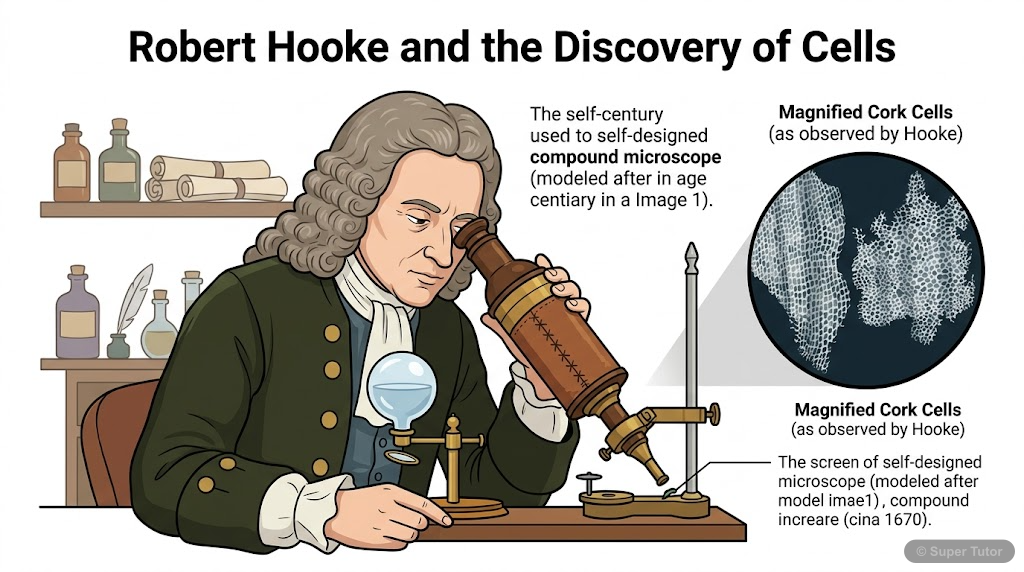
Learn better with visuals Super Tutor pairs illustrations like this with notes and quizzes for Exploring Mixtures and their Separation.
Correct vs Incorrect: What Happens to Cells in Different Solutions
The map in words
- Cell Placed in Solution
- Type of Solution?
- Hypotonic Very Dilute: Water enters cell by osmosis
- Cell Type?
- Plant Cell has cell wall: Cell becomes Turgid - swells but does NOT burst
- Animal Cell no cell wall: Cell swells and may BURST - Cytolysis
- Cell Type?
- Isotonic Same concentration: No net water movement
- Cell stays same size - No change
- Hypertonic Concentrated: Water leaves cell by osmosis
- Cell Type?
- Plant Cell: PLASMOLYSIS - contents shrink from cell wall
- Animal Cell: Cell SHRINKS - Crenation
- Cell Type?
- Hypotonic Very Dilute: Water enters cell by osmosis
- Type of Solution?
Cell Structure - Complete Overview
The map in words
- The Cell
- Cell Membrane
- Selectively Permeable
- Made of Lipids and Proteins
- Osmosis and Diffusion
- Cell Wall
- Only in Plant Cells
- Made of Cellulose
- Prevents Bursting
- Nucleus
- Nuclear Membrane
- Chromatin and DNA
- Controls Cell Activity
- Cytoplasm
- Fluid Content
- Contains Organelles
- Organelles
- Endoplasmic Reticulum
- RER - Protein Synthesis
- SER - Lipid Synthesis
- Golgi Apparatus
- Packaging
- Dispatch
- Mitochondria
- Powerhouse
- Produces ATP
- Plastids
- Chloroplasts
- Leucoplasts
- Lysosomes
- Suicide Bags
- Digestive Enzymes
- Vacuoles
- Storage
- Turgidity
- Endoplasmic Reticulum
- Cell Membrane
The Fundamental Unit of Life — Complete Concept Map
The map in words
- Cell
- Discovery
- Hooke 1665 Cork
- Leeuwenhoek 1674 Pond Water
- Brown 1831 Nucleus
- Cell Theory
- Schleiden 1838
- Schwann 1839
- Virchow 1855
- Types
- Prokaryotic
- No Nuclear Membrane
- No Membrane Organelles
- Nucleoid
- Bacteria
- Eukaryotic
- Nuclear Membrane Present
- Membrane Organelles Present
- Plants Animals Fungi
- Prokaryotic
- Structure
- Plasma Membrane
- Selectively Permeable
- Lipids and Proteins
- Osmosis and Diffusion
- Cell Wall
- Only Plants Fungi Bacteria
- Cellulose
- Plasmolysis
- Nucleus
- Double Membrane
- Chromosomes DNA
- Controls Cell
- Cytoplasm
- Fluid Content
- Contains Organelles
- Plasma Membrane
- Organelles
- ER
- RER with Ribosomes
- SER Lipid Synthesis
- Golgi Apparatus
- Packages Products
- Forms Lysosomes
- Lysosomes
- Suicide Bags
- Digestive Enzymes
- Mitochondria
- Powerhouse
- Makes ATP
- Own DNA
- Plastids
- Only in Plants
- Chloroplasts Green
- Leucoplasts Storage
- Vacuoles
- Large in Plants
- Small in Animals
- Turgidity
- ER
- Cell Division
- Mitosis
- 2 Daughter Cells
- Growth Repair
- Meiosis
- 4 Daughter Cells
- Half Chromosomes
- Gametes
- Mitosis
- Discovery
Mixtures and their separation
The map in words
- Mixtures and their separation
- Classification of mixtures
- Solutions
- Concentration of solution
- Solubility
- Methods of separation of homogeneous mixtures
- Methods of separation of heterogeneous mixtures
- Special mixtures and materials
- Light scattering
Explore these maps interactively
Explore DiagramsFrequently Asked Questions
What are the important topics in Exploring Mixtures and their Separation for CBSE Class 9 Science?
What do the concept maps for Exploring Mixtures and their Separation show?
How should I revise Exploring Mixtures and their Separation for Class 9 exams?
Sources & Official References
- NCERT Official — ncert.nic.in
- CBSE Academic — cbseacademic.nic.in
- CBSE Official — cbse.gov.in
- National Education Policy 2020 — education.gov.in
Content is aligned to the official syllabus. Refer to the board website for the latest curriculum.
More resources for Exploring Mixtures and their Separation
Practice Quiz
Test yourself with a quick quiz
Important Questions
Exam-style questions with answers
Revision Notes
Key points for last-minute revision
Formula Sheet
The chapter's formulas in one place
Chapter Summary
Understand the chapter at a glance
Study Plan
Step-by-step plan for this chapter
Flashcards
Quick-fire cards for active recall
Syllabus
What topics to cover
NCERT Solutions
Every textbook question solved step by step
For serious students
Get the full Exploring Mixtures and their Separation chapter — start free.
Quizzes, flashcards, an AI doubt solver and a study plan for CBSE Class 9 Science. Free to start, no card needed.