Exploring Mixtures and their Separation — Chapter Summary
CBSE · Class 9 · Science
Summary of Exploring Mixtures and their Separation for CBSE Class 9 Science. Part of the CBSE Class 9 Science syllabus.
Interactive on Super Tutor
Studying Exploring Mixtures and their Separation? Get the full interactive chapter.
Quizzes, flashcards, AI doubt-solver and a step-by-step study plan — built for chapter summary and more.
Free trial, no card needed.
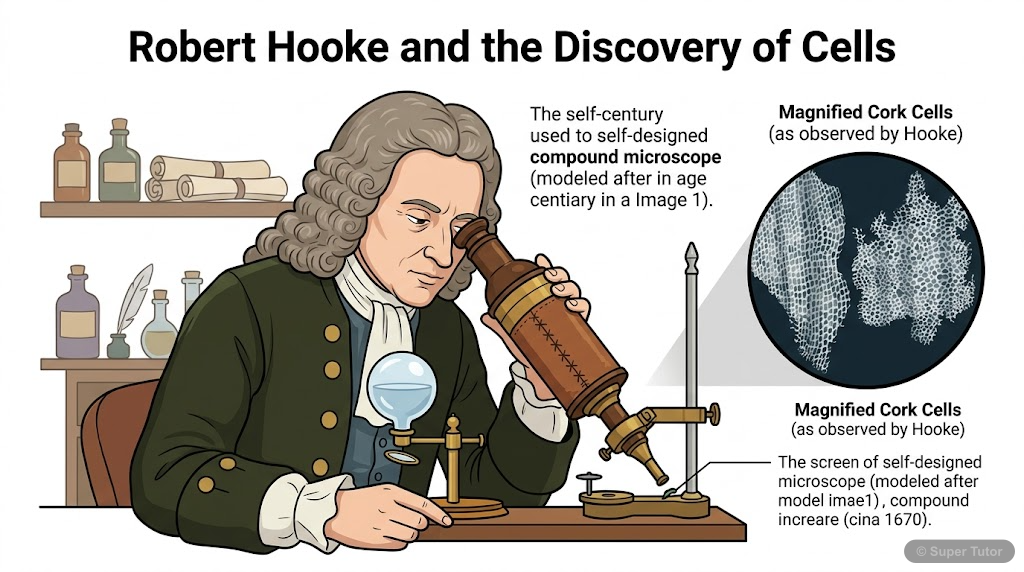
Learn better with visuals Super Tutor pairs illustrations like this with notes and quizzes for Exploring Mixtures and their Separation.
Overview
Mixtures are combinations of two or more substances that are not chemically combined. Some mixtures are uniform throughout and are called homogeneous mixtures or solutions, while others are non-uniform and are called heterogeneous mixtures. The chapter also shows that mixtures can be separated by us
Key Concepts
A homogeneous mixture has the same
A homogeneous mixture has the same composition throughout, so every part is alike. A solution is a homogeneous mixture. A heterogeneous mixture does n
A solution is a homogeneous mixture
A solution is a homogeneous mixture in which one substance dissolves in another. The dissolved substance is the solute and the substance that dissolve
The amount of solute dissolved
The amount of solute dissolved in a given amount of solvent or solution is termed as the concentration of the solution. Concentration can be expressed
Solubility is the maximum amount
Solubility is the maximum amount of solute that dissolves in a fixed quantity of solvent at a given temperature. A saturated solution cannot dissolve
A crystal is a solid
A crystal is a solid that is made up of particles arranged in a regular geometric pattern. In laboratories, the process of forming crystals from a sat
Learning Objectives
- Classify mixtures as homogeneous or heterogeneous
- Distinguish between solutions, suspensions, and colloids
- Understand concentration and its common percentage forms
- Explain solubility and saturated solutions
- Describe crystallization, distillation, paper chromatography, sublimation, separating funnel use, centrifugation, and coagulation
Frequently Asked Questions
What are the important topics in Exploring Mixtures and their Separation for CBSE Class 9 Science?
How should I revise Exploring Mixtures and their Separation for Class 9 exams?
Sources & Official References
- NCERT Official — ncert.nic.in
- CBSE Academic — cbseacademic.nic.in
- CBSE Official — cbse.gov.in
- National Education Policy 2020 — education.gov.in
Content is aligned to the official syllabus. Refer to the board website for the latest curriculum.
More resources for Exploring Mixtures and their Separation
Practice Quiz
Test yourself with a quick quiz
Important Questions
Exam-style questions with answers
Revision Notes
Key points for last-minute revision
Formula Sheet
The chapter's formulas in one place
Concept Maps
See how topics connect
Study Plan
Step-by-step plan for this chapter
Flashcards
Quick-fire cards for active recall
Syllabus
What topics to cover
NCERT Solutions
Every textbook question solved step by step
For serious students
Get the full Exploring Mixtures and their Separation chapter — start free.
Quizzes, flashcards, an AI doubt solver and a study plan for CBSE Class 9 Science. Free to start, no card needed.