Practical Chemistry
ICSE · Class 10 · Chemistry
Quick revision notes for Practical Chemistry — ICSE Class 10 Chemistry. Key concepts, formulas, and definitions for last-minute revision.
Interactive on Super Tutor
Studying Practical Chemistry? Get the full interactive chapter.
Quizzes, flashcards, AI doubt-solver and a step-by-step study plan — built for revision notes and more.
1,000+ Class 10 students started this chapter today
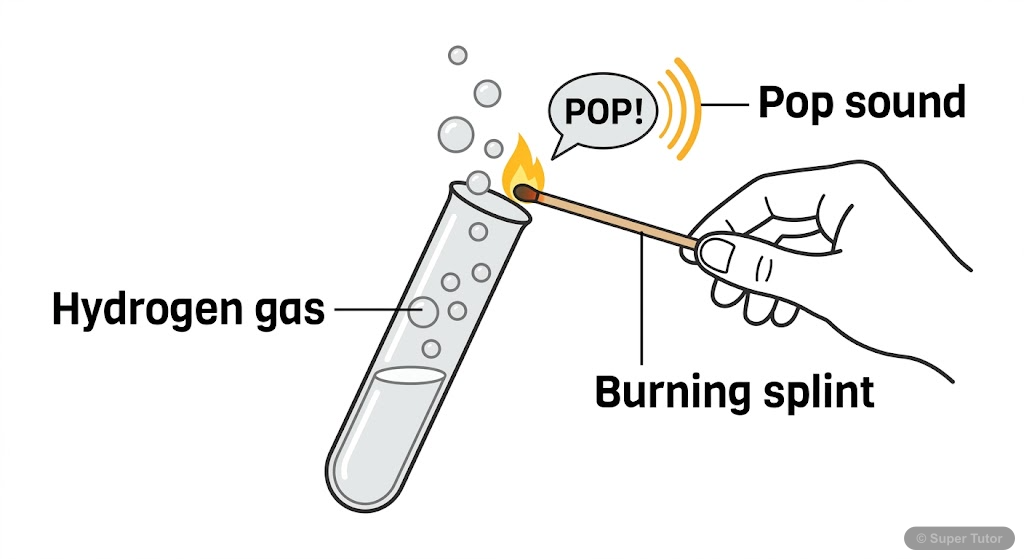
Super Tutor has 18+ illustrations like this for Practical Chemistry alone — flashcards, concept maps, and step-by-step visuals.
See them allKey Topics to Revise
1. Basic Ideas in Practical Chemistry
- A normal salt is made up of two radicals: a cation and an anion.
- A positive charge bearing ion is called a cation while a negative charge bearing ion is called anion.
- Cations are identified by reaction with alkalis or by specific reagents.
2. Identification Tests for Gases
- Ammonia turns moist red litmus blue and turns Nessler's reagent brown.
- Carbon dioxide turns lime water milky and the milkiness disappears on passing excess carbon dioxide.
- Carbon dioxide shows no effect on potassium dichromate solution or potassium permanganate solution.
3. Tests for Cations Other Than Alkali Tests
- Lead ion gives silver black precipitate with hydrogen sulphide, canary yellow with potassium iodide, mustard yellow with potassium chromate, and white precipitate with hydrochloric acid.
- Copper ion gives black precipitate with hydrogen sulphide and chocolate brown precipitate with potassium ferrocyanide.
- Ferrous ion gives Turnbull blue colour with potassium ferricyanide and fails to give blood red colour with KCNS.
4. Tests for Cations Based on Alkalis
- Ammonium ion gives ammonia gas when heated with caustic soda solution.
- Lead ion gives white lead hydroxide with sodium hydroxide, and the precipitate dissolves in excess sodium hydroxide.
- With ammonium hydroxide, lead ion gives white precipitate that is insoluble in excess.
Get complete notes with diagrams and examples
Full NotesKey Concepts
Frequently Asked Questions
What are the important topics in Practical Chemistry for ICSE Class 10 Chemistry?
How to score full marks in Practical Chemistry — ICSE Class 10 Chemistry?
Sources & Official References
Content is aligned to the official syllabus. Refer to the board website for the latest curriculum.
More resources for Practical Chemistry
Practice Quiz
Test yourself with a quick quiz
Important Questions
Practice with board exam-style questions
Formula Sheet
All formulas in one place
Chapter Summary
Understand the chapter at a glance
Concept Maps
See how topics connect visually
Study Plan
Step-by-step plan to ace this chapter
Flashcards
Quick-fire cards for active recall
Syllabus
What topics to cover
NCERT Solutions
Every textbook question solved step by step
For serious students
Get the full Practical Chemistry chapter — for free.
Quizzes, flashcards, AI doubt-solver and a step-by-step study plan for ICSE Class 10 Chemistry.