Practical Chemistry — Chapter Summary
ICSE · Class 10 · Chemistry
Summary of Practical Chemistry for ICSE Class 10 Chemistry. Part of the ICSE Class 10 Chemistry syllabus. Practical Chemistry deals.
Interactive on Super Tutor
Studying Practical Chemistry? Get the full interactive chapter.
Quizzes, flashcards, AI doubt-solver and a step-by-step study plan — built for chapter summary and more.
Free trial, no card needed.
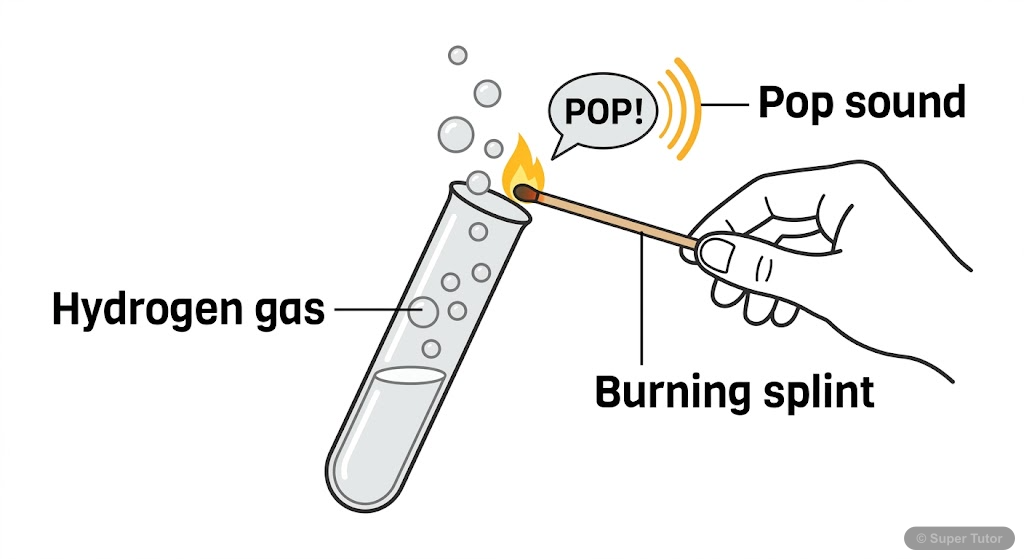
One of 18 illustrations for Practical Chemistry in Super Tutor — alongside flashcards, concept maps and practice questions.
See them allOverview
Practical Chemistry deals with the identification of gases and ions by simple laboratory tests. A normal salt is made up of two radicals, a cation and an anion. A positive charge bearing ion is called a cation while a negative charge bearing ion is called anion. Cations are identified by reaction wi
Key Concepts
A cation is a positively charged
A cation is a positively charged ion and an anion is a negatively charged ion. Salts contain both kinds of ions.
The homogeneous mixture of salt
The homogeneous mixture of salt and solvent prepared before testing is called original solution or O.S.
Different gases are recognised by their
Different gases are recognised by their colour, smell, and confirmatory tests. For example, ammonia turns moist red litmus blue and brown with Nessler
Heating ammonium salts with sodium hydroxide
Heating ammonium salts with sodium hydroxide releases ammonia gas. The gas turns moist red litmus blue and gives brown colour with Nessler's reagent.
Lead ion gives silver black precipitate
Lead ion gives silver black precipitate with hydrogen sulphide, canary yellow with potassium iodide, mustard yellow with potassium chromate, and white
Learning Objectives
- Understand how salts are classified into cations and anions
- Identify common gases using their colour, smell, and confirmatory tests
- Recognise cations using specific reagents and alkali tests
- Use flame test to identify certain cations
- Observe the effect of heat on selected substances and infer products
Frequently Asked Questions
What are the important topics in Practical Chemistry for ICSE Class 10 Chemistry?
How should I revise Practical Chemistry for the ICSE Class 10 board exam?
Sources & Official References
Content is aligned to the official syllabus. Refer to the board website for the latest curriculum.
More resources for Practical Chemistry
For serious students
Get the full Practical Chemistry chapter — start free.
Quizzes, flashcards, an AI doubt solver and a study plan for ICSE Class 10 Chemistry. Free to start, no card needed.