On the face of It (Susan Hill) — NCERT Solutions
Madhya Pradesh Board · Class 12 · English
NCERT Solutions for On the face of It (Susan Hill), Madhya Pradesh Board Class 12 English: 5 textbook questions solved step by step.
Interactive on Super Tutor
Studying On the face of It (Susan Hill)? Get the full interactive chapter.
Quizzes, flashcards, AI doubt-solver and a step-by-step study plan — built for NCERT solutions and more.
Free trial, no card needed.
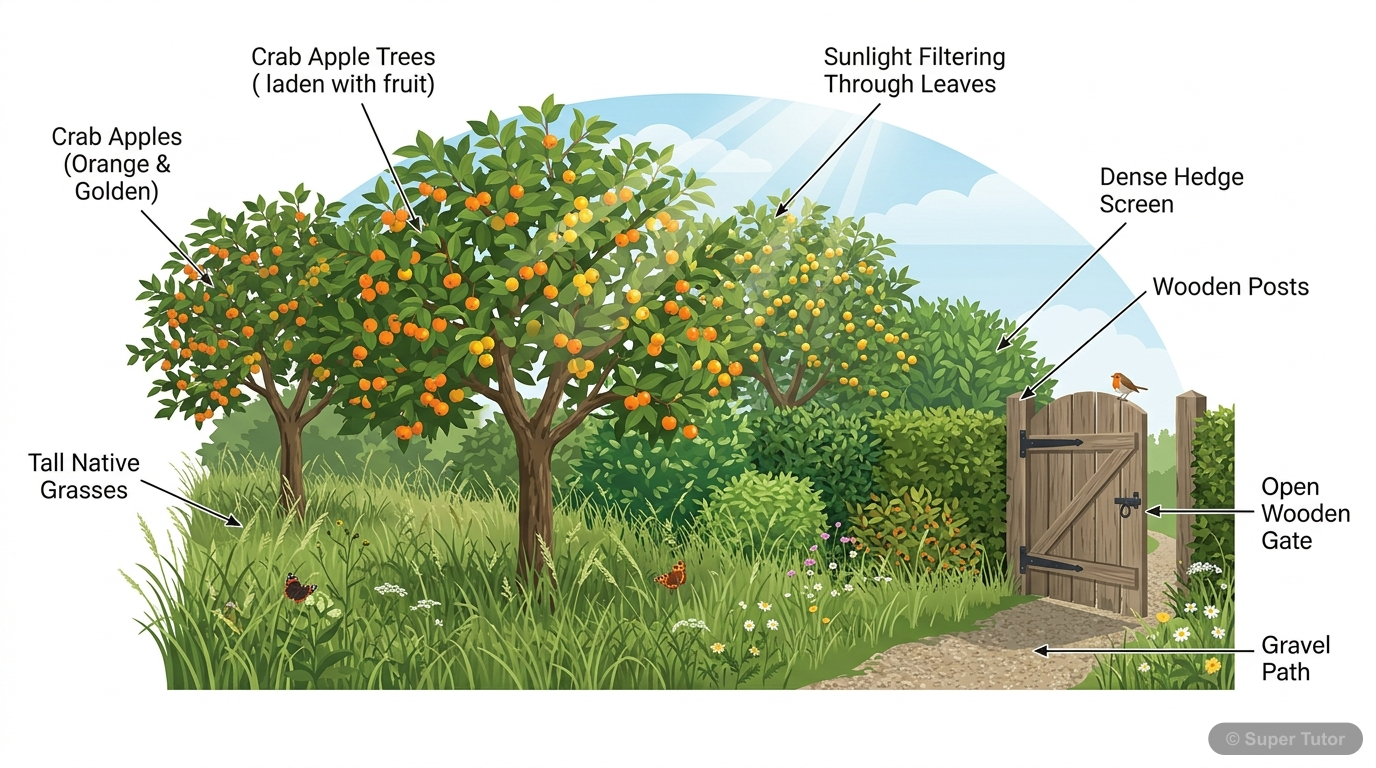
One of 9 illustrations for On the face of It (Susan Hill) in Super Tutor — alongside flashcards, concept maps and practice questions.
The first 3 solutions are open to read. The other 2 are free with a Super Tutor account.
Reading with Insight
1What is it that draws Derry towards Mr Lamb inspite of himself?Show solution
Given / Context: Derry is a fourteen-year-old boy who has had one side of his face burnt by acid. He is deeply withdrawn, bitter, and avoids people because of the stares and pity he receives. He stumbles into Mr Lamb's garden almost by accident.
Answer:
Despite his initial reluctance and defiance, several things draw Derry towards Mr Lamb:
- Acceptance without pity: Mr Lamb is the first person who does not stare at Derry's burnt face with horror or pity. He treats Derry as a completely normal human being, which is something Derry has never experienced before.
- Mr Lamb's own disability: Mr Lamb has a tin leg (his real leg was blown off in a war). He too is physically impaired, yet he lives life fully and joyfully. This gives Derry a sense of kinship — he feels he is with someone who truly understands what it means to be 'different.'
- Mr Lamb's philosophy of life: Mr Lamb's positive outlook — his love for his garden, his books, the bees, the sunlight, and all living things — is something Derry has never encountered. Mr Lamb tells him that everything and everyone in the world has a place and a purpose, and that one must not shut oneself away from life.
- Honest conversation: Mr Lamb speaks to Derry honestly and directly, without false sympathy. He challenges Derry's self-pity and bitterness with logic and gentle humour (e.g., the story of the man who locked himself in a room and was killed by a falling picture). This stimulates Derry intellectually and emotionally.
- The feeling of being wanted: Mr Lamb tells Derry he can come back whenever he likes, that the gate is always open. For a boy who feels rejected by the world, this open invitation is deeply meaningful.
Conclusion: In short, it is Mr Lamb's unconditional acceptance, his shared experience of disability, and his life-affirming philosophy that draw Derry towards him despite Derry's own instinct to remain isolated. Mr Lamb gives Derry a glimpse of a life beyond bitterness and seclusion.
2In which section of the play does Mr Lamb display signs of loneliness and disappointment? What are the ways in which Mr Lamb tries to overcome these feelings?Show solution
Given / Context: Mr Lamb is an old man who lives alone in a large house with a garden. He has a tin leg and no curtains on his windows. Children call him 'Lamey-Lamb' to mock him.
Section where loneliness and disappointment are displayed:
Mr Lamb displays signs of loneliness and disappointment primarily in Scene Two of the play. When Derry says he must go home and that his mother will be waiting, Mr Lamb's tone becomes wistful and slightly resigned. He admits that people come into his garden — children come to scrump apples — but nobody stays. He says, "I've got a lot of friends." Yet it is clear from the context that these are not real, close friends; he is largely alone. He also reveals that he sits in the sun, reads books, and tends his garden — all solitary activities. The fact that he has no curtains and keeps his windows open 'to hear the wind' suggests a deep longing for connection with the outside world.
Furthermore, when Derry decides to leave, Mr Lamb says he doubts Derry will come back — a statement that reveals his disappointment at being left alone once again, as people always seem to leave him.
Ways in which Mr Lamb tries to overcome these feelings:
- Keeping himself busy: He tends his large garden, picks apples, makes toffee from crab apples, and keeps bees. Physical activity keeps him engaged with life.
- Reading: His house is full of books. Reading gives him companionship and intellectual stimulation.
- Embracing nature: He loves the sunlight, the wind, the sound of bees, and the rustling of leaves. He finds joy and meaning in the natural world around him.
- Keeping an open house: He never locks his gate. He welcomes anyone — children, strangers — into his garden. This is his way of inviting human contact.
- Positive philosophy: He consciously chooses to see beauty and purpose in everything, even in weeds ("Some call them weeds. If you look at them... they're as good as any other plant."). This attitude helps him fight despair.
Conclusion: Mr Lamb's loneliness is real, but he combats it through an active engagement with nature, books, and an open-hearted welcome to all who come his way.
3The actual pain or inconvenience caused by a physical impairment is often much less than the sense of alienation felt by the person with disabilities. What is the kind of behaviour that the person expects from others?Show solution
Given / Context: Both Derry and Mr Lamb are physically impaired. Derry's face is burnt by acid; Mr Lamb has a tin leg. The play explores how society's reaction to disability causes far more suffering than the disability itself.
Answer:
The play powerfully illustrates that the psychological wound of alienation is far deeper than any physical wound. A person with a disability does not want the following:
- Stares of horror, disgust, or morbid curiosity.
- Expressions of exaggerated pity or false sympathy.
- Whispered comments (as Derry recalls overhearing a woman say, "That's a terrible thing. That's a face only a mother could love.").
- Being treated as if the disability defines the whole person.
- Being avoided or feared.
Instead, a person with a disability expects and deserves the following behaviour from others:
- Normal, natural interaction: They want to be spoken to and treated just like any other person, without any reference to their physical condition unless they themselves bring it up.
- Acceptance: They want to be accepted as a complete human being — with thoughts, feelings, dreams, and abilities — not reduced to their impairment.
- Respect and dignity: They do not want pity; they want respect. Pity is humiliating because it places the disabled person in a position of inferiority.
- Encouragement: They need others to encourage them to participate fully in life, to pursue their interests and ambitions, rather than being told (directly or indirectly) that they are limited.
- Empathy, not sympathy: True empathy means trying to understand their experience without making them feel like objects of charity.
- Inclusion: They want to be included in social life — conversations, activities, friendships — rather than being isolated or marginalised.
Conclusion: As the play shows through Mr Lamb's treatment of Derry, what a disabled person needs most is to be seen as a full human being. A single act of genuine acceptance, as Mr Lamb demonstrates, can transform a life.
Free with a Super Tutor account
How about...
Free with a Super Tutor account
2 more solved questions in On the face of It (Susan Hill)
They are free with a Super Tutor account, along with practice quizzes and flashcards for this chapter. Free to start, no card needed.
Frequently Asked Questions
What are the important topics in On the face of It (Susan Hill) for Madhya Pradesh Board Class 12 English?
Are these NCERT Solutions for On the face of It (Susan Hill) free?
How should I revise On the face of It (Susan Hill) for the Madhya Pradesh Board Class 12 board exam?
Sources & Official References
Content is aligned to the official syllabus. Refer to the board website for the latest curriculum.
More resources for On the face of It (Susan Hill)
Practice Quiz
Test yourself with a quick quiz
Important Questions
Exam-style questions with answers
Revision Notes
Key points for last-minute revision
Chapter Summary
Understand the chapter at a glance
Concept Maps
See how topics connect
Study Plan
Step-by-step plan for this chapter
Flashcards
Quick-fire cards for active recall
Syllabus
What topics to cover
For serious students
Get the full On the face of It (Susan Hill) chapter — start free.
Quizzes, flashcards, an AI doubt solver and a study plan for Madhya Pradesh Board Class 12 English. Free to start, no card needed.