Keeping Quiet (Pablo Neruda) — NCERT Solutions
Madhya Pradesh Board · Class 12 · English
NCERT Solutions for Keeping Quiet (Pablo Neruda), Madhya Pradesh Board Class 12 English: 5 textbook questions solved step by step.
Interactive on Super Tutor
Studying Keeping Quiet (Pablo Neruda)? Get the full interactive chapter.
Quizzes, flashcards, AI doubt-solver and a step-by-step study plan — built for NCERT solutions and more.
Free trial, no card needed.
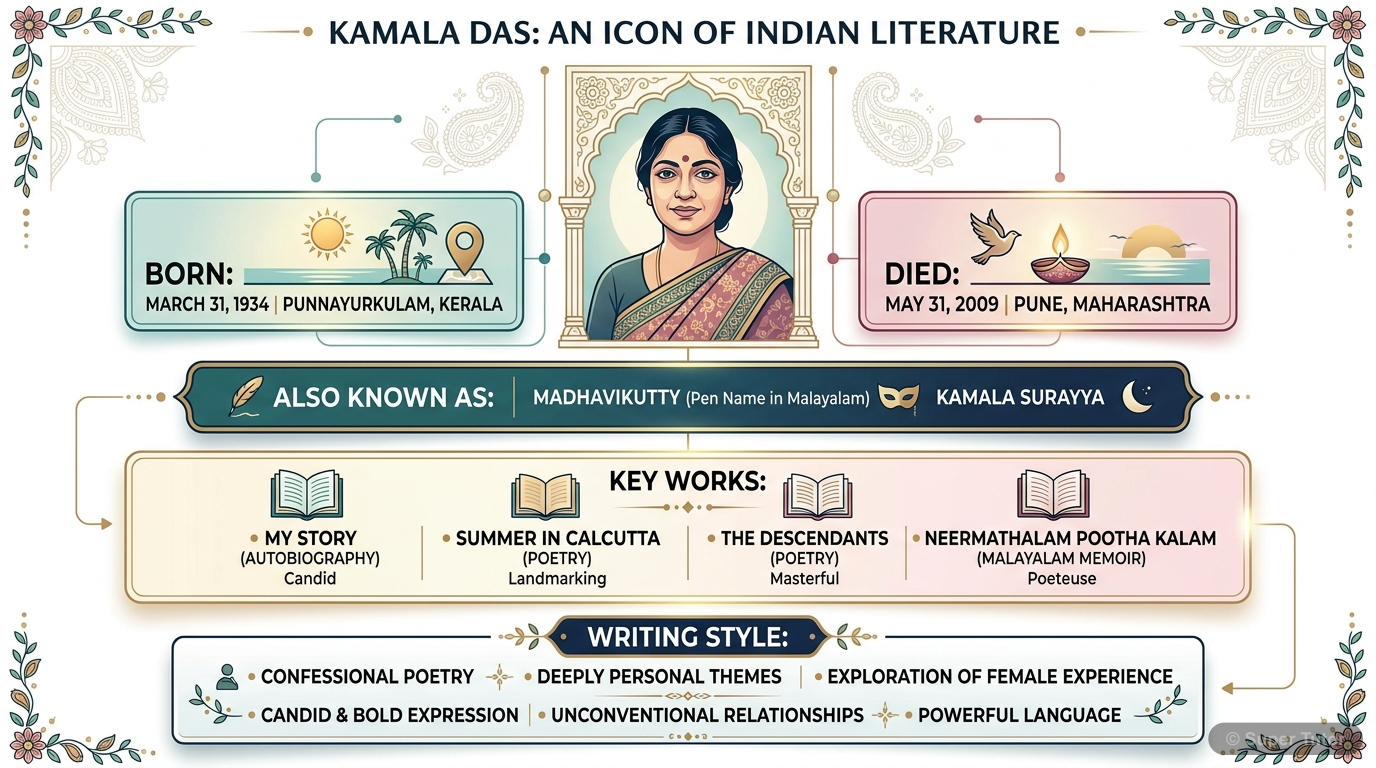
One of 5 illustrations for Keeping Quiet (Pablo Neruda) in Super Tutor — alongside flashcards, concept maps and practice questions.
The first 3 solutions are open to read. The other 2 are free with a Super Tutor account.
Think it out
1What will counting up to twelve and keeping still help us achieve?Show solution
Given / Context: The poet Pablo Neruda asks everyone to count up to twelve and keep quiet for a moment.
Answer:
Counting up to twelve (which takes just a few seconds) and keeping still will give us a rare moment of complete silence and inactivity. During this brief pause, we will stop all our noisy, rushed, and often harmful activities — wars, exploitation of nature, and the relentless pursuit of selfish goals. This sudden stillness will allow us to:
- Introspect — understand ourselves and each other better.
- Break the cycle of violence and destruction — men engaged in wars and harmful activities will pause and reflect.
- Experience a sense of togetherness — people will feel united in shared silence rather than divided by conflict.
- Interrupt the 'sadness' — the sadness of never understanding ourselves and of threatening ourselves with death will be momentarily broken.
In short, this brief, exotic moment of stillness will bring peace, self-awareness, and a sense of brotherhood among all human beings.
2Do you think the poet advocates total inactivity and death?Show solution
Given / Context: The poet says, "What I want should not be confused with total inactivity."
Answer:
No, the poet does not advocate total inactivity or death. He makes this absolutely clear in the poem itself when he says:
> "What I want should not be confused with total inactivity. Life is what it is about; I want no truck with death."
Neruda only asks for a brief, momentary pause — the time it takes to count to twelve. He wants people to stop their destructive, harmful, and mindless activities for just a moment so that they can reflect and reconnect with themselves and with nature.
He is, in fact, a champion of life, not death. He believes that if human beings slow down and stop their self-destructive rush, they will understand life better and value it more. The stillness he advocates is not the stillness of death but the stillness of deep reflection and inner peace — the kind of stillness that the Earth itself demonstrates when everything seems dead in winter but is actually alive underneath, waiting to bloom again.
3What is the 'sadness' that the poet refers to in the poem?Show solution
Given / Context: The poet writes — "perhaps a huge silence might interrupt this sadness of never understanding ourselves and of threatening ourselves with death."
Answer:
The 'sadness' the poet refers to is the deep, collective sorrow that arises from two interlinked failures of human beings:
- The failure to understand ourselves: Human beings are so caught up in the mad rush of modern life — in their ambitions, conflicts, and routines — that they never pause to reflect on who they truly are, what they truly want, or what the purpose of their existence is. This lack of self-awareness is a profound sadness.
- Threatening ourselves with death: Despite being the most intelligent creatures on Earth, human beings constantly threaten their own existence through wars (wars with gas, wars with fire), destruction of nature, and other violent activities. The irony of a species that is intelligent enough to create but chooses to destroy is deeply sad.
Thus, the 'sadness' is the tragedy of human existence — our inability to know ourselves and our tendency to move towards self-destruction rather than harmony and peace.
Free with a Super Tutor account
Try this out
Free with a Super Tutor account
2 more solved questions in Keeping Quiet (Pablo Neruda)
They are free with a Super Tutor account, along with practice quizzes and flashcards for this chapter. Free to start, no card needed.
Frequently Asked Questions
What are the important topics in Keeping Quiet (Pablo Neruda) for Madhya Pradesh Board Class 12 English?
Are these NCERT Solutions for Keeping Quiet (Pablo Neruda) free?
How should I revise Keeping Quiet (Pablo Neruda) for the Madhya Pradesh Board Class 12 board exam?
Sources & Official References
Content is aligned to the official syllabus. Refer to the board website for the latest curriculum.
More resources for Keeping Quiet (Pablo Neruda)
Practice Quiz
Test yourself with a quick quiz
Important Questions
Exam-style questions with answers
Revision Notes
Key points for last-minute revision
Chapter Summary
Understand the chapter at a glance
Concept Maps
See how topics connect
Study Plan
Step-by-step plan for this chapter
Flashcards
Quick-fire cards for active recall
Syllabus
What topics to cover
For serious students
Get the full Keeping Quiet (Pablo Neruda) chapter — start free.
Quizzes, flashcards, an AI doubt solver and a study plan for Madhya Pradesh Board Class 12 English. Free to start, no card needed.