Basic Economic Activies — Flashcards
NIOS · Class 10 · Economics
30 flashcards for Basic Economic Activies (NIOS Class 10 Economics) to test yourself on key terms and facts. Part of the NIOS Class 10 Economics syllabus.
Interactive on Super Tutor
Studying Basic Economic Activies? Get the full interactive chapter.
Quizzes, flashcards, AI doubt-solver and a step-by-step study plan — built for flashcards and more.
Free trial, no card needed.
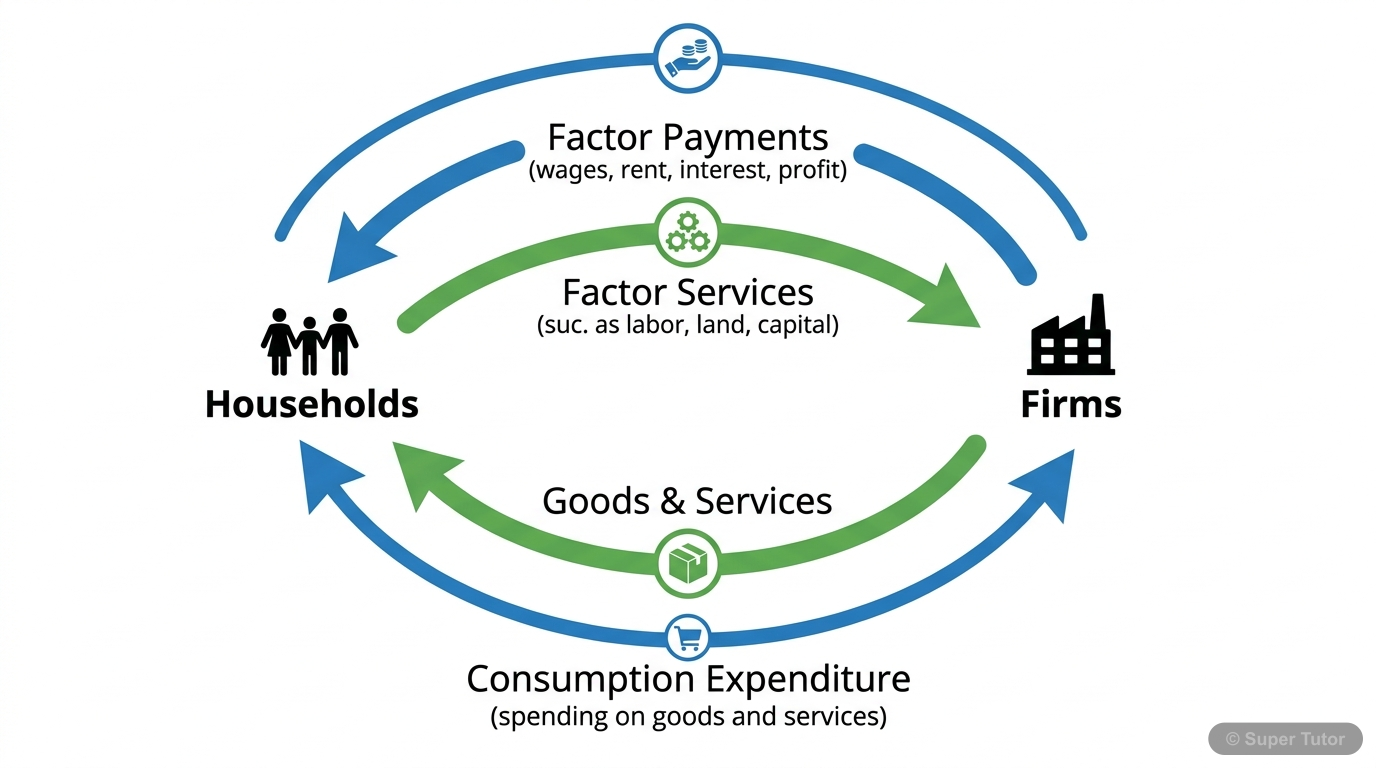
Learn better with visuals Super Tutor pairs illustrations like this with notes and quizzes for Basic Economic Activies.
What are the three basic economic activities of an economy?
Answer
Production, consumption, and capital formation are the three basic economic activities of an economy. Production creates goods and services, consumption uses them to satisfy wants, and capital formati…
Define production.
Answer
Production is defined as creation of utility. It means using scarce resources to make goods and services that satisfy human wants.
What are the factors of production?
Answer
Land, labour, capital, and entrepreneurship are the factors of production. These are combined to produce goods and services, and each factor receives a payment for its productive service.
What is land as a factor of production?
Answer
Land is a gift of nature and a natural resource. It includes plain regions, mountains, and plateau regions. It is not mobile, and the owner of land is paid rent.
How do mountains and plateau regions help production?
Answer
Mountains ensure the flow of rivers into the plain region and provide facilities for tourism. Plateau regions possess reserves of minerals, fossil fuels, and forests. These natural features support di…
What is labour in economics?
Answer
Labour means human effort through physical and mental exertion in the production of goods and services. People who provide labour are known as human resources, and the income received for labour is wa…
Why are loading, unloading, and ploughing called physical labour?
Answer
Loading, unloading, and ploughing are purely physical labour because they depend mainly on bodily effort and do not require special skill. They are examples of unskilled labour.
How does a person become an engineer, doctor, teacher, lawyer, mechanic, electrician, or tailor?
Answer
A person must acquire skill through education and training. These occupations require trained labour, which increases the productivity of the worker and the economy.
+22 more flashcards
Practise AllFrequently Asked Questions
What are the important topics in Basic Economic Activies for NIOS Class 10 Economics?
How many flashcards are available for Basic Economic Activies?
How should I revise Basic Economic Activies for the NIOS Class 10 board exam?
Sources & Official References
Content is aligned to the official syllabus. Refer to the board website for the latest curriculum.
More resources for Basic Economic Activies
Practice Quiz
Test yourself with a quick quiz
Important Questions
Exam-style questions with answers
Revision Notes
Key points for last-minute revision
Chapter Summary
Understand the chapter at a glance
Concept Maps
See how topics connect
Study Plan
Step-by-step plan for this chapter
Syllabus
What topics to cover
For serious students
Get the full Basic Economic Activies chapter — start free.
Quizzes, flashcards, an AI doubt solver and a study plan for NIOS Class 10 Economics. Free to start, no card needed.