Demand — Flashcards
NIOS · Class 10 · Economics
32 flashcards for Demand (NIOS Class 10 Economics) to test yourself on key terms and facts. Sample: "What is demand?"
Interactive on Super Tutor
Studying Demand? Get the full interactive chapter.
Quizzes, flashcards, AI doubt-solver and a step-by-step study plan — built for flashcards and more.
Free trial, no card needed.
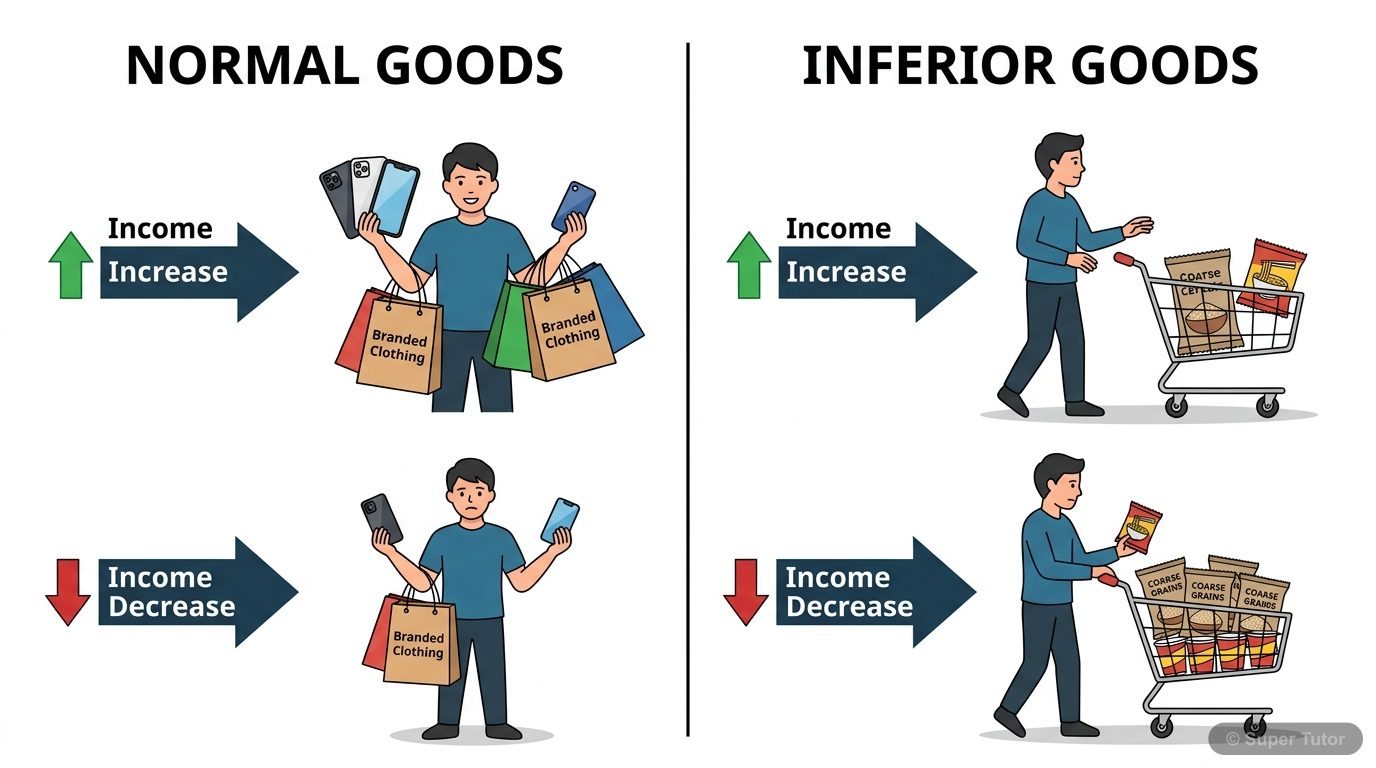
One of 3 illustrations for Demand in Super Tutor — alongside flashcards, concept maps and practice questions.
What is demand?
Answer
Demand for a good is the quantity of the good purchased at a given price at a given time. It includes three parts: price, quantity, and time period. For example, buying 1 kg of rice at Rs. 25 per kg l…
What are the three essential components of demand?
Answer
The three essential components of demand are price of the commodity, quantity of the commodity bought, and time period. The time period may be a week, month, or year.
Why is Nitin's purchase of 2 pairs of shoes not an example of demand?
Answer
It is not an example of demand because the price of a pair of shoes is not given. Demand needs price, quantity, and time period together.
Why is Mr. Jafri's purchase of 5 kg of apple not an example of demand?
Answer
It is not an example of demand because the time period is missing. Demand must mention the price, quantity, and time period.
Why is Ms. Harmit Kaur's milk purchase not an example of demand?
Answer
It is not an example of demand because the quantity of milk consumed is not given. Demand needs price, quantity, and time period.
What is the difference between desire and demand?
Answer
Desire is only wanting a good. Demand is desire backed by ability to purchase and actual payment of price. If a person wants a good but cannot pay for it, it remains desire and does not become demand.
State the law of demand.
Answer
If price of a commodity falls, its quantity demanded increases, and if price of the commodity rises, its quantity demanded falls, other things remaining constant.
What does 'other things remaining constant' mean in the law of demand?
Answer
It means that factors other than price do not change. These include price of related goods, income of the buyer, and tastes and preferences. This condition is also called ceteris paribus.
+24 more flashcards
Practise AllFrequently Asked Questions
What are the important topics in Demand for NIOS Class 10 Economics?
How many flashcards are available for Demand?
How should I revise Demand for the NIOS Class 10 board exam?
Sources & Official References
Content is aligned to the official syllabus. Refer to the board website for the latest curriculum.
More resources for Demand
Practice Quiz
Test yourself with a quick quiz
Important Questions
Exam-style questions with answers
Revision Notes
Key points for last-minute revision
Chapter Summary
Understand the chapter at a glance
Concept Maps
See how topics connect
Study Plan
Step-by-step plan for this chapter
Syllabus
What topics to cover
For serious students
Get the full Demand chapter — start free.
Quizzes, flashcards, an AI doubt solver and a study plan for NIOS Class 10 Economics. Free to start, no card needed.