Once Upon a Time — Practice Quiz
NIOS · Class 10 · English
Try a 4-question quiz on Once Upon a Time for NIOS Class 10 English: tap an answer to check it and see why. 44 questions in the full chapter test.
Interactive on Super Tutor
Studying Once Upon a Time? Get the full interactive chapter.
Quizzes, flashcards, AI doubt-solver and a step-by-step study plan — built for practice quiz and more.
Free trial, no card needed.
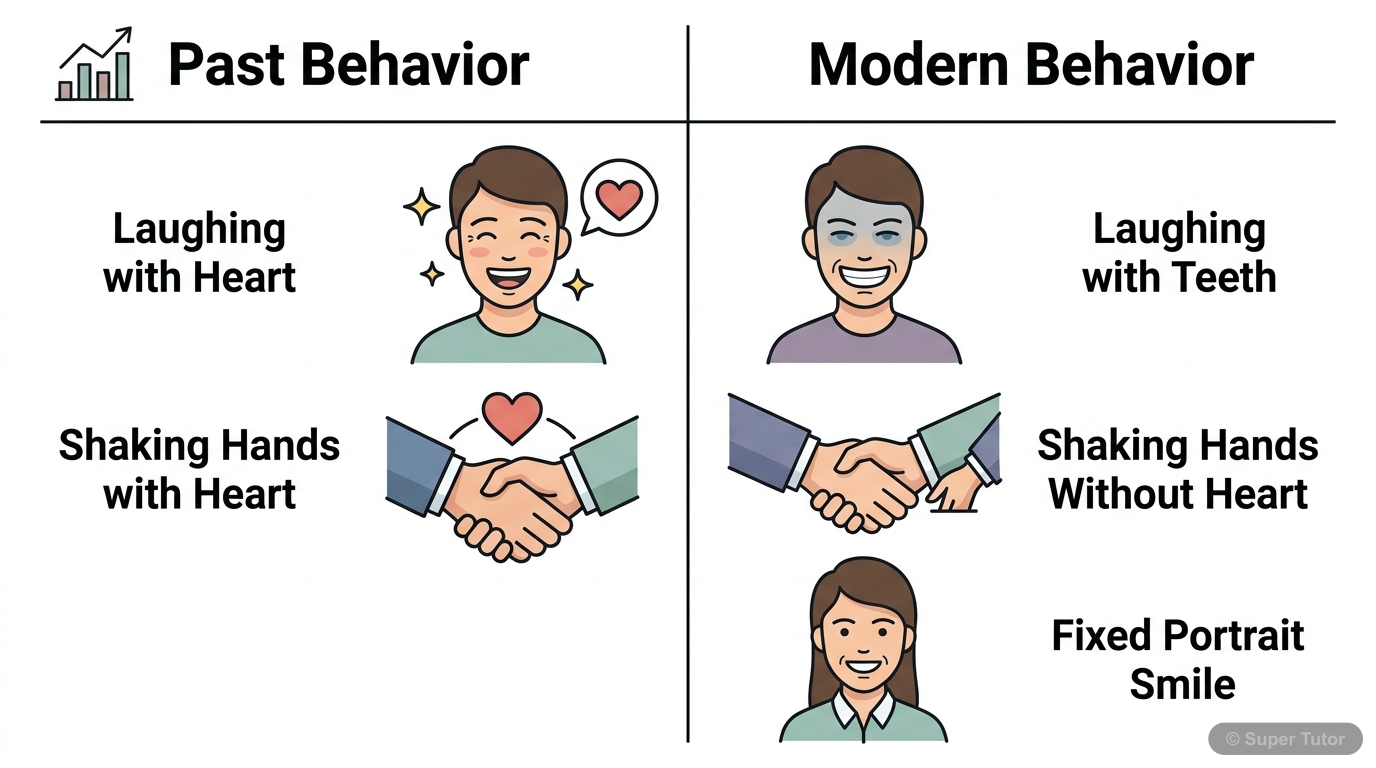
Learn better with visuals Super Tutor pairs illustrations like this with notes and quizzes for Once Upon a Time.
Quick Quiz: Once Upon a Time
0/4Tap an answer to check it instantly. No sign-up needed for these 4.
What phrase does the poet use to begin the poem, creating a story-like atmosphere?
According to the poet, how did people laugh in the olden days?
What do people's 'left hands search' for while shaking hands?
What happens when the poet visits people repeatedly after being told to 'feel at home'?
Sample Questions
The poet compares wearing different faces to:
Show answer
Wearing different dresses
The poet uses the simile 'I have learned to wear many faces like dresses' to show how people change their behavior and expressions according to different situations. Just as we wear different clothes for different occasions (home clothes, office clothes, party clothes), people wear different 'faces' - homeface, officeface, streetface, hostface, cocktailface. This metaphor effectively illustrates how artificial and calculated modern behavior has become, where authenticity is replaced by situation-appropriate masks. Each 'dress' or 'face' hides the person's true self.
What does the poet compare his teeth to when he laughs in the mirror?
Show answer
A snake's bare fangs
This powerful simile 'my laugh in the mirror shows only my teeth like a snake's bare fangs' reveals the poet's disgust with his own artificial behavior. Snake's fangs are associated with danger, poison, and deception - exactly what the poet feels his fake laughter has become. The comparison suggests that his smile has become threatening and false rather than warm and genuine. This metaphor effectively captures how far he has moved from natural, heartfelt laughter to something that appears menacing and insincere. It shows his self-awareness and shame about his transformed behavior.
Who is the poet addressing throughout the poem?
Show answer
His son
Throughout the poem, the poet directly addresses his 'son', using this word multiple times. The father-son relationship is central to the poem's message. The son represents childhood innocence, genuineness, and the natural behavior that the father has lost. By addressing his son, the poet is not only confessing his own transformation but also warning the child about what adulthood might do to him. The son becomes a symbol of hope - someone who can teach the father how to return to authenticity. This direct address makes the poem more personal and emotionally powerful.
What does the poet want to 'unlearn'?
Show answer
All the muting things
The poet says 'I want to unlearn all these muting things' - referring to all the artificial behaviors he has acquired. 'Muting things' refers to behaviors that silence or suppress his true self and genuine expressions. These include fake laughter, insincere handshakes, meaningless pleasantries, and wearing different faces for different situations. The word 'unlearn' is powerful because it suggests these behaviors were learned and therefore can be forgotten. He wants to strip away these layers of artificiality to rediscover his authentic self, just as his son naturally possesses.
+40 more questions on Once Upon a Time (NIOS Class 10 English)
Practise AllFrequently Asked Questions
What are the important topics in Once Upon a Time for NIOS Class 10 English?
How many practice questions are there for Once Upon a Time?
Sources & Official References
Content is aligned to the official syllabus. Refer to the board website for the latest curriculum.
More resources for Once Upon a Time
Important Questions
Exam-style questions with answers
Revision Notes
Key points for last-minute revision
Chapter Summary
Understand the chapter at a glance
Concept Maps
See how topics connect
Study Plan
Step-by-step plan for this chapter
Flashcards
Quick-fire cards for active recall
Syllabus
What topics to cover
For serious students
Get the full Once Upon a Time chapter — start free.
Quizzes, flashcards, an AI doubt solver and a study plan for NIOS Class 10 English. Free to start, no card needed.