Solutions — Flashcards
Tamil Nadu Board · Class 10 · Science
32 flashcards for Solutions (Tamil Nadu Board Class 10 Science) to test yourself on key terms and facts. Sample: "What is a solution? Define it.
Interactive on Super Tutor
Studying Solutions? Get the full interactive chapter.
Quizzes, flashcards, AI doubt-solver and a step-by-step study plan — built for flashcards and more.
Free trial, no card needed.
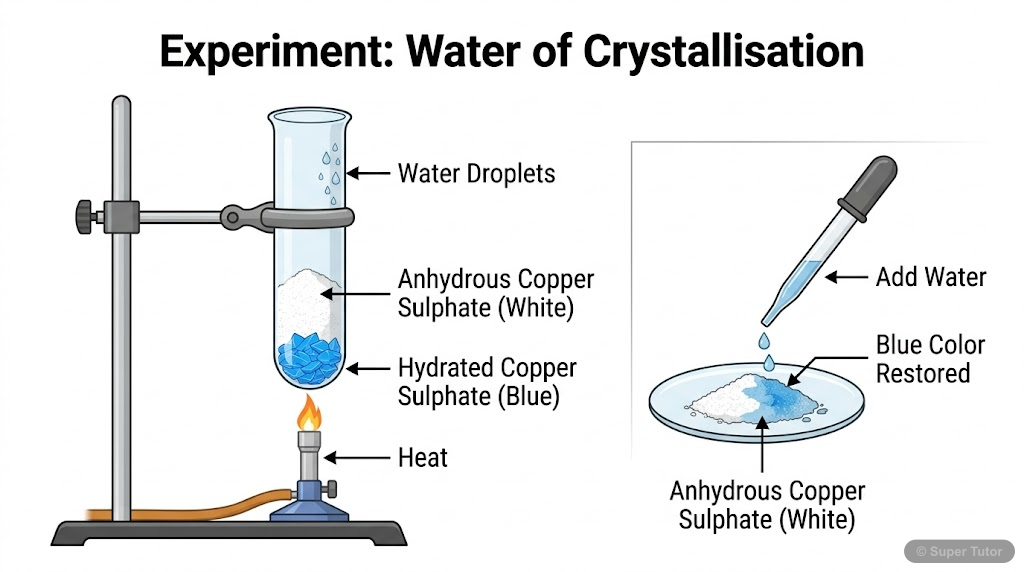
One of 2 illustrations for Solutions in Super Tutor — alongside flashcards, concept maps and practice questions.
What is a solution? Define it with an example from your daily life.
Answer
A solution is a homogeneous mixture of two or more substances where one component (solute) is uniformly dissolved in another component (solvent). The solute particles are distributed evenly throughout…
Distinguish between a solute and a solvent using a specific example.
Answer
Solute: The component present in a smaller amount that gets dissolved. It is the substance being dissolved. Solvent: The component present in a larger amount that acts as the dissolving medium. Exampl…
Why is water called the universal solvent? Give three reasons.
Answer
Water is called the universal solvent because: (1) It dissolves more substances than any other liquid - both ionic compounds (like salt, sugar) and some covalent compounds (like ethanol). (2) Its pola…
Classify solutions based on the physical states of solute and solvent. Give examples for each type.
Answer
Solutions are classified into three types based on physical states: (1) Solid Solutions: Solute is solid, solvent is solid. Example: Alloys like copper dissolved in gold (jewelry). (2) Liquid Solution…
What is the difference between an aqueous solution and a non-aqueous solution?
Answer
Aqueous Solution: A solution in which water is the solvent. Water dissolves the solute due to its polar nature. Common examples: Salt water, sugar solution, copper sulfate solution. These are the most…
A student adds 30 g of sugar to 70 g of water. Is this a saturated or unsaturated solution? Explain your reasoning.
Answer
This is an unsaturated solution. At 25°C, the solubility of sugar in water is approximately 91 g per 100 g of water. The student added only 30 g of sugar to 70 g of water. If we calculate: Maximum sug…
What is a saturated solution? How does it differ from a supersaturated solution?
Answer
Saturated Solution: A solution that contains the maximum amount of solute that can be dissolved in a given amount of solvent at a specific temperature. No more solute can dissolve in it under those co…
Define solubility and write the formula to calculate it.
Answer
Solubility is defined as the maximum mass of a solute (in grams) that can dissolve in 100 g of a solvent to form a saturated solution at a given temperature and pressure. It is a measure of how much a…
+24 more flashcards
Practise AllFrequently Asked Questions
What are the important topics in Solutions for Tamil Nadu Board Class 10 Science?
How many flashcards are available for Solutions?
How should I revise Solutions for the Tamil Nadu Board Class 10 board exam?
Sources & Official References
Content is aligned to the official syllabus. Refer to the board website for the latest curriculum.
More resources for Solutions
For serious students
Get the full Solutions chapter — start free.
Quizzes, flashcards, an AI doubt solver and a study plan for Tamil Nadu Board Class 10 Science. Free to start, no card needed.