Periodic Classification of Elements — Flashcards
Tamil Nadu Board · Class 10 · Science
33 flashcards for Periodic Classification of Elements (Tamil Nadu Board Class 10 Science) to test yourself on key terms and facts.
Interactive on Super Tutor
Studying Periodic Classification of Elements? Get the full interactive chapter.
Quizzes, flashcards, AI doubt-solver and a step-by-step study plan — built for flashcards and more.
Free trial, no card needed.
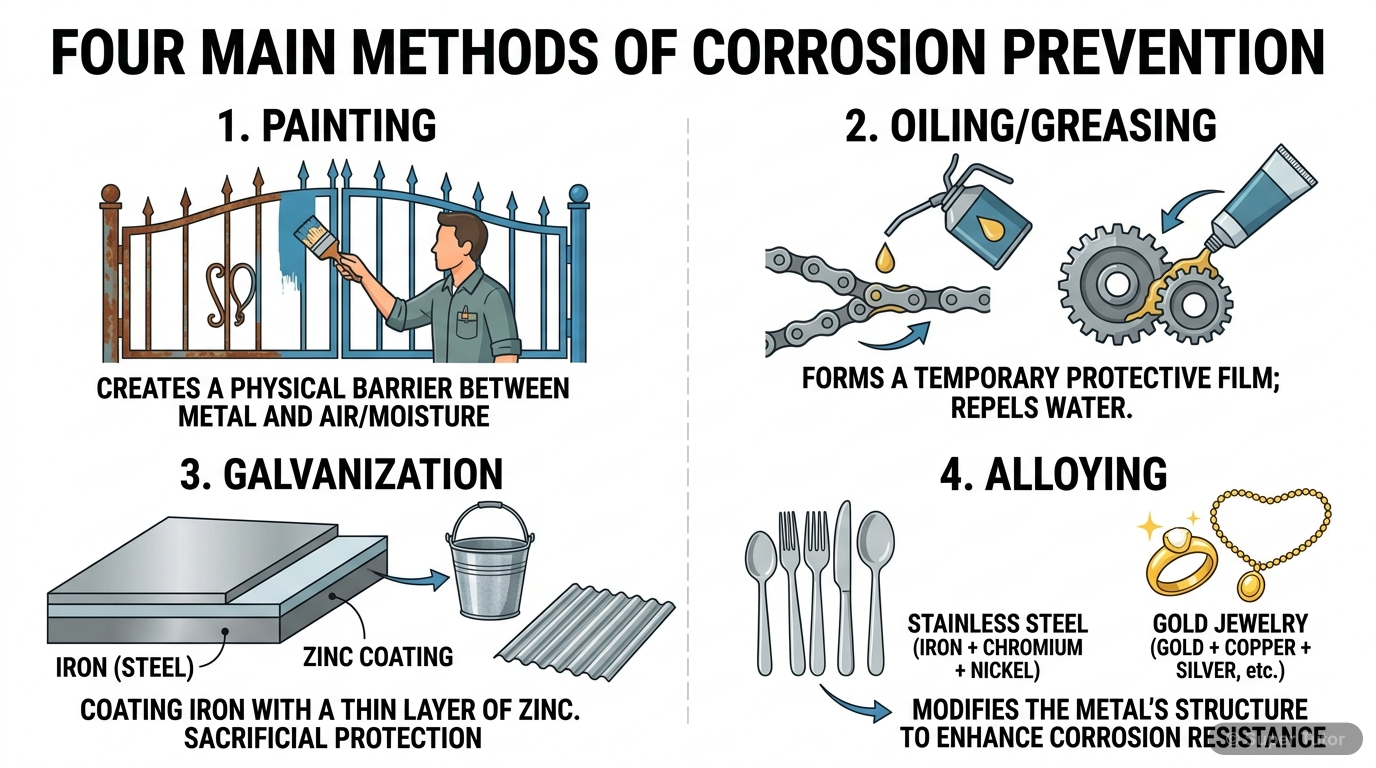
An illustration from Super Tutor's Periodic Classification of Elements chapter — alongside flashcards, concept maps and practice questions.
What is the modern periodic law?
Answer
The modern periodic law states: 'The physical and chemical properties of elements are the periodic functions of their atomic numbers.' This means that when elements are arranged by atomic number (numb…
Why did Mendeleev's periodic table have problems, and how was this fixed?
Answer
Mendeleev arranged elements by atomic mass, which led to problems. For example, argon (39.95 amu) has greater atomic mass than potassium (39.10 amu), but argon is unreactive while potassium is highly …
How many periods and groups are in the modern periodic table, and what do they represent?
Answer
The modern periodic table has 7 periods (horizontal rows) and 18 groups (vertical columns). Periods represent the number of electron shells (energy levels) an atom has - elements in the same period ha…
Describe the characteristics of Period 4 in the periodic table.
Answer
Period 4 contains 18 elements with atomic numbers 19 to 36 (Potassium to Krypton). It is a 'long period' consisting of: 8 representative elements (main group elements), and 10 transition elements (d-b…
What elements belong to the halogen family and in which group are they found?
Answer
The halogen family consists of: Fluorine (F), Chlorine (Cl), Bromine (Br), Iodine (I), and Astatine (At). All halogens are found in Group 17 of the periodic table. They have 7 electrons in their valen…
Explain why atomic radius decreases from left to right across a period.
Answer
As you move left to right across a period: The number of protons in the nucleus increases (atomic number increases), while the number of electron shells remains constant. More protons create a stronge…
Why does atomic radius increase as you move down a group?
Answer
As you move down a group (top to bottom): The number of electron shells increases. Each new shell is further from the nucleus and larger than the previous one. Although nuclear charge (number of proto…
A cation has a smaller radius than its neutral atom, but an anion is larger. Why?
Answer
Cations (positive ions) are smaller because: When an atom loses electrons, fewer electrons remain to be repelled by each other, and the remaining electrons are pulled closer to the nucleus. The positi…
+25 more flashcards
Practise AllFrequently Asked Questions
What are the important topics in Periodic Classification of Elements for Tamil Nadu Board Class 10 Science?
How many flashcards are available for Periodic Classification of Elements?
How should I revise Periodic Classification of Elements for the Tamil Nadu Board Class 10 board exam?
Sources & Official References
Content is aligned to the official syllabus. Refer to the board website for the latest curriculum.
More resources for Periodic Classification of Elements
For serious students
Get the full Periodic Classification of Elements chapter — start free.
Quizzes, flashcards, an AI doubt solver and a study plan for Tamil Nadu Board Class 10 Science. Free to start, no card needed.