Periodic Classification of Elements — Important Questions
Tamil Nadu Board · Class 10 · Science
45 important questions from Periodic Classification of Elements for Tamil Nadu Board Class 10 Science, with answers. Includes multiple choice questions.
Interactive on Super Tutor
Studying Periodic Classification of Elements? Get the full interactive chapter.
Quizzes, flashcards, AI doubt-solver and a step-by-step study plan — built for important questions and more.
Free trial, no card needed.
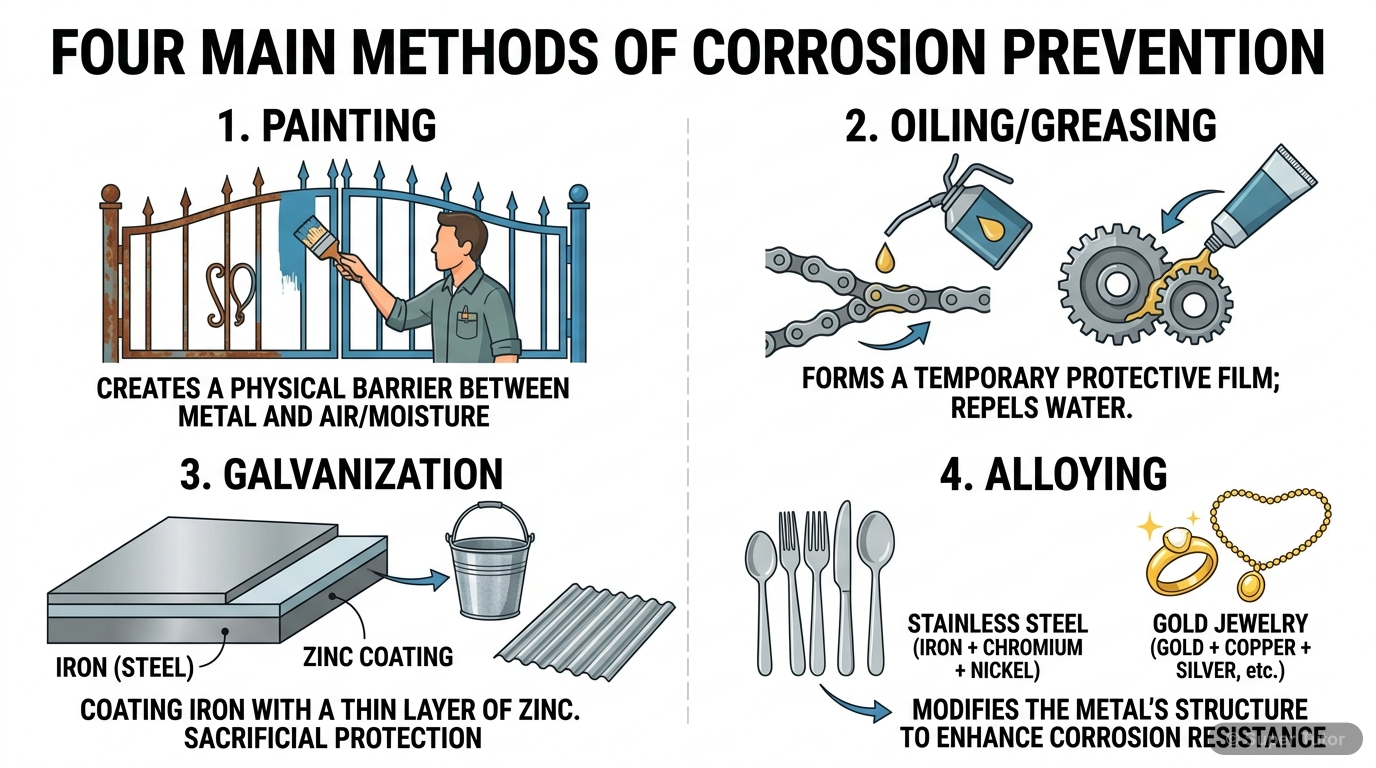
An illustration from Super Tutor's Periodic Classification of Elements chapter — alongside flashcards, concept maps and practice questions.
Important Questions from Periodic Classification of Elements
As we move from left to right across a period in the periodic table, the atomic radius:
Show answer
Decreases gradually
Step 1: Atomic radius is the distance from the nucleus to the outermost electron shell. Step 2: As we move left to right across a period, the shell number (energy level) stays the same. Step 3: However, the atomic number (number of protons) increases from left to right. Step 4: More protons mean a stronger positive nuclear charge that pulls the electrons closer to the nucleus. Step 5: This causes the electron cloud to shrink, so atomic radius decreases across a period from left to right.
As we move down a group in the periodic table, the ionisation energy:
Show answer
Decreases
Step 1: Ionisation energy is the minimum energy needed to remove an electron from a gaseous atom. Step 2: As we go down a group, new electron shells are added, so atomic size increases. Step 3: The valence electrons are now farther from the nucleus and are more loosely held. Step 4: Since the electrons are loosely bound, less energy is needed to remove them. Step 5: Therefore, ionisation energy decreases as we move down a group. This is the opposite of the trend across a period, where ionisation energy increases.
The mineral from which a metal can be readily and economically extracted on a large scale is called:
Show answer
Ore
Step 1: A mineral is any natural compound or mixture of compounds found in the Earth's crust. Step 2: Not all minerals are useful for extraction — only those from which metals can be extracted easily and profitably are called ores. Step 3: For example, both clay and bauxite are minerals of aluminium, but only bauxite is an ore because aluminium can be profitably extracted from it. Step 4: Gangue is the rocky impurity in the ore. Flux is a substance added to remove impurities. Slag is the waste product formed when flux reacts with gangue. Step 5: So the correct answer is Ore.
Which method of ore concentration uses the difference in densities of ore and gangue particles?
Show answer
Hydraulic (Gravity separation) method
Step 1: Different methods of ore concentration are based on different physical properties. Step 2: Hydraulic or Gravity separation works on the principle that ore particles are heavier (more dense) than gangue particles. Step 3: Water is used to wash the crushed ore over a sloping table — lighter gangue washes away while heavier ore settles in grooves. Step 4: Froth floatation uses oil wettability (for sulphide ores). Magnetic separation uses magnetic properties. Leaching uses chemical reagents. Step 5: Haematite (Fe₂O₃), the iron ore, is concentrated by this hydraulic method.
+41 more questions on Periodic Classification of Elements (Tamil Nadu Board Class 10 Science)
Practise AllFrequently Asked Questions
What are the important topics in Periodic Classification of Elements for Tamil Nadu Board Class 10 Science?
How many important questions are there in Periodic Classification of Elements?
Sources & Official References
Content is aligned to the official syllabus. Refer to the board website for the latest curriculum.
More resources for Periodic Classification of Elements
For serious students
Get the full Periodic Classification of Elements chapter — start free.
Quizzes, flashcards, an AI doubt solver and a study plan for Tamil Nadu Board Class 10 Science. Free to start, no card needed.