Animal Cell Culture — Flashcards
CBSE · Class 12 · Biotechnology
76 flashcards for Animal Cell Culture (CBSE Class 12 Biotechnology) to test yourself on key terms and facts. Sample: "What is animal cell culture?"
Interactive on Super Tutor
Studying Animal Cell Culture? Get the full interactive chapter.
Quizzes, flashcards, AI doubt-solver and a step-by-step study plan — built for flashcards and more.
Free trial, no card needed.
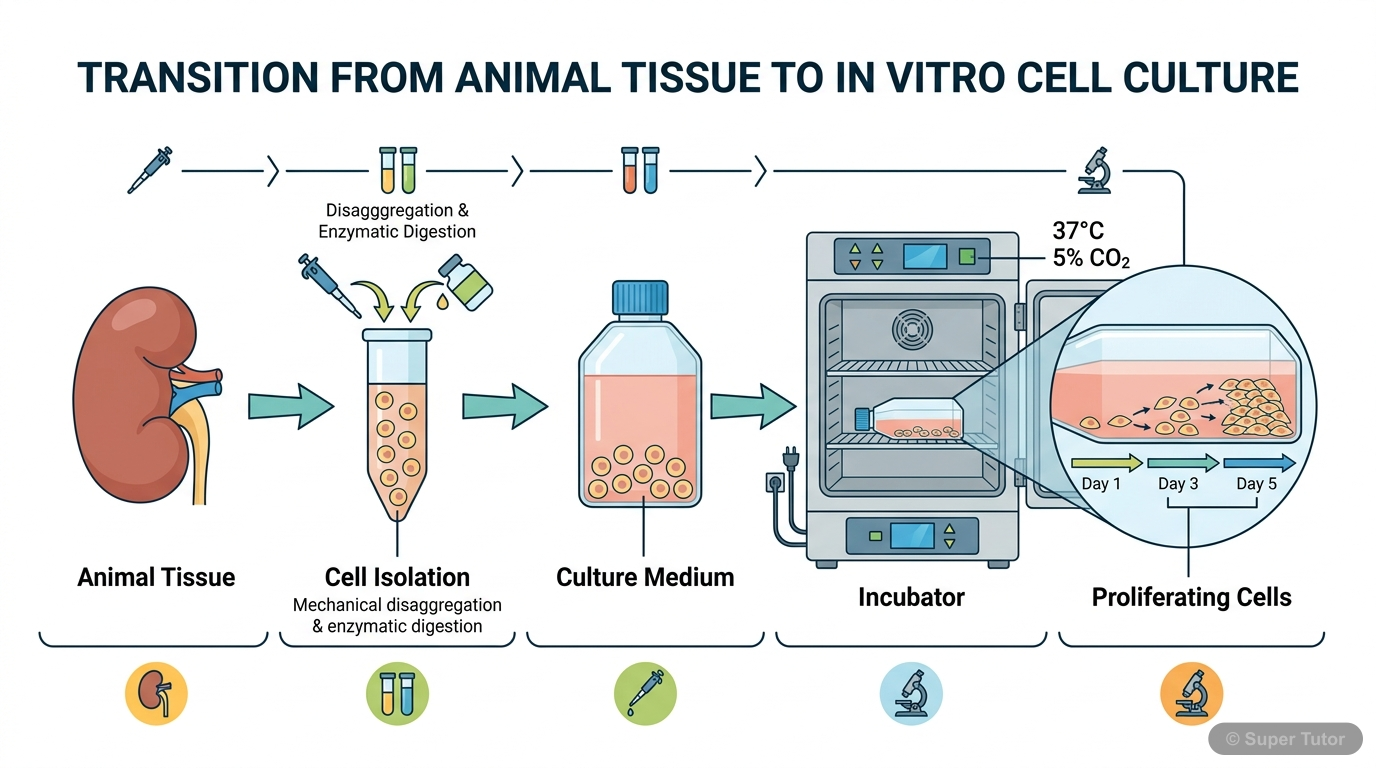
Learn better with visuals Super Tutor pairs illustrations like this with notes and quizzes for Animal Cell Culture.
Get startedWhat is animal cell culture?
Answer
Animal cell culture is the in vitro maintenance and proliferation of animal cells outside the living organism, provided with proper nutrients and growth conditions.
पशु कोशिका संवर्धन क्या है?
Answer
पशु कोशिका संवर्धन जीवित जीव के बाहर उचित पोषक तत्वों और वृद्धि स्थितियों के साथ पशु कोशिकाओं का in vitro रखरखाव और वृद्धि है।…
पशु कोशिका संवर्धन संदूषण के प्रति संवेदनशील क्यों है?
Answer
पशु कोशिकाएँ आमतौर पर धीरे-धीरे विभाजित होती हैं और विभाजित होने में लगभग 18 to 24 hours लेती हैं। इस धीमी वृद्धि के कारण, बैक्टीरिया की बहुत छोटी संख्या भी पशु कोशिकाओं से अधिक बढ़ सकती है और संवर्धन…
Why is animal cell culture vulnerable to contamination?
Answer
Animal cells usually divide slowly and take about 18 to 24 hours to divide. Because of this slow growth, even a small number of bacteria can overgrow the animal cells and contaminate the culture.
What is a clone in cell culture?
Answer
A clone is a homogeneous population of cells derived from a single parental cell. All cells in a clonal population are genetically identical.
कोशिका संवर्धन में clone क्या है?
Answer
clone कोशिकाओं की एक समरूप जनसंख्या है जो एक ही मातृ कोशिका से उत्पन्न होती है। एक clonal जनसंख्या की सभी कोशिकाएँ आनुवंशिक रूप से समान होती हैं।…
पहली मानव कोशिका रेखा, HeLa, किसने स्थापित की?
Answer
George Gey ने 1950s में Henrietta Lacks’ की गर्भाशय ग्रीवा कैंसर कोशिकाओं से पहली मानव कोशिका रेखा, HeLa, स्थापित की। HeLa एक अमर कोशिका रेखा बन गई और कोशिका संवर्धन इतिहास में व्यापक रूप से जानी जाती…
Who established the first human cell line, HeLa?
Answer
George Gey established the first human cell line, HeLa, in the 1950s from Henrietta Lacks’ cervical cancer cells. HeLa became an immortal cell line and is widely known in cell culture history.
+68 more flashcards
Practise AllFrequently Asked Questions
What are the important topics in Animal Cell Culture for CBSE Class 12 Biotechnology?
How many flashcards are available for Animal Cell Culture?
How should I revise Animal Cell Culture for the CBSE Class 12 board exam?
Sources & Official References
- NCERT Official — ncert.nic.in
- CBSE Academic — cbseacademic.nic.in
- CBSE Official — cbse.gov.in
- National Education Policy 2020 — education.gov.in
Content is aligned to the official syllabus. Refer to the board website for the latest curriculum.
More resources for Animal Cell Culture
Practice Quiz
Test yourself with a quick quiz
Important Questions
Exam-style questions with answers
Revision Notes
Key points for last-minute revision
Chapter Summary
Understand the chapter at a glance
Concept Maps
See how topics connect
Study Plan
Step-by-step plan for this chapter
Syllabus
What topics to cover
NCERT Solutions
Every textbook question solved step by step
For serious students
Get the full Animal Cell Culture chapter — start free.
Quizzes, flashcards, an AI doubt solver and a study plan for CBSE Class 12 Biotechnology. Free to start, no card needed.