Host–Vector System — Flashcards
CBSE · Class 12 · Biotechnology
80 flashcards for Host–Vector System (CBSE Class 12 Biotechnology) to test yourself on key terms and facts. Sample: "पुनर्योगज DNA प्रौद्योगिकी में.
Interactive on Super Tutor
Studying Host–Vector System? Get the full interactive chapter.
Quizzes, flashcards, AI doubt-solver and a step-by-step study plan — built for flashcards and more.
Free trial, no card needed.
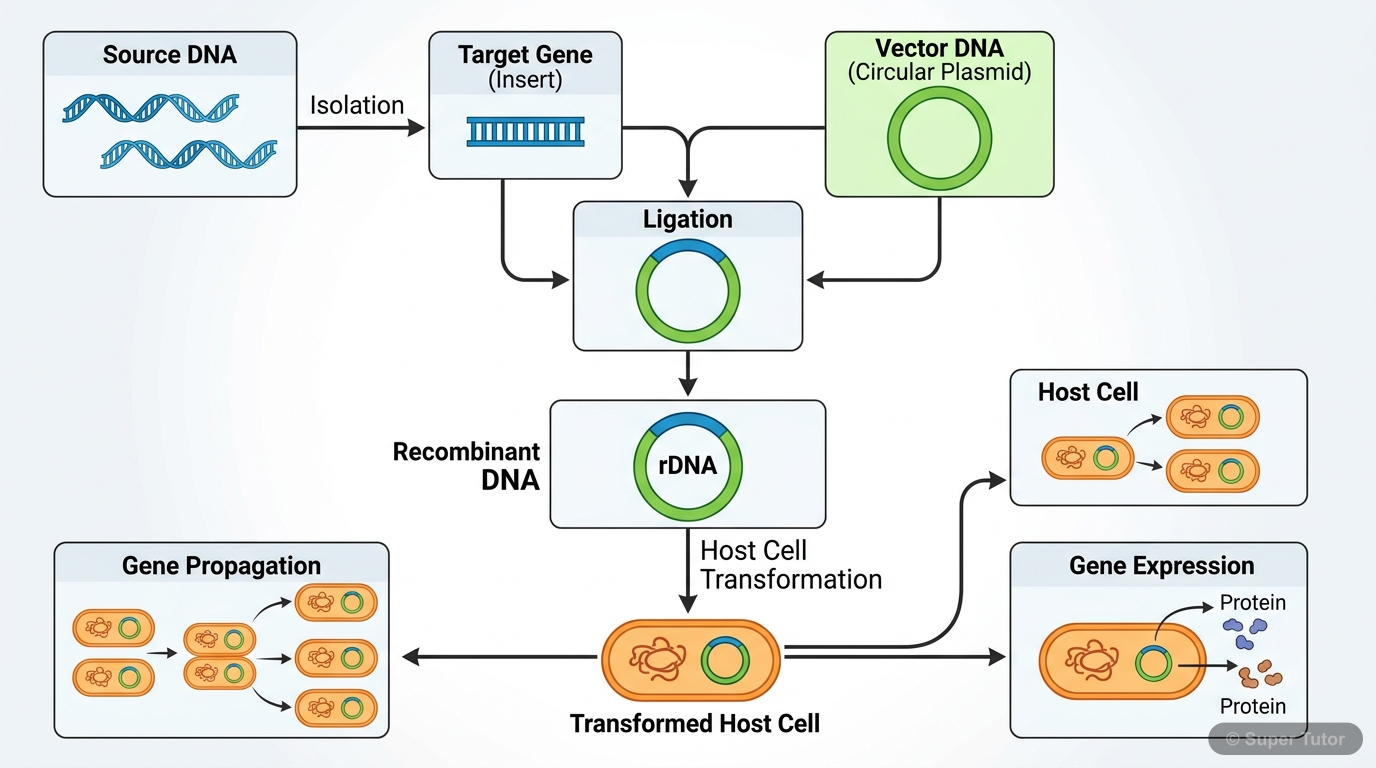
Learn better with visuals Super Tutor pairs illustrations like this with notes and quizzes for Host–Vector System.
Get startedपुनर्योगज DNA प्रौद्योगिकी में पोषी-वाहक प्रणाली क्या है?
Answer
यह दो घटक प्रणाली है जो एक अनुकूल मेजबान और एक वाहक से बनी है। वाहक वांछित DNA प्रविष्टि को ले जाता है, और मेजबान उस DNA की प्रतिकृति और अभिव्यक्ति के लिए आवश्यक एंजाइम और प्रोटीन प्रदान करता है।…
What is the host–vector system in recombinant DNA technology?
Answer
It is a two-component system made of a compatible host and a vector. The vector carries the desired DNA insert, and the host provides the enzymes and proteins needed for replication and expression of …
Why is a vector needed for gene cloning?
Answer
A vector is needed because the desired DNA must enter a host cell and be copied there. The vector also needs an origin of replication, unique restriction sites, and at least one selectable marker so t…
जीन क्लोनिंग के लिए वेक्टर की आवश्यकता क्यों होती है?
Answer
एक वेक्टर की आवश्यकता होती है क्योंकि वांछित DNA को एक मेजबान कोशिका में प्रवेश करना चाहिए और वहां कॉपी किया जाना चाहिए। वेक्टर को प्रतिकृति के मूल, अद्वितीय प्रतिबंध स्थलों और कम से कम एक चयन योग्य म…
क्लोनिंग वेक्टर की आवश्यक विशेषताएं क्या हैं?
Answer
क्लोनिंग वेक्टर छोटा होना चाहिए, प्रतिकृति की उत्पत्ति होनी चाहिए, अद्वितीय प्रतिबंध स्थल होने चाहिए, और इसमें कम से कम एक चयन योग्य मार्कर होना चाहिए जैसे कि ampR या tetR। ये विशेषताएं वेक्टर को मेजब…
What are the essential features of a cloning vector?
Answer
A cloning vector should be small, should have an origin of replication, should contain unique restriction sites, and should have at least one selectable marker such as ampR or tetR. These features hel…
Define plasmids.
Answer
Plasmids are circular, double-stranded, extra-chromosomal DNA molecules capable of autonomous replication. They occur naturally in bacteria and also in some eukaryotes such as yeast.
प्लाज्मिड की परिभाषा दीजिए।
Answer
प्लास्मिड (plasmids) वृत्ताकार, द्वि-रज्जुक, अतिरिक्त-गुणसूत्र DNA अणु होते हैं जो स्वायत्त प्रतिकृति करने में सक्षम होते हैं। ये प्राकृतिक रूप से बैक्टीरिया में और कुछ यूकेरियोट्स जैसे कि खमीर में भी…
+72 more flashcards
Practise AllFrequently Asked Questions
What are the important topics in Host–Vector System for CBSE Class 12 Biotechnology?
How many flashcards are available for Host–Vector System?
How should I revise Host–Vector System for the CBSE Class 12 board exam?
Sources & Official References
- NCERT Official — ncert.nic.in
- CBSE Academic — cbseacademic.nic.in
- CBSE Official — cbse.gov.in
- National Education Policy 2020 — education.gov.in
Content is aligned to the official syllabus. Refer to the board website for the latest curriculum.
More resources for Host–Vector System
Practice Quiz
Test yourself with a quick quiz
Important Questions
Exam-style questions with answers
Revision Notes
Key points for last-minute revision
Chapter Summary
Understand the chapter at a glance
Concept Maps
See how topics connect
Study Plan
Step-by-step plan for this chapter
Syllabus
What topics to cover
NCERT Solutions
Every textbook question solved step by step
For serious students
Get the full Host–Vector System chapter — start free.
Quizzes, flashcards, an AI doubt solver and a study plan for CBSE Class 12 Biotechnology. Free to start, no card needed.