Applications of Recombinant DNA Technology — Flashcards
CBSE · Class 12 · Biotechnology
106 flashcards for Applications of Recombinant DNA Technology (CBSE Class 12 Biotechnology) to test yourself on key terms and facts.
Interactive on Super Tutor
Studying Applications of Recombinant DNA Technology? Get the full interactive chapter.
Quizzes, flashcards, AI doubt-solver and a step-by-step study plan — built for flashcards and more.
Free trial, no card needed.
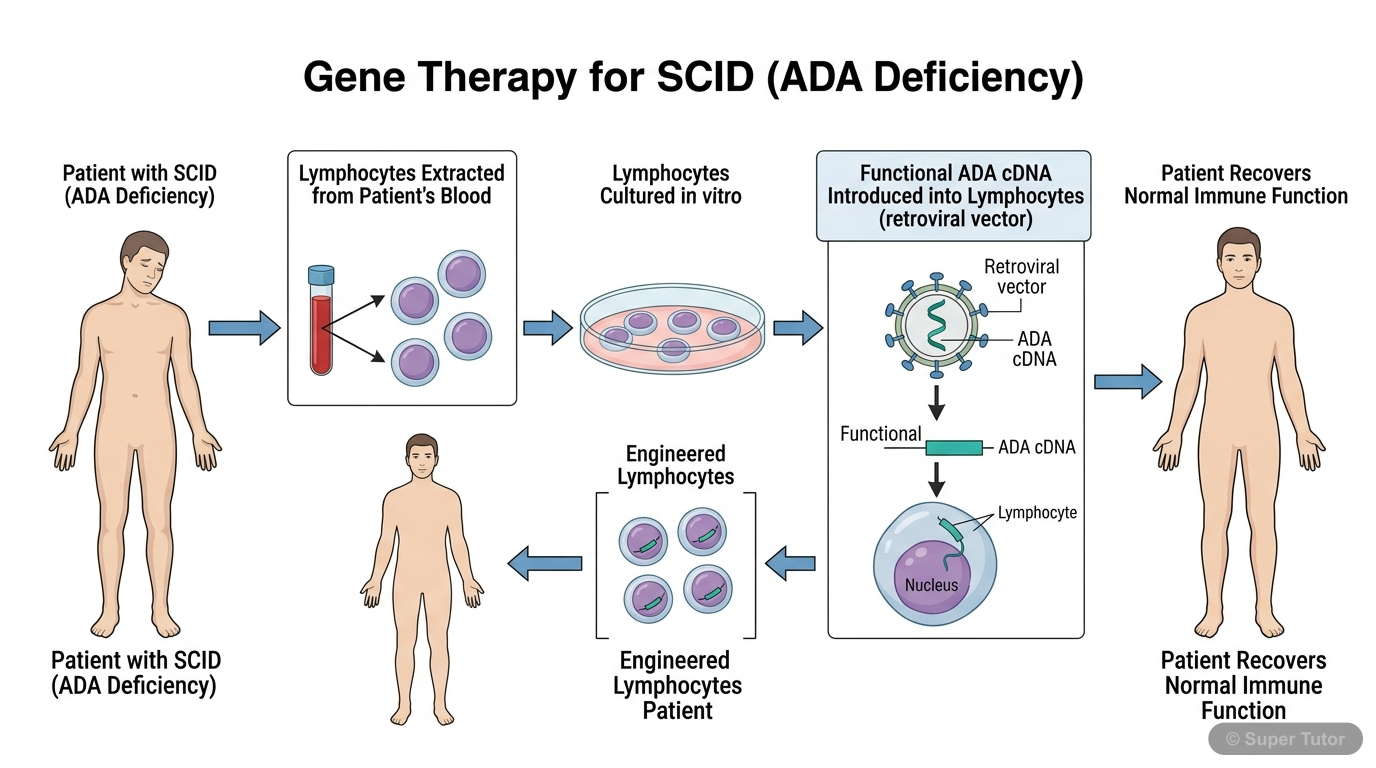
One of 28 illustrations for Applications of Recombinant DNA Technology in Super Tutor — alongside flashcards, concept maps and practice questions.
See them allDNA फिंगरप्रिंटिंग क्या है और यह उपयोगी क्यों है?
Answer
DNA फिंगरप्रिंटिंग एक विधि है जिसका उपयोग पूरी DNA को अनुक्रमित किए बिना विरासत में मिले DNA परिवर्तनों की तुलना करने के लिए किया जाता है। यह व्यक्तियों की पहचान करने, पितृत्व परीक्षण का समर्थन करने औ…
What is DNA fingerprinting and why is it useful?
Answer
DNA fingerprinting is a method used to compare inherited DNA variations without sequencing the whole DNA. It helps identify individuals, support paternity testing, and assist forensic and evolutionary…
Why can DNA fingerprinting distinguish between individuals when most human DNA is similar?
Answer
About 99.9% of the human genome is the same in all humans, but the remaining 0.1% contains inherited variations. These variations create different DNA patterns in individuals.
जब अधिकांश मानव DNA समान होते हैं तो DNA फिंगरप्रिंटिंग व्यक्तियों के बीच अंतर क्यों नहीं कर पाती है?
Answer
मानव जीनोम का लगभग ९९.९% भाग सभी मनुष्यों में समान होता है, लेकिन शेष ०.१% में आनुवंशिक भिन्नताएँ होती हैं। ये भिन्नताएँ व्यक्तियों में अलग-अलग DNA पैटर्न बनाती हैं।…
DNA फिंगरप्रिंटिंग में VNTRs क्या है?
Answer
VNTRs चर संख्या के साथ एक साथ दोहराए जाने वाले छोटे DNA अनुक्रम हैं जो एक स्थान पर एक साथ दोहराए जाते हैं। वे व्यक्तियों के बीच अत्यधिक परिवर्तनशील होते हैं और DNA फिंगरप्रिंटिंग का आधार बनाते हैं।…
What are VNTRs in DNA fingerprinting?
Answer
VNTRs are variable number tandem repeats, short DNA sequences repeated in tandem at a locus. They are highly variable among individuals and form the basis of DNA fingerprinting.
Differentiate microsatellites and minisatellites.
Answer
Microsatellites are VNTRs with repeated sequences of 1 to 9 bp. Minisatellites are VNTRs with repeated sequences of 10 to 100 bp. Both are used in DNA fingerprinting.
सूक्ष्म उपग्रहों और लघु उपग्रहों में अंतर बताइए।
Answer
सूक्ष्म उपग्रह VNTRs हैं जिनमें 1 से 9 बीपी के दोहराए गए अनुक्रम हैं। लघु उपग्रह VNTRs हैं जिनमें 10 से 100 बीपी के दोहराए गए अनुक्रम हैं। दोनों का उपयोग DNA फिंगरप्रिंटिंग में किया जाता है।…
+98 more flashcards
Practise AllFrequently Asked Questions
What are the important topics in Applications of Recombinant DNA Technology for CBSE Class 12 Biotechnology?
How many flashcards are available for Applications of Recombinant DNA Technology?
How should I revise Applications of Recombinant DNA Technology for the CBSE Class 12 board exam?
Sources & Official References
- NCERT Official — ncert.nic.in
- CBSE Academic — cbseacademic.nic.in
- CBSE Official — cbse.gov.in
- National Education Policy 2020 — education.gov.in
Content is aligned to the official syllabus. Refer to the board website for the latest curriculum.
More resources for Applications of Recombinant DNA Technology
Practice Quiz
Test yourself with a quick quiz
Important Questions
Exam-style questions with answers
Revision Notes
Key points for last-minute revision
Chapter Summary
Understand the chapter at a glance
Concept Maps
See how topics connect
Study Plan
Step-by-step plan for this chapter
Syllabus
What topics to cover
NCERT Solutions
Every textbook question solved step by step
For serious students
Get the full Applications of Recombinant DNA Technology chapter — start free.
Quizzes, flashcards, an AI doubt solver and a study plan for CBSE Class 12 Biotechnology. Free to start, no card needed.