Aldehydes, Ketones and Carboxylic Acids
CBSE · Class 12 · Chemistry
NCERT Solutions for Aldehydes, Ketones and Carboxylic Acids — CBSE Class 12 Chemistry.
Interactive on Super Tutor
Studying Aldehydes, Ketones and Carboxylic Acids? Get the full interactive chapter.
Quizzes, flashcards, AI doubt-solver and a step-by-step study plan — built for ncert solutions and more.
1,000+ Class 12 students started this chapter today
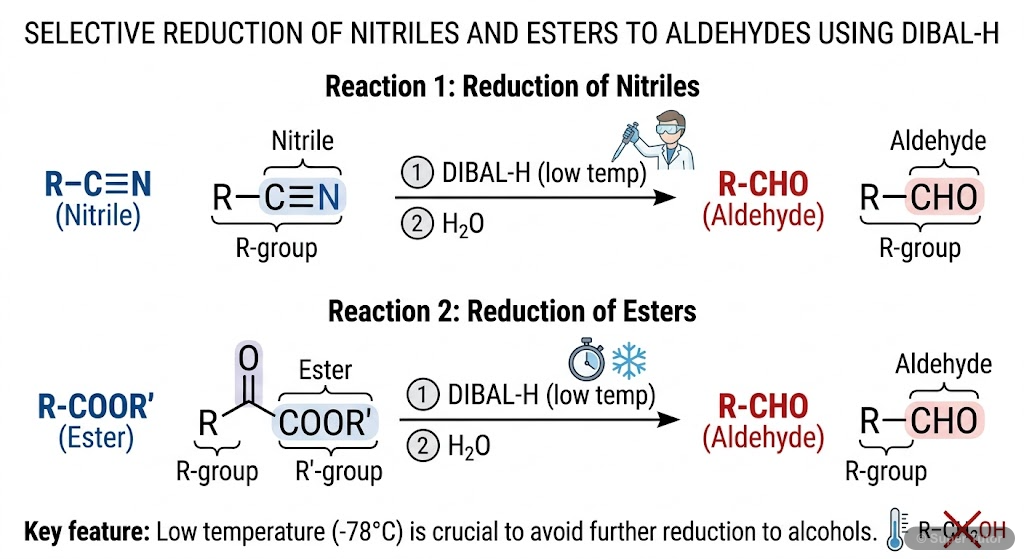
Learn better with visuals Super Tutor has hundreds of illustrations like this across every chapter — all free to try.
Get started51 worked solutions below. Unlock all 102 free in Super Tutor
Exercises
8.1What is meant by the following terms? Give an example of the reaction in each case.Show solution
(ii) Acetal: Compound formed when an aldehyde reacts with two molecules of alcohol in presence of dry HCl. Example:
(iii) Semicarbazone: Derivative formed when a carbonyl compound reacts with semicarbazide. Example:
(iv) Aldol: \beta-hydroxy aldehyde or \beta-hydroxy ketone formed by aldol reaction. Example: two molecules of ethanal give aldol:
(v) Hemiacetal: Product formed when one molecule of alcohol adds to an aldehyde. Example:
(vi) Oxime: Derivative formed when a carbonyl compound reacts with hydroxylamine. Example:
(vii) Ketal: Cyclic or acyclic derivative formed when a ketone reacts with alcohols; with ethylene glycol it gives a cyclic ketal. Example:
(viii) Imine: Compound containing the group **** formed by reaction of a carbonyl compound with ammonia. Example:
(ix) 2,4-DNP-derivative: Yellow, orange or red derivative formed when a carbonyl compound reacts with 2,4-dinitrophenylhydrazine. Example:
(x) Schiff's base: A substituted imine formed when a carbonyl compound reacts with a primary amine. Example:
Not sure why a step works? check your working in Super Tutor
8.1(i)CyanohydrinShow solution
Not sure why a step works? check your working in Super Tutor
8.1(ii)AcetalShow solution
Not sure why a step works? check your working in Super Tutor
8.1(iii)SemicarbazoneShow solution
Not sure why a step works? check your working in Super Tutor
8.1(iv)AldolShow solution
Not sure why a step works? check your working in Super Tutor
8.1(v)HemiacetalShow solution
Not sure why a step works? check your working in Super Tutor
8.1(vi)OximeShow solution
Not sure why a step works? check your working in Super Tutor
8.1(vii)KetalShow solution
Not sure why a step works? check your working in Super Tutor
8.1(vii)ImineShow solution
Not sure why a step works? check your working in Super Tutor
8.1(ix)2,4-DNP-derivativeShow solution
Not sure why a step works? check your working in Super Tutor
8.1(x)Schiff's baseShow solution
Not sure why a step works? check your working in Super Tutor
8.2Name the following compounds according to IUPAC system of nomenclature:Show solution
(i) 3-Methylpentanal
(ii) 4-Chloro-5-ethylhexan-3-one
(iii) But-2-enal
(iv) Pentan-2,4-dione
(v) 2,4,4-Trimethylhexan-2-one
(vi) 2,2-Dimethylbutanoic acid
(vii) Benzene-1,4-dicarbaldehyde
Not sure why a step works? check your working in Super Tutor
8.2(i)Show solution
So the IUPAC name is 3-methylpentanal.
Not sure why a step works? check your working in Super Tutor
8.2(ii)Show solution
So the IUPAC name is 4-chloro-5-ethylhexan-3-one.
Not sure why a step works? check your working in Super Tutor
8.2(iii)Show solution
So the IUPAC name is but-2-enal.
Not sure why a step works? check your working in Super Tutor
8.2(iv)Show solution
So the IUPAC name is pentan-2,4-dione.
Not sure why a step works? check your working in Super Tutor
8.2(v)Show solution
So the IUPAC name is 2,4,4-trimethylhexan-2-one.
Not sure why a step works? check your working in Super Tutor
8.2(vi)Show solution
So the IUPAC name is 2,2-dimethylbutanoic acid.
Not sure why a step works? check your working in Super Tutor
8.2(vii)Show solution
Not sure why a step works? check your working in Super Tutor
8.3Draw the structures of the following compounds.Show solution
(i) 3-Methylbutanal:
(ii) p-Nitropropiophenone: $\mathrm{p\!-
O_2NC_6H_4COCH_2CH_3}$
(iii) p-Methylbenzaldehyde: $\mathrm{p\!-
CH_3C_6H_4CHO}$
(iv) 4-Methylpent-3-en-2-one:
(v) 4-Chloropentan-2-one:
(vi) 3-Bromo-4-phenylpentanoic acid:
(vii) p,p'-Dihydroxybenzophenone: $\mathrm{HO\!-
C_6H_4COC_6H_4\!-
OH}\mathrm{-OH}$ groups para to the carbonyl group
(viii) Hex-2-en-4-ynoic acid:
Not sure why a step works? check your working in Super Tutor
8.3(i)3-MethylbutanalShow solution
Structure: ****
Not sure why a step works? check your working in Super Tutor
8.3(ii)-NitropropiophenoneShow solution
Structure: $\mathrm{p\!-
O_2NC_6H_4COCH_2CH_3}$
Not sure why a step works? check your working in Super Tutor
8.3(iii)-MethylbenzaldehydeShow solution
Structure: $\mathrm{p\!-
CH_3C_6H_4CHO}$
Not sure why a step works? check your working in Super Tutor
8.3(iv)4-Methylpent-3-en-2-oneShow solution
Not sure why a step works? check your working in Super Tutor
8.3(v)4-Chloropentan-2-oneShow solution
Not sure why a step works? check your working in Super Tutor
8.3(vi)3-Bromo-4-phenylpentanoic acidShow solution
So the IUPAC name is 3-bromo-4-phenylpentanoic acid.
Not sure why a step works? check your working in Super Tutor
8.3(vii)-DihydroxybenzophenoneShow solution
Not sure why a step works? check your working in Super Tutor
8.3(viii)Hex-2-en-4-ynoic acidShow solution
Not sure why a step works? check your working in Super Tutor
8.4Write the IUPAC names of the following ketones and aldehydes. Wherever possible, give also common names.Show solution
1. 3-Bromo-4-phenylpentanoic acid
2. 4,4′-Dihydroxybenzophenone
3. Hex-2-en-4-ynoic acid
Method used: name the parent chain containing the principal functional group, number from the carboxyl carbon, then assign positions to the substituents and multiple bonds.
Not sure why a step works? check your working in Super Tutor
8.4(i)Show solution
\mathrm{CH_3CO(CH_2)_4CH_3}$, the longest chain containing the carbonyl group has 7 carbons:
Number from the end nearer the carbonyl group, so the carbonyl is at C-2. Therefore the IUPAC name is heptan-2-one.
Wait — the given formula is exactly:
= , which is heptan-2-one.
The common name is methyl n-hexyl ketone.
Not sure why a step works? check your working in Super Tutor
8.4(ii)Show solution
Structure:
Numbering from the carbon:
- C-2 has methyl
- C-4 has bromo
So the IUPAC name is 4-bromo-2-methylhexanal.
Not sure why a step works? check your working in Super Tutor
8.4(iii)Show solution
Not sure why a step works? check your working in Super Tutor
8.4(iv)Show solution
So the IUPAC name is 3-phenylprop-2-enal. The common name is cinnamaldehyde.
Not sure why a step works? check your working in Super Tutor
8.4(vi)Show solution
Not sure why a step works? check your working in Super Tutor
8.5Draw structures of the following derivatives.Show solution
1. 2,4-Dinitrophenylhydrazone of benzaldehyde: benzaldehyde condensed with 2,4-DNP to give the hydrazone, i.e. .
2. Cyclopropanone oxime: cyclopropanone carbonyl converted to .
3. Acetaldehyde dimethyl acetal: .
4. Semicarbazone of cyclobutanone: cyclobutanone carbonyl converted to .
5. Ethylene ketal of hexan-3-one: cyclic ketal formed with ethylene glycol at the carbonyl carbon of hexan-3-one.
6. Methyl hemiacetal of formaldehyde: .
These are drawn by replacing the carbonyl oxygen appropriately with the corresponding derivative group.
Not sure why a step works? check your working in Super Tutor
8.5(i)The 2,4-dinitrophenylhydrazone of benzaldehydeShow solution
This is the condensation product of the aldehyde with 2,4-DNP.
Not sure why a step works? check your working in Super Tutor
8.5(ii)Cyclopropanone oximeShow solution
Not sure why a step works? check your working in Super Tutor
8.5(iii)AcetaldehydedimethylacetalShow solution
Not sure why a step works? check your working in Super Tutor
8.5(iv)The semicarbazone of cyclobutanoneShow solution
Not sure why a step works? check your working in Super Tutor
8.5(v)The ethylene ketal of hexan-3-oneShow solution
Not sure why a step works? check your working in Super Tutor
8.5(vi)The methyl hemiacetal of formaldehydeShow solution
Not sure why a step works? check your working in Super Tutor
8.6Predict the products formed when cyclohexanecarbaldehyde reacts with following reagents.Show solution
- With **PhMgBr followed by , the Grignard reagent adds to the aldehyde carbonyl to give a secondary alcohol.
- With Tollens' reagent, the aldehyde is oxidised to the corresponding carboxylic acid salt.
- With semicarbazide and weak acid, it forms the semicarbazone.
- With excess ethanol and acid, it forms the acetal.
- With zinc amalgam and dilute HCl, the aldehyde group is reduced to methyl**, giving the corresponding hydrocarbon.
These follow the standard reactions of aldehydes given in the chapter.
Not sure why a step works? check your working in Super Tutor
8.6(i) and then Show solution
So the product is 1-phenylcyclohexan-1-ol.
Not sure why a step works? check your working in Super Tutor
8.6(ii)Tollens' reagentShow solution
Not sure why a step works? check your working in Super Tutor
8.6(iii)Semicarbazide and weak acidShow solution
Not sure why a step works? check your working in Super Tutor
8.6(iv)Excess ethanol and acidShow solution
Not sure why a step works? check your working in Super Tutor
8.6(v)Zinc amalgam and dilute hydrochloric acidShow solution
So cyclohexanecarbaldehyde becomes methylcyclohexane (also written as cyclohexylmethane in some contexts).
Not sure why a step works? check your working in Super Tutor
8.7Which of the following compounds would undergo aldol condensation, which the Cannizzaro reaction and which neither? Write the structures of the expected products of aldol condensation and Cannizzaro reaction.Show solution
- Methanal**: no -hydrogen, so it undergoes Cannizzaro reaction.
- 2-Methylpentanal: has -hydrogen, so it undergoes aldol condensation.
- Benzaldehyde: no -hydrogen, so it undergoes Cannizzaro reaction.
- Benzophenone: no -hydrogen and is a ketone, so neither.
- Cyclohexanone: has -hydrogen, so it undergoes aldol condensation.
- 1-Phenylpropanone: has -hydrogen, so it undergoes aldol condensation.
- Phenylacetaldehyde: has -hydrogen, so it undergoes aldol condensation.
- Butan-1-ol: not a carbonyl compound, so neither.
- 2,2-Dimethylbutanal: aldehyde but no -hydrogen, so Cannizzaro reaction.
Expected products:
- Cannizzaro gives one molecule of alcohol and one of carboxylate salt.
- Aldol gives a -hydroxy aldehyde/ketone, which may dehydrate to an -unsaturated carbonyl compound.
Not sure why a step works? check your working in Super Tutor
8.7(i)MethanalShow solution
For methanal:
So the correct classification is Cannizzaro reaction.
Not sure why a step works? check your working in Super Tutor
8.7(ii)2-MethylpentanalShow solution
Not sure why a step works? check your working in Super Tutor
8.7(iii)BenzaldehydeShow solution
Not sure why a step works? check your working in Super Tutor
51 more solved questions in Aldehydes, Ketones and Carboxylic Acids
Every remaining exercise is solved step by step in Super Tutor, plus practice quizzes and flashcards for this chapter. Free to start.
Stuck on a step?
Ask Super Tutor AI to explain any solution on this page in a simpler way — free, 24x7.
Ask a Doubt FreeFrequently Asked Questions
What are the important topics in Aldehydes, Ketones and Carboxylic Acids for CBSE Class 12 Chemistry?
How to score full marks in Aldehydes, Ketones and Carboxylic Acids — CBSE Class 12 Chemistry?
Where can I get free NCERT Solutions for Aldehydes, Ketones and Carboxylic Acids Class 12 Chemistry?
Sources & Official References
- NCERT Official — ncert.nic.in
- CBSE Academic — cbseacademic.nic.in
- CBSE Official — cbse.gov.in
- National Education Policy 2020 — education.gov.in
Content is aligned to the official syllabus. Refer to the board website for the latest curriculum.
More resources for Aldehydes, Ketones and Carboxylic Acids
Practice Quiz
Test yourself with a quick quiz
Important Questions
Practice with board exam-style questions
Revision Notes
Key points for last-minute revision
Formula Sheet
All formulas in one place
Chapter Summary
Understand the chapter at a glance
Concept Maps
See how topics connect visually
Study Plan
Step-by-step plan to ace this chapter
Flashcards
Quick-fire cards for active recall
Syllabus
What topics to cover
For serious students
Get the full Aldehydes, Ketones and Carboxylic Acids chapter — for free.
Quizzes, flashcards, AI doubt-solver and a step-by-step study plan for CBSE Class 12 Chemistry.