Biomolecules — Study Plan
ICSE · Class 11 · Biology
A step-by-step study plan for Biomolecules, ICSE Class 11 Biology: what to learn first, what to practise and when to revise.
Interactive on Super Tutor
Studying Biomolecules? Get the full interactive chapter.
Quizzes, flashcards, AI doubt-solver and a step-by-step study plan — built for study plan and more.
Free trial, no card needed.
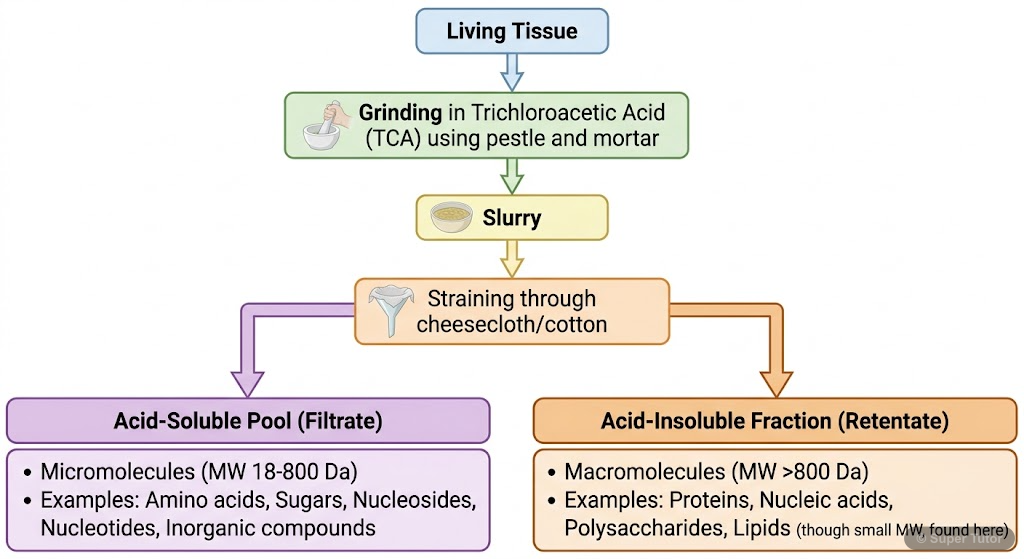
Learn better with visuals Super Tutor pairs illustrations like this with notes and quizzes for Biomolecules.
Study Plan
Learn the Theory
Read the textbook chapter carefully. Note down definitions, formulas and key ideas. Focus on: 1. Cellular Pool and Chemical Composition of Cells, 2. Carbohydrates, 3. Amino Acids and Proteins.
Practise
Solve the textbook exercises and extra practice questions. There are 103 questions available for this chapter.
Revise & Test
Revise key points without looking at your notes. Take a practice quiz and mark weak areas for another pass.
Spaced Revision
Come back to Biomolecules after a week. Use flashcards for quick recall and try past exam questions on this chapter.
What to Focus On
- Cellular pool includes inorganic and organic molecules.
- Plasma membrane helps maintain the distinct composition of the cell.
- Nearly 93% of cellular material consists of carbon, hydrogen, and oxygen.
- Biomolecules are carbon compounds found in living tissues.
- Acid-soluble pool and acid-insoluble fraction are obtained during tissue analysis.
- Chromatography, gel filtration, and electrophoresis are used for separation.
- Carbohydrates are broad polyhydroxy aldehydes or ketones and their derivatives.
- General formula of carbohydrates is C_x(H_2O)_y.
- Monosaccharides are simple sugars with free aldehyde or ketone groups.
Common Mistakes to Avoid
All compounds with the formula Cx(H2O)y are carbohydrates, and all carbohydrates must fit this formula.
Sucrose is a reducing sugar because it is made from glucose and fructose, which are both reducing sugars.
All polysaccharides made from one type of monomer must be homopolysaccharides, so chitin should also be a homopolysaccharide.
Memory Tips
Cellular pool
Main elemental composition of living matter
Micromolecules and macromolecules
Primary and secondary metabolites
Want a personalised study plan?
Super Tutor builds a day-by-day plan for ICSE Class 11 Biology that fits your exam date and pace.
Create My Study PlanFrequently Asked Questions
What are the important topics in Biomolecules for ICSE Class 11 Biology?
How should I revise Biomolecules for Class 11 exams?
Sources & Official References
Content is aligned to the official syllabus. Refer to the board website for the latest curriculum.
More resources for Biomolecules
Practice Quiz
Test yourself with a quick quiz
Important Questions
Exam-style questions with answers
Revision Notes
Key points for last-minute revision
Formula Sheet
The chapter's formulas in one place
Chapter Summary
Understand the chapter at a glance
Concept Maps
See how topics connect
Flashcards
Quick-fire cards for active recall
Syllabus
What topics to cover
For serious students
Get the full Biomolecules chapter — start free.
Quizzes, flashcards, an AI doubt solver and a study plan for ICSE Class 11 Biology. Free to start, no card needed.