Biomolecules — Chapter Summary
ICSE · Class 11 · Biology
Summary of Biomolecules for ICSE Class 11 Biology. Key concepts: The collection of various, Micromolecules have molecular and Primary metabolites include.
Interactive on Super Tutor
Studying Biomolecules? Get the full interactive chapter.
Quizzes, flashcards, AI doubt-solver and a step-by-step study plan — built for chapter summary and more.
Free trial, no card needed.
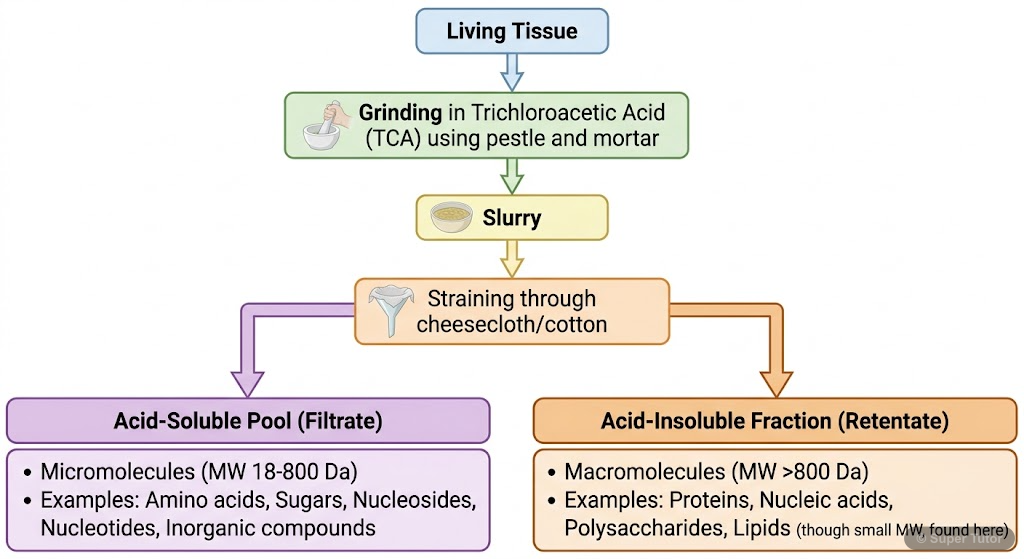
Learn better with visuals Super Tutor pairs illustrations like this with notes and quizzes for Biomolecules.
Overview
Biomolecules are the chemical substances present in living cells and tissues. They include inorganic materials such as water and salts, and organic compounds such as carbohydrates, lipids, amino acids, proteins, nucleotides, nucleic acids, enzymes, and vitamins. Living matter contains a much higher
Key Concepts
The collection of various types
The collection of various types of molecules in a cell is called the cellular pool. It includes inorganic materials such as water, salts, and mineral
Micromolecules have molecular weight less than
Micromolecules have molecular weight less than one thousand dalton. Macromolecules have molecular size above 10,000 dalton. Micromolecules include wat
Primary metabolites include carbohydrates
Primary metabolites include carbohydrates, fats, amino acids, proteins, and nucleic acids. Secondary metabolites include alkaloids, terpenoids, phenol
Carbohydrates are broadly defined as polyhydroxy
Carbohydrates are broadly defined as polyhydroxy aldehydes or ketones and their derivatives, or substances that yield one of these compounds on hydrol
Monosaccharides are simple sugars that cannot
Monosaccharides are simple sugars that cannot be hydrolysed into smaller units. They possess a free aldehyde or ketonic group and two or more hydroxyl
Learning Objectives
- Understand the chemical composition of living cells
- Distinguish between micromolecules and macromolecules
- Classify carbohydrates, proteins, lipids, and enzymes
- Explain the structure and functions of major biomolecules
- Describe amino acids, peptide bonds, and levels of protein structure
Frequently Asked Questions
What are the important topics in Biomolecules for ICSE Class 11 Biology?
How should I revise Biomolecules for Class 11 exams?
Sources & Official References
Content is aligned to the official syllabus. Refer to the board website for the latest curriculum.
More resources for Biomolecules
Practice Quiz
Test yourself with a quick quiz
Important Questions
Exam-style questions with answers
Revision Notes
Key points for last-minute revision
Formula Sheet
The chapter's formulas in one place
Concept Maps
See how topics connect
Study Plan
Step-by-step plan for this chapter
Flashcards
Quick-fire cards for active recall
Syllabus
What topics to cover
For serious students
Get the full Biomolecules chapter — start free.
Quizzes, flashcards, an AI doubt solver and a study plan for ICSE Class 11 Biology. Free to start, no card needed.