Human Reproduction — Chapter Summary
ICSE · Class 12 · Biology
Summary of Human Reproduction for ICSE Class 12 Biology. Part of the ICSE Class 12 Biology syllabus. Human reproduction is the process that produces new.
Interactive on Super Tutor
Studying Human Reproduction? Get the full interactive chapter.
Quizzes, flashcards, AI doubt-solver and a step-by-step study plan — built for chapter summary and more.
Free trial, no card needed.
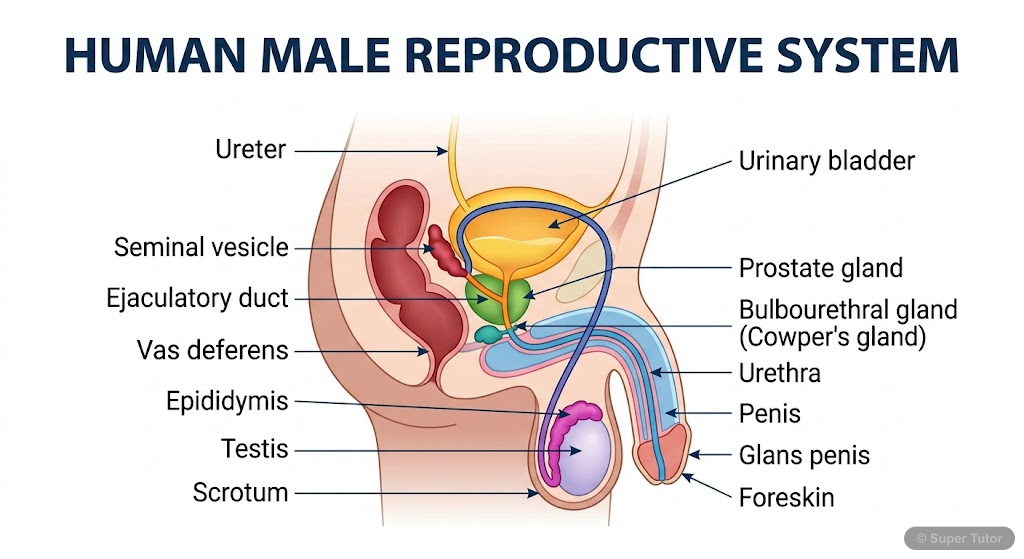
One of 7 illustrations for Human Reproduction in Super Tutor — alongside flashcards, concept maps and practice questions.
Overview
Human reproduction is the process that produces new individuals of the same kind and ensures continuity of the species. In humans, reproduction is sexual and viviparous. The chapter covers the structure and function of the male and female reproductive systems, formation of gametes, puberty, menstrua
Key Concepts
The testes are the primary male
The testes are the primary male reproductive organs and the ovaries are the primary female reproductive organs. They produce gametes and sex hormones.
The male reproductive system includes testes
The male reproductive system includes testes, duct system, accessory glands, and external genitalia. Testes produce sperms and testosterone. Sperms pa
Each testis is covered by three
Each testis is covered by three tunics and contains about 250 testicular lobules with seminiferous tubules. Spermatogonia divide and develop into prim
Human sperm is about 60 µm
Human sperm is about 60 µm long and has a head, neck, middle piece, and tail. The head contains the nucleus and acrosome, the middle piece has mitocho
The female reproductive system includes ovaries
The female reproductive system includes ovaries, fallopian tubes, uterus, cervix, vagina, and mammary glands. Ovaries produce ova and the hormones est
Learning Objectives
- Understand the structure and function of male and female reproductive organs
- Describe spermatogenesis and oogenesis with their stages
- Explain puberty and secondary sexual characters in boys and girls
- Describe the phases and hormonal control of the menstrual cycle
- Explain fertilization, cleavage, blastocyst formation, and implantation
Frequently Asked Questions
What are the important topics in Human Reproduction for ICSE Class 12 Biology?
How should I revise Human Reproduction for the ICSE Class 12 board exam?
Sources & Official References
Content is aligned to the official syllabus. Refer to the board website for the latest curriculum.
More resources for Human Reproduction
For serious students
Get the full Human Reproduction chapter — start free.
Quizzes, flashcards, an AI doubt solver and a study plan for ICSE Class 12 Biology. Free to start, no card needed.