Climate — Chapter Summary
ICSE · Class 12 · Geography
Summary of Climate for ICSE Class 12 Geography. Key concepts: India has a climate marked by, India lies between 6° and 37°N and Coastal regions have.
Interactive on Super Tutor
Studying Climate? Get the full interactive chapter.
Quizzes, flashcards, AI doubt-solver and a step-by-step study plan — built for chapter summary and more.
Free trial, no card needed.
Learn better with visuals Super Tutor pairs illustrations like this with notes and quizzes for Climate.
Overview
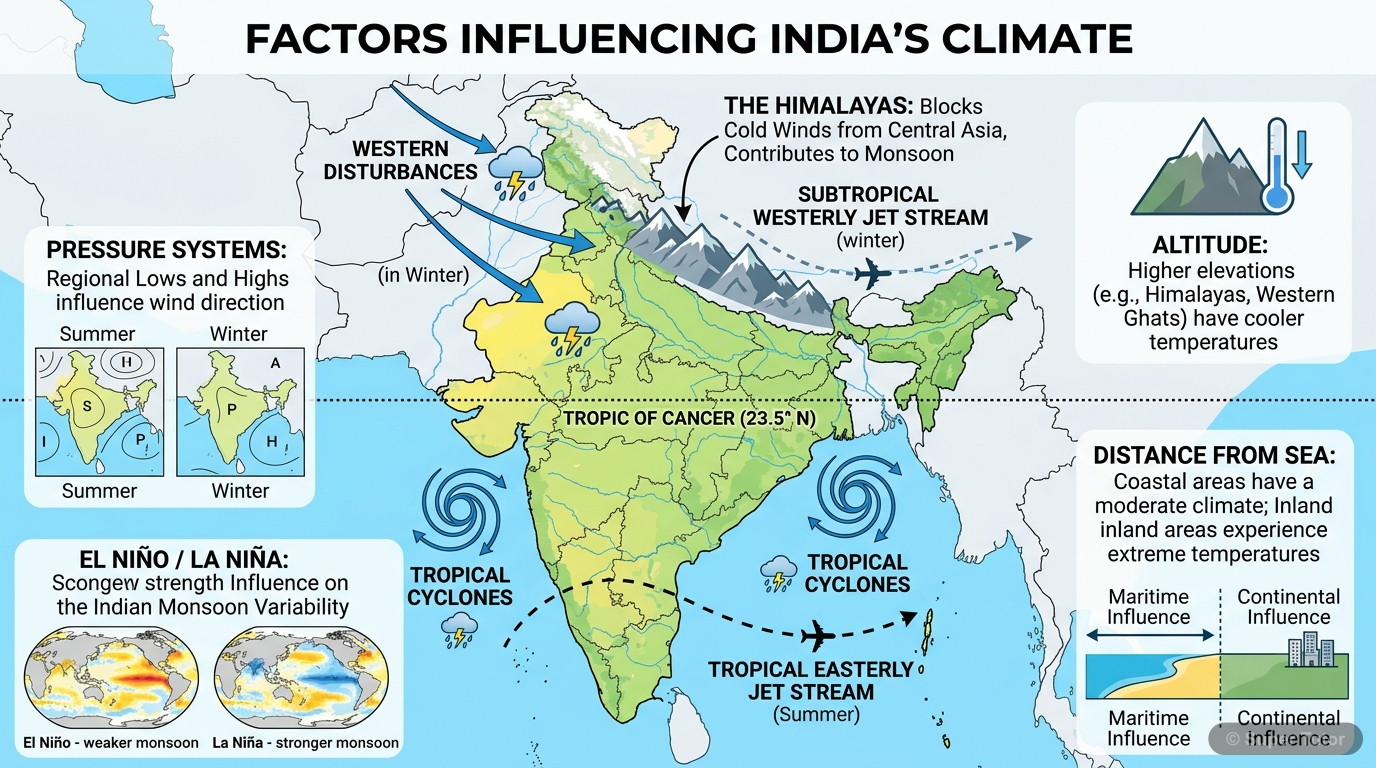
India has a monsoon type of climate. The word monsoon comes from the Arabic word 'mausim', meaning seasonal reversal of winds during the year. Climate in India changes with location, distance from the sea, relief, pressure and wind systems, jet streams, and special phenomena such as El-Nino and Sout
Key Concepts
India has a climate marked by
India has a climate marked by seasonal reversal of winds. Summer winds blow from sea to land and bring most of the rainfall, while winter winds usuall
India lies between 6° and 37°N
India lies between 6° and 37°N latitudes, and the Tropic of Cancer passes through the middle of the country. Southern India is warmer, while northern
Coastal regions have an equable
Coastal regions have an equable or maritime climate because the sea moderates temperature. Interior regions have an extreme or continental climate bec
The Himalayas protect India from cold
The Himalayas protect India from cold, dry winds from Central Asia and also block the south-west monsoon from moving beyond the northern frontiers.
Relief affects temperature
Relief affects temperature, pressure, wind direction, and rainfall. The Western Ghats cause heavy rainfall on the west coast and create rain-shadow re
Learning Objectives
- Understand the meaning of monsoon and the features of India’s monsoon climate
- Identify the main factors controlling India’s weather and climate
- Explain the role of ITCZ, jet streams, western disturbances, El-Nino, and Southern Oscillation
- Describe the four seasons of India and their weather conditions
- Understand the onset, advance, break, and retreat of the monsoon
Frequently Asked Questions
What are the important topics in Climate for ICSE Class 12 Geography?
How should I revise Climate for the ICSE Class 12 board exam?
Sources & Official References
Content is aligned to the official syllabus. Refer to the board website for the latest curriculum.
More resources for Climate
For serious students
Get the full Climate chapter — start free.
Quizzes, flashcards, an AI doubt solver and a study plan for ICSE Class 12 Geography. Free to start, no card needed.