Rebels and the Raj: 1857 Revolt and its Representations — Syllabus
Madhya Pradesh Board · Class 12 · History
What Rebels and the Raj: 1857 Revolt and its Representations covers in Madhya Pradesh Board Class 12 History: 4 topics, for the 2026-27 session.
Interactive on Super Tutor
Studying Rebels and the Raj: 1857 Revolt and its Representations? Get the full interactive chapter.
Quizzes, flashcards, AI doubt-solver and a step-by-step study plan — built for syllabus and more.
Free trial, no card needed.
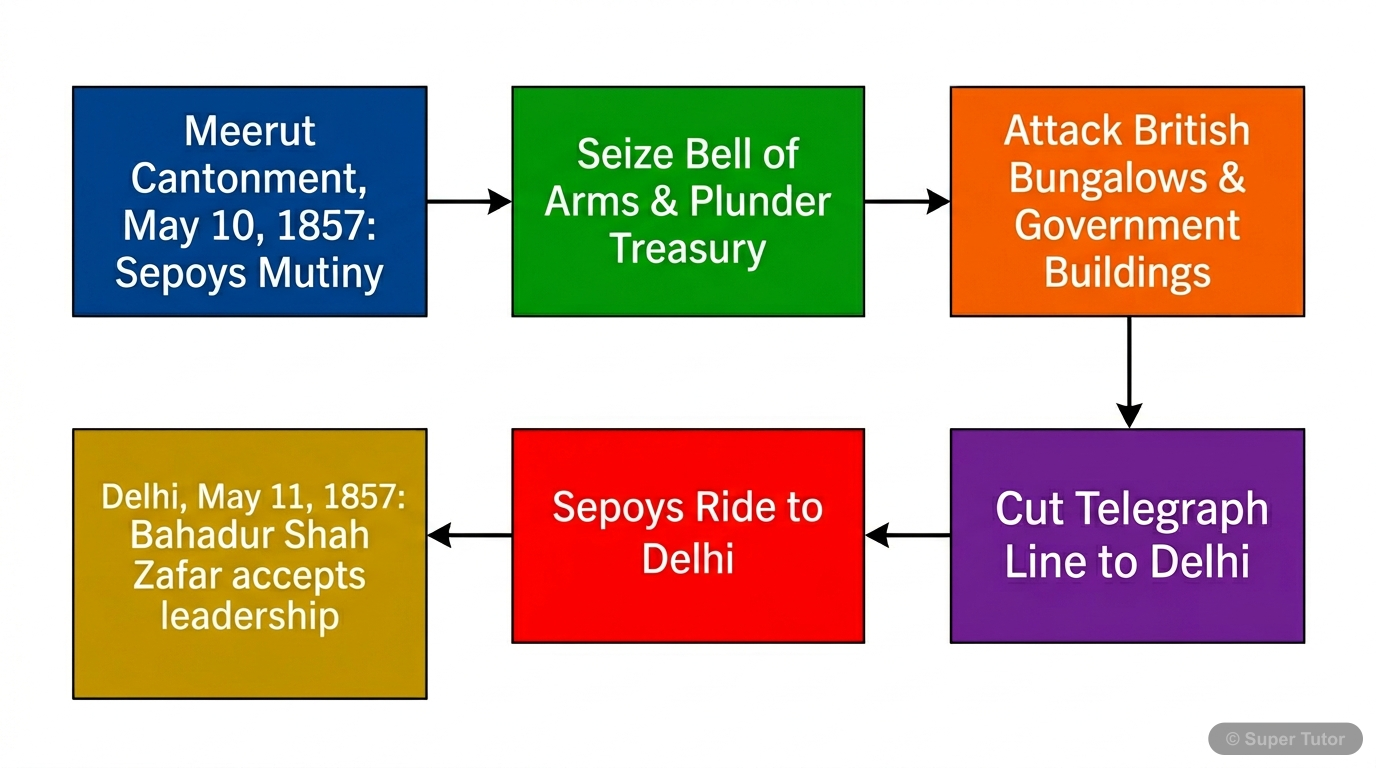
One of 12 illustrations for Rebels and the Raj: 1857 Revolt and its Representations in Super Tutor — alongside flashcards, concept maps and practice questions.
Topics in Rebels and the Raj: 1857 Revolt and its Representations
1. The Beginning of the Revolt and its Spread
- The mutiny began late in the afternoon of 10 May 1857 in Meerut.
- The sepoys first acted in the native infantry lines, then spread to the cavalry and the city.
- Ordinary people of Meerut and nearby villages joined the sepoys.
2. Planning, Communication, and Collective Decision-Making
- There was communication between sepoy lines of different cantonments, showing some level of planning and coordination.
- After the 7th Awadh Irregular Cavalry refused new cartridges in early May, they wrote to the 48th Native Infantry that they had acted for the faith and awaited the 48th’s orders.
- A Muslim tahsildar from Bijnor asked François Sisten, a native Christian police inspector in Sitapur, about the progress of the work in Awadh, suggesting rebel communication across regions.
3. Leaders of the Revolt and Why People Followed Them
- In many places, people turned to former rulers or local leaders for leadership.
- Bahadur Shah was made the nominal leader in Delhi after sepoys forced him to bless the revolt.
- Nana Sahib, successor to Peshwa Baji Rao II, was made leader in Kanpur by sepoys and townspeople.
4. Awadh: Grievance, Annexation, and Revolt
- Awadh became a major centre of revolt because political, economic, and emotional grievances came together there.
- Lord Dalhousie described Awadh in 1851 as a cherry that would fall into British hands one day.
- Awadh was formally annexed in 1856.
Key Concepts
Central concept: The 1857 Revolt as a combined military mutiny, popular rebellion, anti-colonial resistance, and later nationalist memory
Work through every topic in Rebels and the Raj: 1857 Revolt and its Representations with notes and quizzes
Start This ChapterFrequently Asked Questions
What are the important topics in Rebels and the Raj: 1857 Revolt and its Representations for Madhya Pradesh Board Class 12 History?
How should I revise Rebels and the Raj: 1857 Revolt and its Representations for the Madhya Pradesh Board Class 12 board exam?
Sources & Official References
Content is aligned to the official syllabus. Refer to the board website for the latest curriculum.
More resources for Rebels and the Raj: 1857 Revolt and its Representations
Practice Quiz
Test yourself with a quick quiz
Important Questions
Exam-style questions with answers
Revision Notes
Key points for last-minute revision
Chapter Summary
Understand the chapter at a glance
Concept Maps
See how topics connect
Study Plan
Step-by-step plan for this chapter
Flashcards
Quick-fire cards for active recall
NCERT Solutions
Every textbook question solved step by step
For serious students
Get the full Rebels and the Raj: 1857 Revolt and its Representations chapter — start free.
Quizzes, flashcards, an AI doubt solver and a study plan for Madhya Pradesh Board Class 12 History. Free to start, no card needed.