Kinship, Caste and Class (Early Societies) (c. 600 BCE-600 CE) — Syllabus
Madhya Pradesh Board · Class 12 · History
What Kinship, Caste and Class (Early Societies) (c. 600 BCE-600 CE) covers in Madhya Pradesh Board Class 12 History: 4 topics, for the 2026-27 session.
Interactive on Super Tutor
Studying Kinship, Caste and Class (Early Societies) (c. 600 BCE-600 CE)? Get the full interactive chapter.
Quizzes, flashcards, AI doubt-solver and a step-by-step study plan — built for syllabus and more.
Free trial, no card needed.
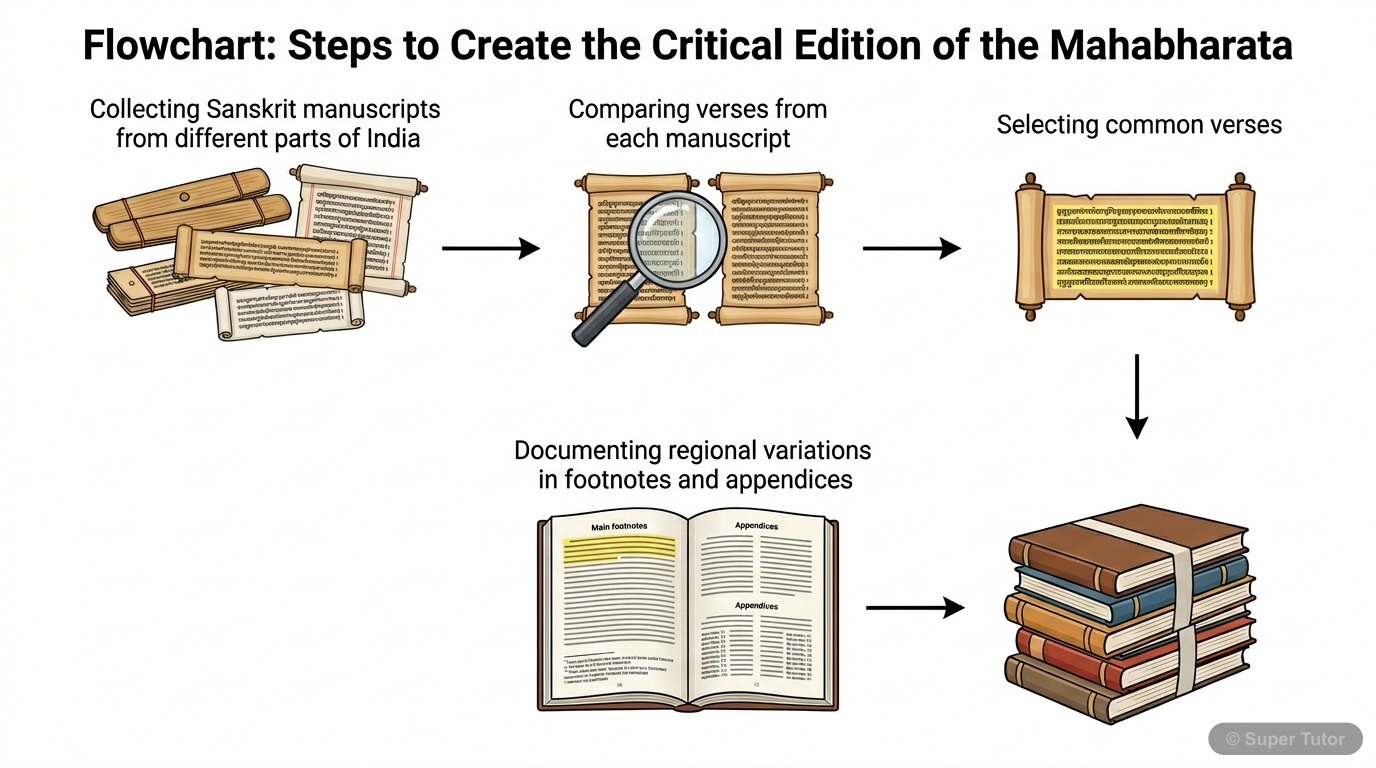
One of 16 illustrations for Kinship, Caste and Class (Early Societies) (c. 600 BCE-600 CE) in Super Tutor — alongside flashcards, concept maps and practice questions.
Topics in Kinship, Caste and Class (Early Societies) (c. 600 BCE-600 CE)
1. The Mahabharata as a historical source
- The Mahabharata is a colossal Sanskrit epic with over 100,000 verses.
- It was composed over about 1,000 years from c.500 BCE onwards.
- Its story centres on a feud over land and power between the Kauravas and the Pandavas.
2. Kinship, patriliny, and marriage
- The Mahabharata is also a story about kinship conflict within the Kuru family.
- The Kauravas were sons of Dhritarashtra and the Pandavas were sons of Pandu.
- Since Dhritarashtra was blind, his younger brother Pandu ascended the throne of Hastinapura.
3. Gotra, Satavahanas, and kinship rules
- Gotra classification is evident from c.1000 BCE onwards.
- Each gotra was named after a Vedic seer.
- Women were expected to give up the father’s gotra and adopt the husband’s gotra on marriage.
4. Varna, jati, and social hierarchy
- Caste refers to a set of hierarchically ordered social categories.
- Brahmanical texts placed Brahmanas first and Shudras and untouchables at the bottom.
- Positions in the ideal order were supposedly determined by birth.
Key Concepts
Central concept: Social organisation in early India through kinship, marriage, caste, class, property, and textual traditions
Work through every topic in Kinship, Caste and Class (Early Societies) (c. 600 BCE-600 CE) with notes and quizzes
Start This ChapterFrequently Asked Questions
What are the important topics in Kinship, Caste and Class (Early Societies) (c. 600 BCE-600 CE) for Madhya Pradesh Board Class 12 History?
How should I revise Kinship, Caste and Class (Early Societies) (c. 600 BCE-600 CE) for the Madhya Pradesh Board Class 12 board exam?
Sources & Official References
Content is aligned to the official syllabus. Refer to the board website for the latest curriculum.
More resources for Kinship, Caste and Class (Early Societies) (c. 600 BCE-600 CE)
Practice Quiz
Test yourself with a quick quiz
Important Questions
Exam-style questions with answers
Revision Notes
Key points for last-minute revision
Chapter Summary
Understand the chapter at a glance
Concept Maps
See how topics connect
Study Plan
Step-by-step plan for this chapter
Flashcards
Quick-fire cards for active recall
NCERT Solutions
Every textbook question solved step by step
For serious students
Get the full Kinship, Caste and Class (Early Societies) (c. 600 BCE-600 CE) chapter — start free.
Quizzes, flashcards, an AI doubt solver and a study plan for Madhya Pradesh Board Class 12 History. Free to start, no card needed.