The End of Bipolarity — Chapter Summary
Madhya Pradesh Board · Class 12 · Political Science
Summary of The End of Bipolarity for Madhya Pradesh Board Class 12 Political Science. Part of the Madhya Pradesh Board Class 12 Political Science syllabus.
Interactive on Super Tutor
Studying The End of Bipolarity? Get the full interactive chapter.
Quizzes, flashcards, AI doubt-solver and a step-by-step study plan — built for chapter summary and more.
Free trial, no card needed.
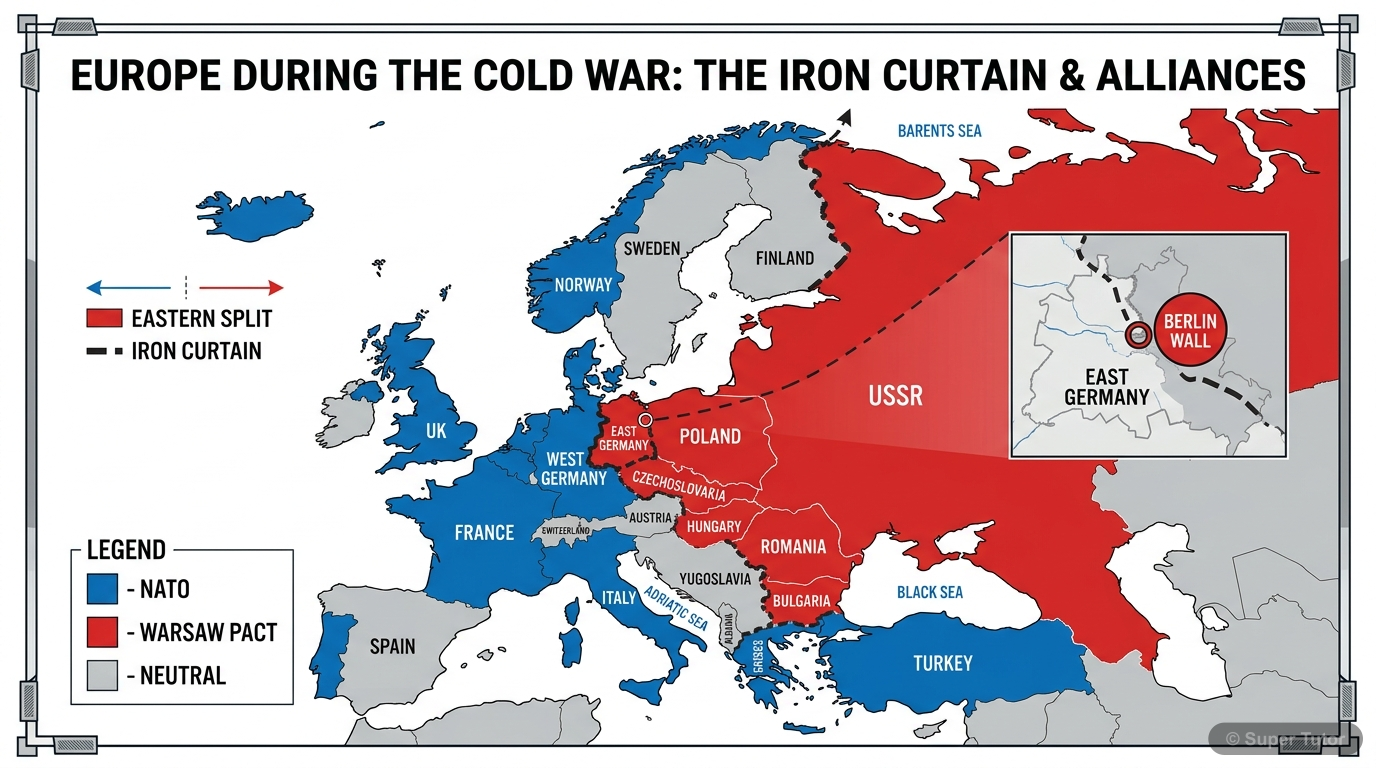
One of 10 illustrations for The End of Bipolarity in Super Tutor — alongside flashcards, concept maps and practice questions.
Overview
The collapse of the Soviet Union marked the end of the bipolar world order that had divided world politics into two rival blocs led by the United States and the USSR. The Berlin Wall, built in 1961 and broken on 9 November 1989, became the strongest symbol of that division and of its end. The chapte
Key Concepts
The USSR came into being after
The USSR came into being after the 1917 socialist revolution in Russia. It was based on state ownership, planned economy, and one-party rule by the Co
After the Second World War
After the Second World War, East European countries under Soviet control followed the Soviet model politically and economically. The Warsaw Pact held
The Berlin Wall was built
The Berlin Wall was built in 1961 to separate East Berlin from West Berlin. It was more than 150 kilometres long, stood for 28 years, and symbolised t
Mikhail Gorbachev became General Secretary
Mikhail Gorbachev became General Secretary in 1985 and introduced perestroika and glasnost. He wanted to reform the system, reduce tensions with the W
In 1991
In 1991, a coup encouraged by Communist Party hardliners failed, and power shifted from the Soviet centre to the republics. Russia, Ukraine and Belaru
Learning Objectives
- Understand the nature of the Soviet political and economic system
- Explain why the Soviet Union became weak and disintegrated
- Describe Gorbachev’s reforms and their unintended effects
- Trace the breakup of the Soviet bloc and the formation of the CIS
- Explain the consequences of shock therapy in post-communist states
Frequently Asked Questions
What are the important topics in The End of Bipolarity for Madhya Pradesh Board Class 12 Political Science?
How should I revise The End of Bipolarity for the Madhya Pradesh Board Class 12 board exam?
Sources & Official References
Content is aligned to the official syllabus. Refer to the board website for the latest curriculum.
More resources for The End of Bipolarity
Practice Quiz
Test yourself with a quick quiz
Important Questions
Exam-style questions with answers
Revision Notes
Key points for last-minute revision
Concept Maps
See how topics connect
Study Plan
Step-by-step plan for this chapter
Flashcards
Quick-fire cards for active recall
Syllabus
What topics to cover
NCERT Solutions
Every textbook question solved step by step
For serious students
Get the full The End of Bipolarity chapter — start free.
Quizzes, flashcards, an AI doubt solver and a study plan for Madhya Pradesh Board Class 12 Political Science. Free to start, no card needed.